



SunRail Service to Transform Florida's Commuter Culture
The $1 billion, 61.5-mile system, being built by the Florida DOT, will utilize an existing rail corridor. The 32-mile first phase will serve 12 stations and link DeBary, to Sand Lake Road, just south of Orlando. Service is expected to begin in 2014.
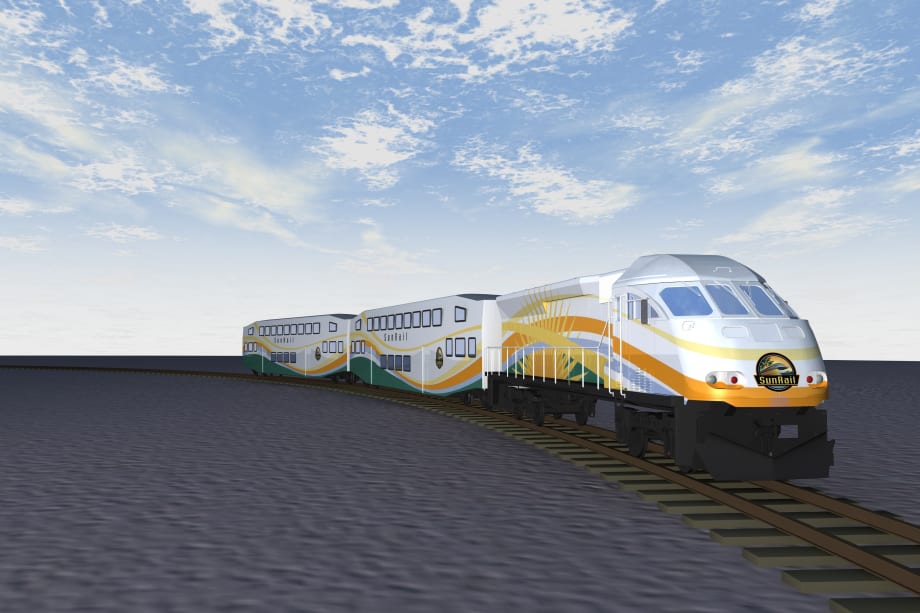
Less than a year from now, thousands of people will be boarding Florida’s new SunRail commuter rail service. The $1 billion, 61.5-mile system, being built by the Florida Department of Transportation (FDOT), will provide commuters with an alternative to the highly congested Interstate 4, a major commuter arterial roadway, which parallels the rail line.
“It takes our customers downtown right where they want to go in the morning and drops them off where they live at the end of the day,” says Steve Olson, public information officer for FDOT’s District 5.
The 32-mile first phase of SunRail will serve 12 stations and link DeBary, in Volusia County, to Sand Lake Road, just south of Orlando. Service is expected to begin in 2014. Construction on Phase I of SunRail includes double-tracking, signal improvements, stations and an operations control center. The rail line, built on an existing freight rail corridor that traverses Orange, Seminole, Volusia and Osceola counties, has put about 800 people to work, according to FDOT officials. Phase 2 will serve five additional stations, north to DeLand and south to Poinciana.
FDOT officials are careful to say that SunRail is not necessarily going to reduce congestion, because there is a high demand for north-south surface roads, which will be undergoing improvements in the coming years. “The region is continuing to grow, so there will be demand for these services,” Olson says. “Our thinking is to get people to rethink using their automobiles and use the SunRail trains and other forms of mass transit.
“We think SunRail will change the whole dynamic for mass transit in the region,” he adds. “It will have a huge impact as far as giving people choices.”
Corridor selection
“The corridor has actually been looked at for decades within the Orlando area for use as passenger rail, because the communities have grown up around this rail line,” says Tawny Olore project manager for SunRail. “This line goes through the heart of metro Orlando as well as the suburbs to the north and south.”
It basically parallels Interstate 4, which is subject to a lot of congestion during rush hour. Further south, the line parallels a busy state road, Orange Avenue, which brings in traffic from southern Orlando and the Kissimmee/Osseola County.
Although the existing rail corridor is used by freight and Amtrak services, it will have to be improved for SunRail’s passenger service. The trains will be operating with push-pull technology, and to ensure on-time performance, most of the 61.5-mile corridor will be double tracked.
“We are putting new tracks next to existing and moving existing tracks over, and replacing it,” Olson says. “We are going through some of the existing infrastructure and upgrading it so it’s a smooth ride.”
SunRail will operate on weekdays, every half hour during three-hour windows in the morning and in the afternoon, and every two hours during off-peak periods. No freight will be allowed on the corridor during those peak travel periods. Olore says SunRail will also be in compliance with the positive train control mandate for 2015.
The capital cost for SunRail will also include a new state-of-the-art signal system for train operations and upgrades for the at-grade crossing warning system. In addition, upgrades to the at-grade crossing warning system will ensure that crossing gates aren’t down any longer than needed, Olore says.
The former CSXT right-of-way along this 61.5-mile stretch is currently used 24 hours a day, seven days a week by freight and Amtrak trains. On average there are 10 through-freight, 10 local freight switchers and up to six Amtrak trains operating on a typical day. Many of these trains are operated after 11 p.m. CSX Transportation's long-range business plans call for relocating up to nine through-freight trains over to the "S-line," which runs through the center of the state. Freight trains on the "A-Line," where SunRail will operate, will be scheduled outside of peak commute times.[PAGEBREAK]
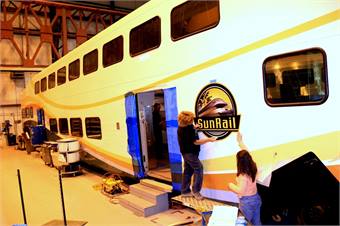
Bombardier is building 14 bi-level units for Phase 1, per a $41.7 million contract. The company will also provide operations and maintenance services for the first 10 years of the rail service.
Funding
The cost for Phase 1 and 2 of SunRail, which includes the 61.5-mile/17-station plan between DeLand and Poinciana in Osceola County, is approximately $615 million. FDOT purchased the corridor for $432 million. The federal government will pay 50%, the state 25% and local governments in the four counties and City of Orlando covering the remaining 25%. Local partners include, Orange, Volusia, Osceola and Seminole counties, as well as the City of Orlando, and advise FDOT on SunRail issues as the Central Florida Rail Commission. For the first seven years of SunRail servie, FDOT will handle the operations and maintenance via a contract with Bombardier Transportation. Then it becomes the local government’s responsibility. The Federal Transit Administration on July 18, 2011 also committed to pay one-half of the Phase I capital costs for SunRail.
Total cost to operate the system is running about $30 million a year prior to revenues coming in, Olore says. Farebox recovery is expected to cover a majority of the operational costs.
Per a $195 million contract, Bombardier will provide operations and maintenance services for the first 10 years of the rail service. Bombardier’s scope of work for the contract will include operations, dispatching, fleet maintenance, track maintenance, customer service, station platform and facility maintenance, and material supply. The Bombardier team will mobilize for service over the coming months and assume its operations and maintenance responsibilities in the spring of 2014.
Railcar contract
Bombardier is also building the railcars, 14 bi-level units for Phase 1, per a $41.7 million contract. Under the agreement, an additional 6 vehicles have been ordered for Phase 2. Deliveries are scheduled to be completed by late 2013. The railcar shells are being built at the manufacturer’s Thunder Bay, Ontario, Canada facility, with final assembly taking place at its Plattsburgh, N.Y. plant.
The double-decker railcars, which can seat up to 150 passengers per car, will include restroom facilities; power outlets; luggage and bicycle racks; and wireless Internet connectivity.
Wabtec Corp’s MotivePower subsidiary is providing seven remanufactured locomotives for Phase 1, with three additional locomotives on order for Phase 2, per a contract with SunRail valued at approximately $17.7 million, with delivery slated to begin later this year. The 3,000-horsepower locomotives will feature MotivePower’s streamlined cab and will be fully compliant with EPA regulations for remanufactured locomotives, according to the company. [PAGEBREAK]
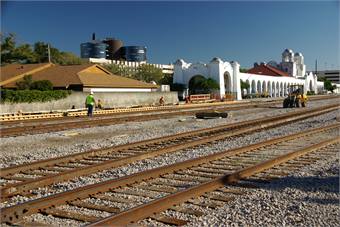
The Florida Hospital rail station is one of 12 stations planned for the first phase of the rail line, which has spurred a $250 million investment in a 176-acre Health Village.
Service Integration
FDOT officials have been working with transportation providers up and down the corridor to integrate services with the rail line. While the suburban stations along the corridor will be park-n-ride arrangements, the downtown area stations are the “destination stations” that require transportation options for commuters.
To address “last-mile” connections in the downtown Orlando area, FDOT is working with the local mass transit provider, LYNX (Central Florida Regional Transportation Authority), to coordinate feeder bus services. “So, to a certain extent, people can buy their ticket, get off the train and transfer to a LYNX bus for one price,” says Olson.
Additionally, LYNX and the City of Orlando have partnered to expand the downtown bus circulator system, LYMMO, which will provide local service connection from SunRail stations to central city destinations. Construction is underway, with service set to begin in early 2014.
“Nothing precludes private transportation providers from jumping into the mix as well,” says Olson. “Let’s say a business wants to pay for a dedicated bus service or a service through a private provider [for its employees], that’s an option also.”
FDOT also has a commuter services program, branded as reThink, which includes carpooling and vanpooling options. “There might be some opportunities there for some of the suburban stations, with people making some sort of arrangements by using a van to get to their offices,” Olson says.
For the northern portion of the rail line, Volusia County’s public transit system, Votran, is looking at routes to connect with SunRail. Votran and LYNX intend on upgrading their fare systems to work with SunRail, Olson says. The goal is to have seamless service.
“When you purchase a ticket, it will work seamlessly between the agencies,” Olson says. “We are working on the back-of-the-house issues right now.”
The fare collection system will employ tap-on, tap-off technology. SunRail platforms will each have four vending kiosks to issue tickets. “We are going to be encouraging people to go cashless, but one of the vending machines will handle cash and coin,” he adds.
Transit Oriented Development
The 12 outdoor stations are designed with awnings to keep people out of the elements. “The weather here in Florida is not that bad to be waiting outside, even in the winter,” Olson says.
FDOT is currently developing an app that will allow users of smartphones or other mobile devices to track the train. Stations will also be equipped with real-time arrival screens and video surveillance systems.
“We’re supporting business development around these stations,” Olson says. “The cities are embracing this transit oriented development and the business opportunities around the stations. They’re tailoring it to the flavor of each stop.”
More than two dozen retail, office, government, and residential development projects within a 10-minute walk of the new transit stations are planned or under way, says Olore, the SunRail project manager. This represents about $1.6 billion in public and private investments altogether.
Other transit-oriented projects planned or under construction include restaurants, convenience stores and shops. Offices for professional and medical services are in the mix, while governmental facilities include churches, schools as well as county, city, state and federal buildings.
The Florida Hospital rail station is one of 12 stations planned for the first phase of the rail line, which has spurred a $250 million investment in a 176-acre Health Village at the hospital. This will enable thousands of medical researchers, hospital employees, patients and their families to take transit to work or when seeking medical care, according to FDOT.
“Florida Hospital paid for their station,” says Olore. “They are going to be offsetting costs to buy monthly rail passes for their employees.”
Another private sector partner is the NBA basketball team Orlando Magic, which plans to move their headquarters downtown next to the Church Street station. “We are also working with them to possibly provide passes for their employees,” Olore says.
These private sector partnerships were developed through a combination of FDOT working with its local funding partners, she says.
“People talk about public-private partnerships. [SunRail] is truly one of those because the private enterprises stepped up to fund and push it through our various requirements and approvals that we needed to get,” Olore says. “Our local partners stepped up in terms of 25% as well as operating it in year eight and beyond and paying for the operation. I couldn’t say it was any one agency or private entity; it was a combination of everyone working together. “
More Rail

New York MTA Advances Final Contract for Second Avenue Subway Expansion
Contract Four is the largest in the Second Avenue Subway Phase 2 project and includes construction of station infrastructure, tracks, and signals for the subway expansion, MTA officials said. Work on Contract Four will begin in 2027.
Read More →
San Diego MTS Breaks Monthly Trolley Ridership Record
Agency officials said July’s ridership indicates MTS’s continued recovery from the pandemic.
Read More →
Report Examines NJ TRANSIT Reliability, Funding Challenges
The Garden State Initiative analysis examines the roles of Amtrak infrastructure, fleet management, and agency operations while recommending a more performance-based approach to improving reliability.
Read More →
Stadler, CapMetro Sign Long-Term Rail Fleet Support Agreement
Beginning in 2027, Stadler will provide on-site technical expertise, spare parts support, training, and obsolescence management to help extend the reliability and longevity of CapMetro’s GTW fleet.
Read More →
Biz Briefs: Alstom Lands Canadian Contract, LYT to Supply California TSP, and More
In METRO's latest installment, we take a look at recent news from Complete Coach Works, Beep, FlixBus, and more partnerships making headlines across the transportation sector.
Read More →
CATS Gold Line Marks 5 Years of Service, 2.8M Passenger Trips
With a six-mile expansion planned, the Charlotte streetcar is positioned to connect more neighborhoods and major transit hubs across the region.
Read More →
Why Simulating Pedestrian Movement Has Become Essential for Modern Rail Stations
Pedestrian microsimulation is helping rail planners identify bottlenecks, test station designs, and prepare complex transit hubs for growing passenger volumes.
Read More →
Amtrak Begins Major Construction at New York’s Sunnyside Yard
The new maintenance facility will support Amtrak’s Airo trainsets while improving maintenance efficiency and turnaround times in New York.
Read More →
Chicago Leaders Unveil Plans for O’Hare Airport Express Train
The privately developed project would offer a 15-minute trip between downtown and O’Hare’s Terminal 2, with trains operating every 15 minutes on a dedicated track. The service would use battery-electric trains and three existing freight rail rights-of-way.
Read More →
OCTA Maps Out 30-Year Strategy to Protect Coastal Rail Corridor
The draft feasibility report identifies strategies to protect the coastal rail line for decades as the agency continues near-term stabilization and sand placement efforts.
Read More →