



Taking a Fresh Look at Automated Peoplemovers
How do automated peoplemovers (APMs) fit into the larger world of public transportation? Not easily, according to the author. The APM Conference in San Francisco will examine this often-ignored transportation mode.
With the U.S. transit industry so narrowly focused these days on buses and rail, the potential of automated peoplemovers (APM) remains largely untapped. Actually, most of American life is car-oriented, leaving public transportation with a somewhat marginal role in the bigger civic picture. Still, the instinctive response of many transit industry leaders and their lobbyists is to beg for billions of dollars more to further subsidize “cattle-hauling” technologies that seem increasingly inappropriate as the Internet whisks us forward into the New Millennium. American Public Transportation Association officials and Transportation Research Board researchers know little about APMs, which are also not high on the priority list of the American Planning Association or the Institute of Transportation Engineers. Their automation might make APMs of great interest to the Institute of Electrical and Electronic Engineers, and their propulsion and suspension innards might fascinate the American Society of Mechanical Engineers. Yet, it is civil engineers pondering the requisite concrete and curving beamways who have provided a lively forum for the emerging APM industry. Urban policy-makers and transport planners will explore the potential of APMs when the American Society of Civil Engineers (ASCE) holds its 8th International APM Conference July 8 to 11 in San Francisco. (More about the conference later in this article.) APMs as building blocks The existence of an APM, even if it performs well technically and does not cost more than expected to construct and operate, does not guarantee that people will use it. The federal government in the 1980s funded three downtown peoplemovers (DPMs) that eventually cost more than $500 million. They operate today in Detroit, Miami and Jacksonville, Fla., requiring millions of dollars in annual operating subsidies to carry passenger levels well below what was hoped for. Many question the benefits that they have brought to their downtown districts. Even if we don’t brand them as failures, they are hardly examples that other cities have shown much inclination to emulate. It isn’t only the inefficiencies of the public sector that have led to such DPM embarrassments. Many private developers run shuttle services, build skybridges and provide other mobility-oriented amenities. The private developer of an upscale residential complex on an island off downtown Tampa spent about $9 million on an APM shuttle. Advertised as a location “90 seconds from downtown,” Harbour Island included a festive marketplace aimed at downtown workers. It immediately failed financially and was replaced by storage space. After a decade of subsidizing the APM, the developer finally paid the city of Tampa several million dollars to allow it to dismantle the APM, despite its record of reliable, economic and safe service. Within the commercial core of a planned community located halfway between downtown Dallas and Dallas-Fort Worth Airport another private developer invested $55 million in an APM circulator that was to provide a “signature” for Las Colinas. When riders numbering in the hundreds instead of thousands were drawn to it, the developer mothballed it. Today it is operated manually during limited midday hours to keep it functional in the hopes that planned expansions will be realized, making its service more useful. In Birmingham, England, and outside Paris, France, there are also examples of APMs that were engineering successes but planning failures. But, there are also successes in London, Copenhagen and Singapore. How can APMs be better coordinated with development plans to take advantage of the high levels of service that they offer? Perhaps the key is to concentrate building mass (square footage of floor space) into a peak of density, consigning parking to the periphery so that the APM has a core use of drivers who leave their cars at the edge to reach a compact, pedestrian-friendly center. The Getty Center in Los Angeles is a shining example of that. The same idea is central to APMs at Chicago O’Hare and Newark Airports. Or maybe the way to APM success is to incorporate the stations into building lobbies to make access as simple and easy as possible. Certainly that is central to the consensus that airport APMs make economic, functional and commercial sense. APMs may also be promising additions to the menu of tools available to such professionals as public planners and public safety officers. To achieve this, however, it may be necessary to do a major rethinking of the way buildings and infrastructure go together in urban development and construction processes. APMs vs. LRT vs. BRT When it comes to planning large urban transit in corridors, planners have several options beyond ordinary buses. They can develop a scenario of superior bus transport by applying many improvements to right-of-way by using superior vehicle technology and by benefiting from increasingly effective communications systems. Together, those can create bus rapid transit (BRT), a more flexible and lower cost alternative to light rail transit (LRT)—the modern equivalent of streetcars and trolleys, with low floors for easy boarding and agile motors for smoother and quicker acceleration. Of course, if heavy demand of more than 10,000 people per hour per direction is forecast, then planners will probably also consider LRT’s big brother, which goes by many names: rail rapid, metro or heavy rail transit. Although BRT as a term is relatively new, the idea of giving special treatment to buses is not. Transit officials and the general public are very familiar with buses. What is not so familiar, however, is an APM in a corridor application. Since so little attention has been paid to that in the U.S. in recent decades, transit folk tend to use a label developed in the 1970s, automated guideway transit (AGT). They are unsure about whether it is the same as a monorail (it is not), or whether it has to be elevated (it does not). They may be unaware of the successful driverless metros that have been built in France in Lille, Lyon, Toulouse, Paris and Rennes. Moreover, they may not recognize that the advanced light rail SkyTrain in Vancouver and Kuala Lumpur is indeed an APM. They are likely to think that the Morgantown Peoplemover—the modest five-station automated corridor built in West Virginia in the 1970s about the time of the DPM program—was dismantled as an utter failure. Actually, it was not and is operating today with updated computers and controls. APM Conference preview All of the above topics will be covered when the ASCE holds its APM Conference in San Francisco, as mentioned earlier. For the first time, there will be panel discussions structured to debate the issues of where and how APMs can fit into cities, suburbs, exurbs, towns and district development. There is much to be learned from the progress in airports and airfront planning. There are pitfalls too—several private APMs have been marginal at best, and a few have been utter failures—both in delivering reliable service and in achieving development objectives. The conference will include, also for the first time, an APM primer workshop for those unfamiliar with APMs and who want to come up to speed very quickly. Professor William Sproule of Michigan Technological University will provide a quick overview, including general definitions of the different kinds of APMs, what they can and cannot do, the range of their costs and where they’ve been built. For those who already know and who want to make their living with APMs, there is a post-conference APM markets seminar. Panel sessions will include how architects and developers perceive the opportunities and problems of APMs as a new building block to be considered in their design schemes and what zoning and building codes help and hinder innovative clustering and station-serving APMs. A plan to connect Oakland Airport to a nearby station of Bay Area Rapid Transit (BART) has been on the books since the 1970s. Michele Jacobson, the current project manager for BART, will describe the reality of developer interests and their concerns for how an APM in the district between the station will affect them and the airport, and how those concerns affect the planning of the APM itself. Discussions will center on how the physical reality of the APM impacts development proposals and how infrastructure aesthetics are coordinated. Pete Cipolla, GM of San Jose’s Valley Transportation Authority, will share his experience with building and planning LRT lines. He will also represent European perspectives as the North American head of the Union International des Transports Publics (UITP). How does UITP’s worldview—which encompasses the French VALs, the SkyTrains, Copenhagen’s automated metro now underway and several smaller driverless urban transit—compare to APTA’s lack of interest in APMs? Other speakers include Joe Marie of Bombardier, Andy Robbins of Adtranz, Joe Perkowski of Bechtel and Cliff Henke of North American Bus Industries. For more on the conference, go to www.asce.org/conferences/apm8
More Rail
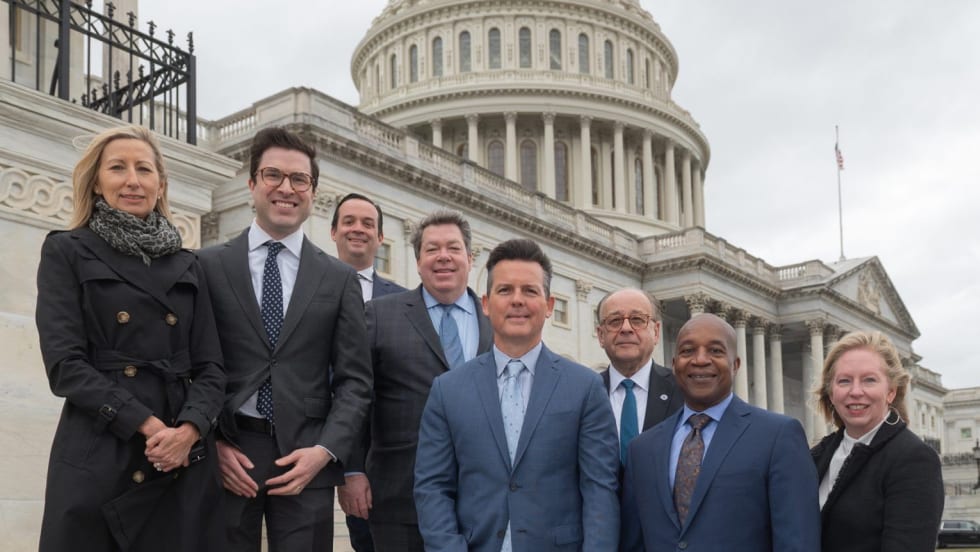
The Business Voice Behind Public Transportation
As chair of APTA’s Business Members Board of Governors, Ray Melleady explains how more than 850 business members are partnering with transit agencies to advance funding, innovation, and industry-wide collaboration.
Read More →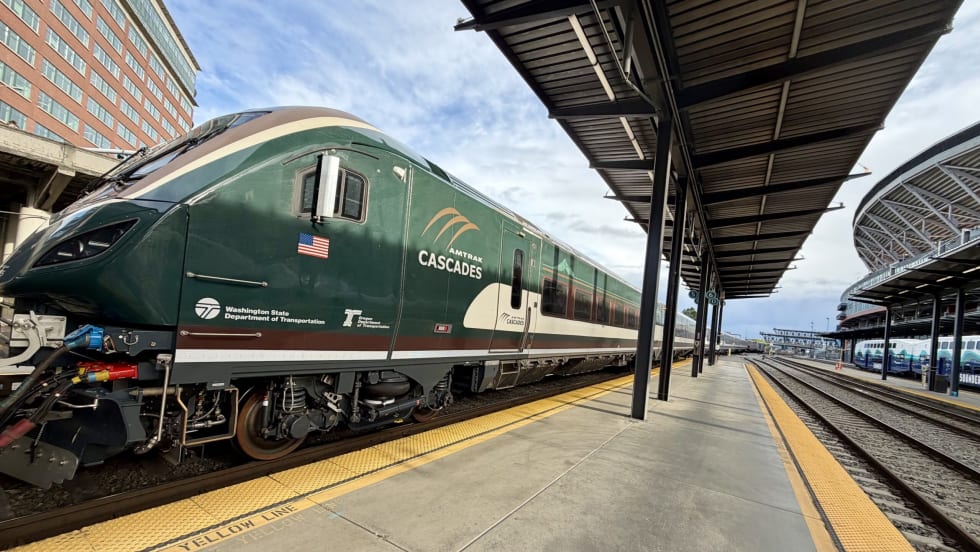
FRA Announces $5.3B in Rail Investments, Including $2B for Amtrak
Funding will support grade-crossing improvements, infrastructure upgrades, and new Amtrak equipment in 23 states.
Read More →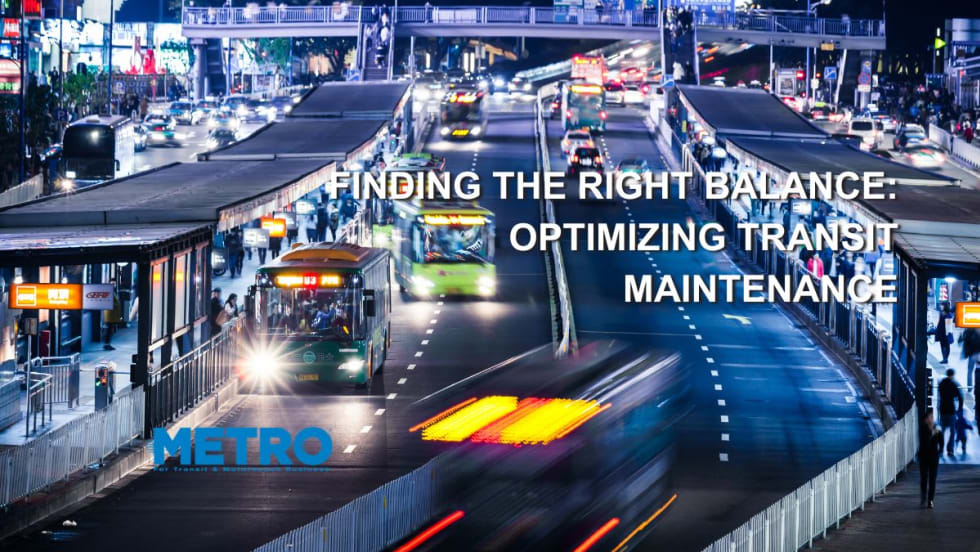
Finding the ‘Happy Medium’: Optimizing Maintenance Without Sacrificing Reliability
The key to maintenance optimization isn’t doing less work—it’s doing the right work at the right time on the right assets.
Read More →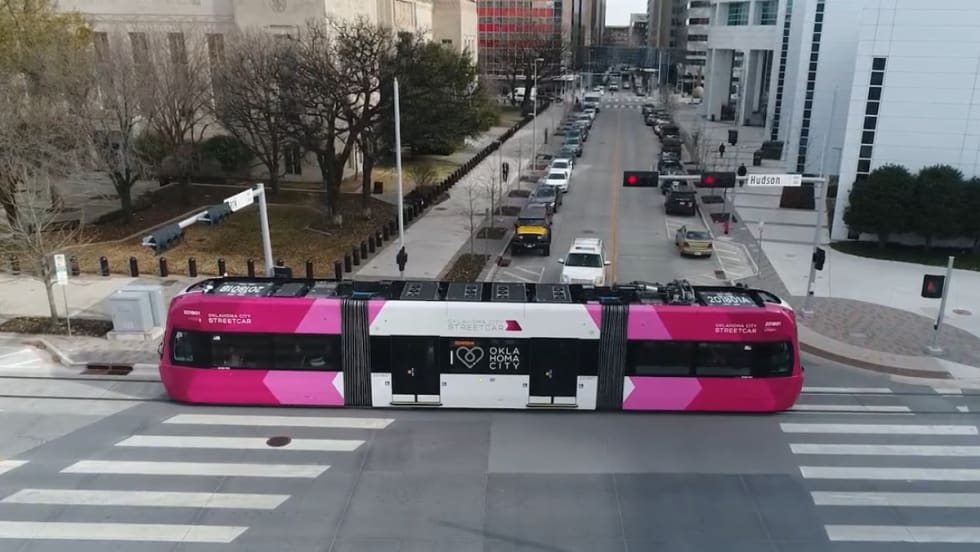
OKC Streetcar Makes Zero-Fare Service Permanent
Ridership increased an average of 71% compared with the same period a year earlier during the fare-free pilot.
Read More →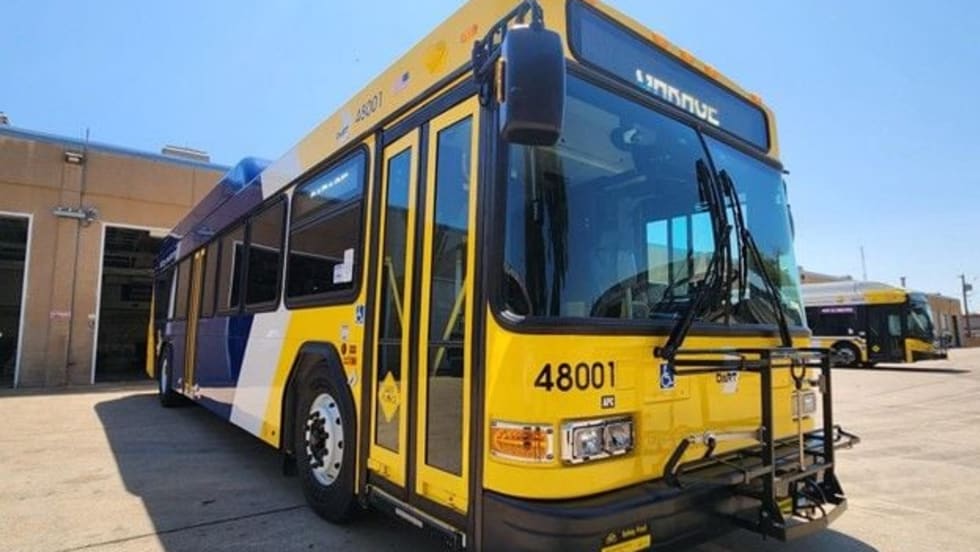
DART Customer Satisfaction Reaches Six-Year High
Overall satisfaction rose to 74.9%, while the agency’s Net Promoter Score reached a record 33.7.
Read More →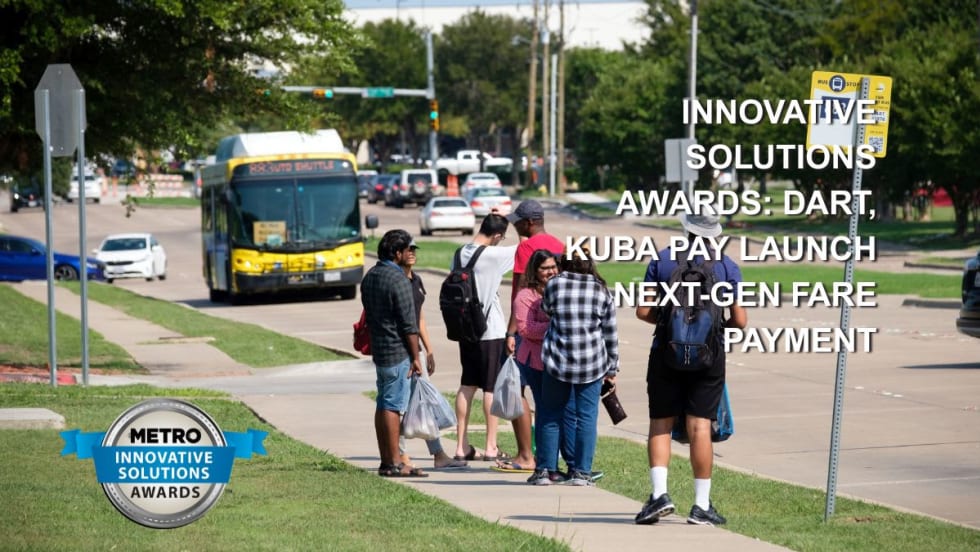
How DART's GoPass Is Redefining Regional Mobility
Serving 14 transit agencies, GoPass simplifies multimodal travel by allowing riders to plan, pay for, and manage an entire trip through one app.
Read More →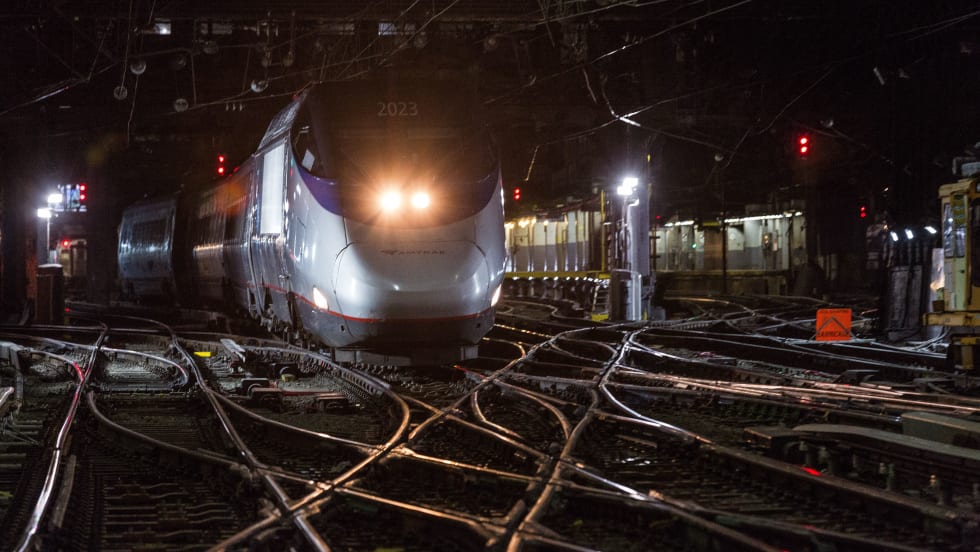
Amtrak Board Advances Plan to Restructure Organization, Seeks Public Input
The proposal, developed by Amtrak management and approved by the board for further consideration, is intended to modernize the organization's structure while improving accountability, operational efficiency, and customer service.
Read More →
Biz Briefs: STV teams with Amtrak, Motorcoach Operators Boost Fleet and Land Contracts, and More
From manufacturers and suppliers to transit agencies and motorcoach operators, these updates offer a snapshot of the projects, partnerships and business moves driving the industry forward.
Read More →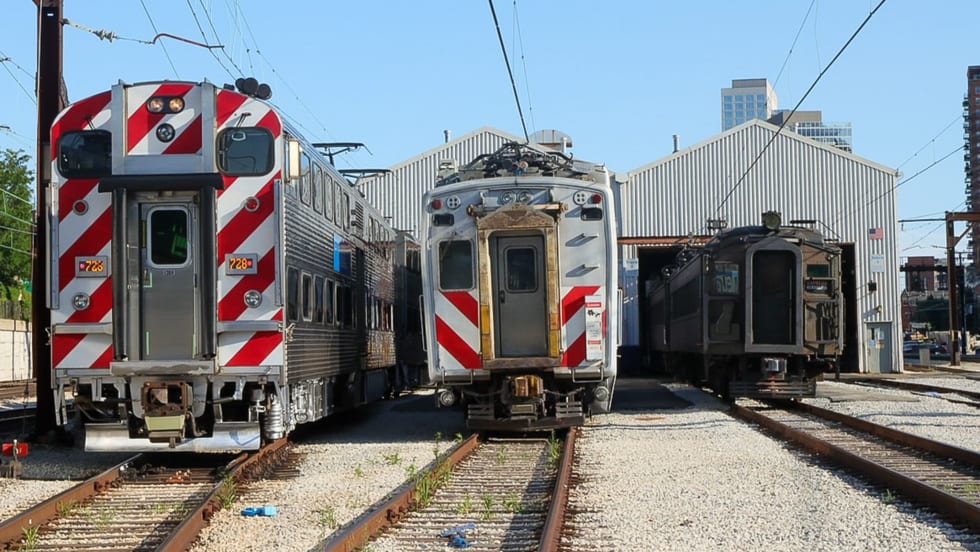
Metra Celebrates 100 Years of Electric Rail, Looks to the Future
The event was also a celebration of recent reforms to public transportation in the Chicago area, changes that could be as transformative in the future as the major civic achievement a century ago, said officials.
Read More →
LA Metro Marks Banner Year, Sets Ambitious Goals for New Fiscal Year
Incoming LA Metro Board Chair and Los Angeles Mayor Karen Bass joined outgoing Board Chair Fernando Dutra and LA Metro CEO Stephanie Wiggins to review accomplishments from fiscal year 2026, which included the opening of new rail extensions, advancement of major transit projects, expanded safety programs, and new rider amenities.
Read More →