




ICYMI: High-Speed Rail Proposal Aims to Transform U.S. Passenger Rail Investment
The Invisible Infrastructure of Passenger Flow
What a seat reservation system on Austria’s Railjet trains reveals about the future of rider experience, and why U.S. agencies should pay attention.
June 8, 2026

As ridership grows, intuitive passenger flow becomes key to a seamless end-to-end rail experience.
Credit:
Stadler/EAO/METRO
5 min to read
- The seat reservation system on Austria’s Railjet trains exemplifies advanced infrastructure aimed at optimizing passenger flow and enhancing rider experience.
- Insights from Austria’s approach could inform how U.S. railway systems manage and improve passenger experiences in terms of efficiency and comfort.
- Emphasizing the relevance of modernized reservation systems, U.S. agencies should consider similar technologies to meet future public transportation demands.
*Summarized by AI
Passengers rarely remember the technology that made a trip feel effortless.
They remember whether boarding felt chaotic. Whether they wandered the aisle searching for an open seat. If they had to confront another passenger over a reservation. Whether the train felt intuitive or stressful.
That’s the real story behind a new seat reservation system being deployed on Austrian Federal Railways’ (ÖBB) next-generation Railjet and City Airport Train fleets through a collaboration between Stadler and EAO.
On the surface, it’s a modest onboard interface project: seat displays, LED indicators, backend integration. But underneath is something transit agencies globally are wrestling with in real time. How do we move more people, more efficiently, without degrading the passenger experience?
The case study itself is deeply operational. Stadler needed a tailored seat reservation system that could integrate into compact luggage racks, reduce wiring complexity, improve installation efficiency, and lower total lifecycle costs. EAO responded with a custom Human Machine Interface (HMI) solution featuring high-visibility LED indicators, CAN bus connectivity, Ethernet integration with passenger information systems, and a simplified daisy-chain architecture.
But the more interesting story is what this project says about where rail operations are heading.
Passenger Flow is Becoming an Operational Strategy
For decades, agencies focused heavily on macro infrastructure problems: signaling, rolling stock procurement, platform capacity, scheduling, and expansion. Those challenges remain. But as systems mature and ridership expectations evolve, operators are confronting more friction.
Well, not catastrophic failures, but more likely tiny interruptions.
Passengers stopping in aisles. Confusion around reserved seating. Boarding delays that compound station dwell times. Crew members pulled into avoidable seat disputes. Riders hesitating because they can’t quickly interpret the environment around them.
Sai Janani Ramachandran, senior product manager at EAO, framed the issue bluntly: “The challenge isn’t just getting passengers onto the train, it’s enabling them to locate the correct seat quickly, confidently, and without disrupting onboard flow.”
In many transit conversations, “passenger flow” still gets treated as a station design issue through platform widths, escalators, and fare gates. Inside the train itself, movement is becoming a systems-level operational concern. As ridership rises and agencies attempt to maximize flow rate using existing infrastructure, onboard uncertainty becomes costly.
“What often gets overlooked is that passenger flow doesn’t only break down at the platform or doorway,” Ramachandran said. “It also breaks down inside the train.”
That’s especially true in hybrid service models that combine open seating, premium reserved seating, airport connectivity, and business-class offerings within the same environment. International operators have spent years refining these models. North America is only beginning to explore them seriously.

Stadler and ÖBB rely on EAOs Seat Reservation System to help riders find the right seat quickly and without disruption.
Credit:
Credit: ÖBB Marek Knopp
The Power of ‘Small’ Interfaces
One of the most revealing aspects of the project is the impact of something visually minimal, like seat indicators or color-coded displays. Seems like these are tiny interface decisions, right?
“A seat indicator may seem minor,” Ramachandran said, “but it directly influences how quickly a passenger can decide and move on.”
Ramachandran cuts to the core of modern transit design. Agencies increasingly need systems that reduce cognitive load. Every hesitation point creates ripple effects, like slowed boarding, blocked aisles, crowding near entrances, delayed departures, increased staff intervention, and ultimately a degraded perception of reliability.
The lesson here is not really about seat displays, but more about maximizing an agency’s decisions compared to the average rider. Can passengers instantly understand where to go and what to do?
If the answer is yes, systems feel smooth. If the answer is no, friction builds quickly.
This is the same logic driving innovation in airport wayfinding, stadium crowd management, and retail circulation design. Rail is now applying similar principles onboard.
Why Agencies Should Care About Total Cost of Ownership
The case study also exposes something transit technology vendors often underplay. Agencies are no longer buying isolated products in favor of maintainable ecosystems.
Ramachandran repeatedly emphasized installation efficiency, simplified wiring, energy reduction, and lifecycle economics. Stadler eliminated the need for expensive DC/DC converters by adopting a 24 VDC-only configuration, reducing component costs and display size. Direct plug integration removed the need for separate connection cables. Daisy-chain connectivity reduced installation complexity.
None of this is flashy, either. Transit agencies today face intense pressure to modernize while controlling maintenance burdens and long-term operating costs. Technologies that appear operationally elegant but create maintenance headaches rarely scale successfully.
“Agencies and OEMs evaluate the full lifecycle: ease of integration, hardware complexity, scalability, retrofit effort, power consumption, maintenance burden, and long-term support,” Ramachandran said.
That’s one reason the project feels more relevant than a typical product deployment story. It reflects a broader shift in transportation procurement toward operational resilience and maintainability rather than feature accumulation.

Smarter seat displays minimize energy use and maintenance.
Credit:
Stadler/EAO
Can This Passenger System Be Transferred to the U.S.?
The short answer is yes, although probably not in identical form.
North American rail systems have historically relied less on assigned seating than European long-distance operators, but that landscape is changing. As that happens, the same passenger-flow challenges emerge. Ramachandran argued the applicability is broader than many U.S. agencies may initially assume.
“It spans corridor services and airport connectors, premium commuter offerings, quiet or work zones, business-focused seating products, peak-hour guaranteed-seat programs, and even mixed open- and reserved-seating models within a single train,” she said.
That observation is particularly timely as agencies search for new revenue strategies. Premium offerings are becoming more attractive in a post-pandemic environment where commuter patterns remain unstable, and agencies are trying to diversify ridership and increase farebox recovery.
The technology also aligns with another growing industry reality: transit agencies are competing against consumer expectations shaped elsewhere.
Passengers compare rail experiences not only to other trains, but to airlines, rideshare apps, hospitality platforms, and digital navigation tools. Clarity, predictability, and low-friction experiences are becoming baseline expectations.
The Human Side of Operational Design
What ultimately makes the Stadler-ÖBB case compelling is that it reframes efficiency as a human experience problem. Too often, operational efficiency is discussed in abstract terms through performance metrics, but riders experience efficiency emotionally. They feel confusion, stress, hesitation, and relief.
EAO’s framing repeatedly returns to that human dimension.
“The primary goal is to improve the rider experience while avoiding the kind of preventable frustration that can erode trust in the transit brand,” Ramachandran said.
That may be the most important takeaway for agencies. The future of passenger experience may not depend entirely on billion-dollar megaprojects or revolutionary technologies. It will likely come from solving dozens of small moments of uncertainty that create friction for transit riders — invisible infrastructure that passengers barely notice because it works exactly as it should.
Subscribe to Our Newsletter
More Rail
FTA Advances $164M Broward County Commuter Rail Project
The proposed 10.5-mile commuter rail extension would connect Fort Lauderdale and Aventura, expanding passenger rail options in South Florida.
Read More →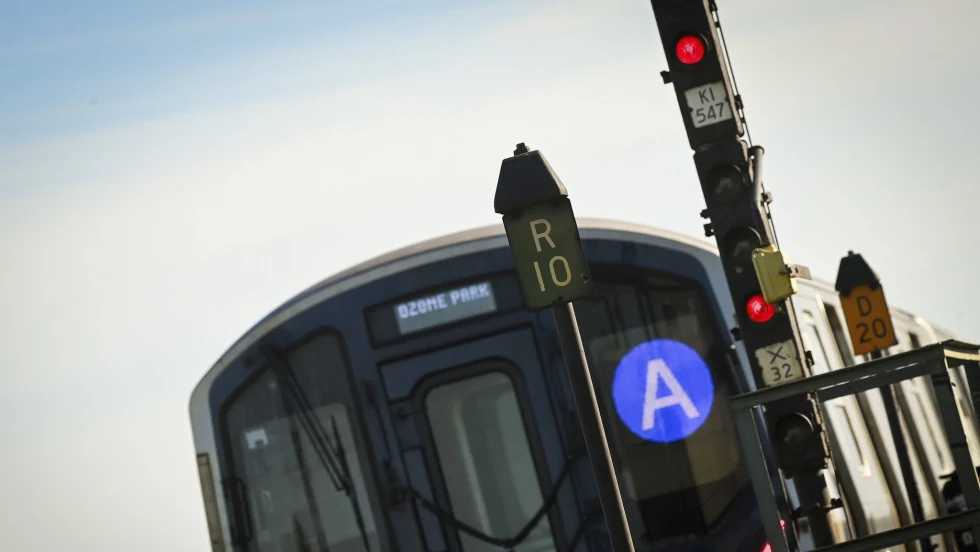
New York MTA Launches Historic $1.9B Signal, Track Modernization Project
Funded in part by congestion pricing revenue, the project will replace nearly century-old signals along the A and C lines in Brooklyn and Queens.
Read More →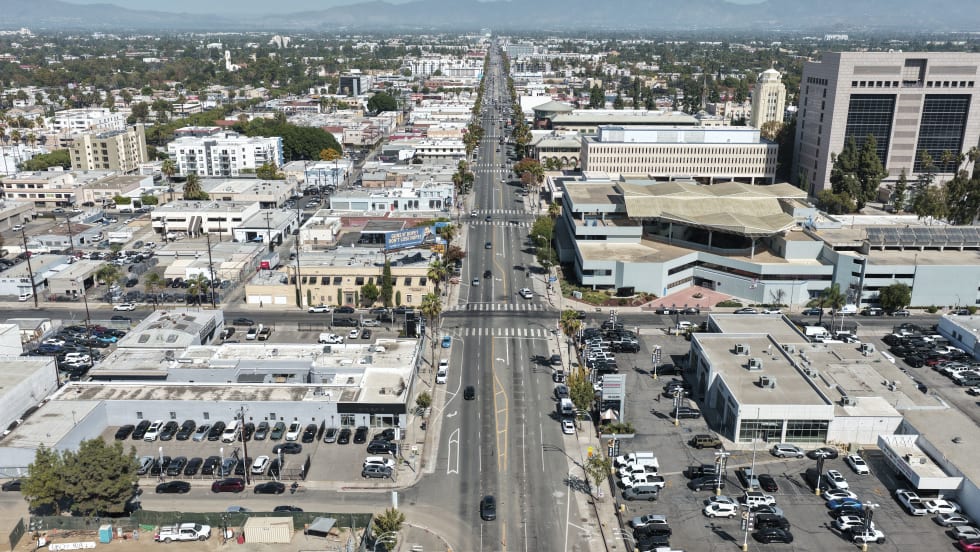
LA Metro Breaks Ground on East San Fernando Valley Light Rail Project
The 6.7-mile line will add 11 stations along Van Nuys Boulevard, expand access to jobs and regional transit connections, and support Metro’s broader efforts to improve mobility as rail ridership grows.
Read More →
CSA Group Releases Climate Resilience Standard for Transit, Passenger Rail
Developed with support from the Standards Council of Canada, CSA D700 guides assessing climate-related risks and planning adaptation measures for transit and passenger rail systems.
Read More →
LA Metro September Ridership Climbs 3.9%, Led by Rail Growth
The agency recorded more than 27.2 million boardings, with rail ridership increasing 12.4% year over year and the D Line posting the largest gains.
Read More →
First Full MetroLink Rail Expansion Completed in 20 Years with $192M Airport Project
The project links two St. Louis-area airports by light rail while adding roadway and bike trail connections to improve regional access and mobility.
Read More →
Utilimarc Launches SmartReplace to Optimize Fleet Replacement Decisions
AI-powered SmartReplace helps fleets prioritize vehicle replacements, model budget scenarios, and build more defensible long-term strategies.
Read More →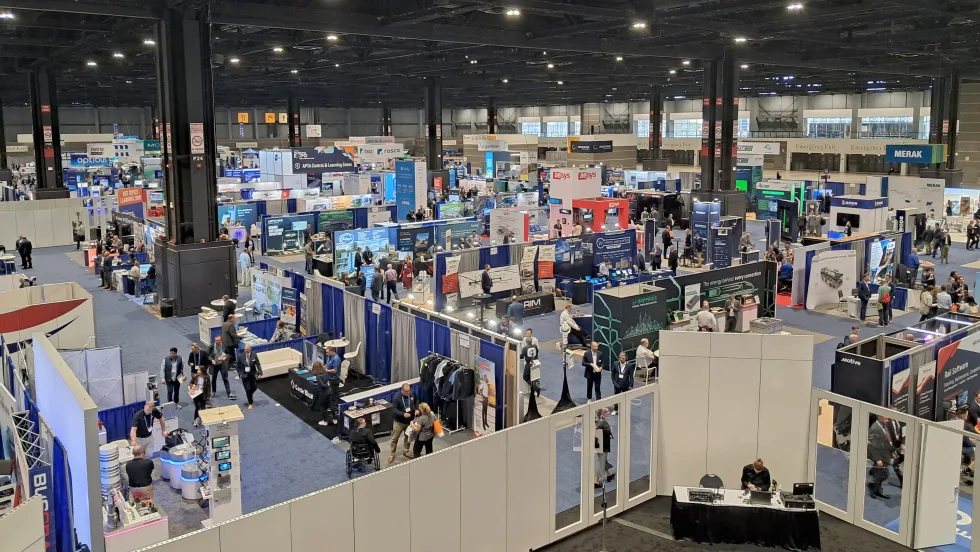
Scenes from APTA TRANSform & EXPO 2026
Transit leaders, manufacturers, and industry professionals gathered in Chicago to explore new technologies, share ideas, and discuss the future of public transportation.
Read More →
USDOT Awards $416 Million for Florida Rail Crossing Safety Upgrades, New Brightline Station
The projects aim to reduce risks for motorists and pedestrians at rail crossings while expanding passenger rail access along Florida’s Space Coast.
Read More →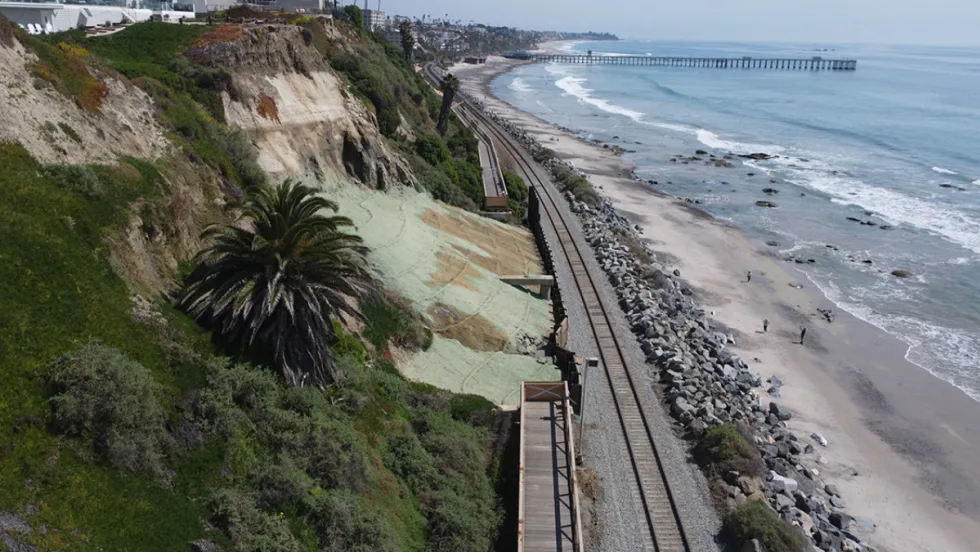
OCTA Declares Emergency to Protect Rail Corridor From Coastal Erosion
The California agency is accelerating shoreline protection and plans to place approximately 690,000 cubic yards of sand along the San Clemente coast to protect a key passenger and freight rail link.
Read More →