



Targeting Non-English Speaking Riders
Reaching out to different cultures means creating literature in different languages, offering translation services and hiring employees who help bridge the communication gap.
North American transit agencies have much experience in communicating with Spanish-speaking riders. But what happens when those who speak other languages are present in significant numbers? Anyone who wants to reach those customers can learn from the Toronto Transit Commission (TTC), where the multilingual approach is a routine part of the system’s operation. Canada’s largest city was a stiff-upper-lip British kind of place in the 1930s, but Toronto’s ethnic mix and demographics have become dramatically more varied in recent years. As the final destination for nearly half of all immigrants to Canada, Toronto seems to offer a new cultural experience with each passing block. Some observers describe Toronto as “the most multicultural city in the world,” and that statement isn’t just hype from an ad agency. “There are 62 different ethnic groups in the Toronto area with a population of 10,000 or more,” says Marilyn Bolton, director of public affairs at the TTC. “Chinese is our biggest language right now.” That’s no surprise, as the city’s Chinatown is one of the largest in the western world. Making a sincere effort to reach Mandarin and Cantonese speakers would be considered sufficient by many transit agencies, but the TTC doesn’t stop there. Toronto’s large Italian community can obtain information in its native tongue, and the area’s growing number of Indian natives will find it easy to communicate in Hindi or Tamil. Riders on Toronto’s subway lines, buses and fabled streetcars will find information and schedules in numerous other tongues. The TTC has printed transit information in 12 languages. The list includes French, Greek, Polish, Portuguese, Russian, Turkish and Vietnamese, but that is just part of the linguistic mix offered in Toronto. “We have a service that allows our agents to contact a translator,” says TTC spokesman Bob Hughes. “That’s available in 140 languages. We work with the city of Toronto. They have contract translators. We pay for the translations, but we get a reduced rate because of the volume the city generates.” In many cases, outside help isn’t needed to assist customers who speak little or no English. “At any given time, we’ll have employees who speak four or five different languages on duty at our call center,” Hughes says. The TTC’s multicultural efforts have come a long way in 15 years. “This started in the late 1980s,” Hughes says. “Naturally, there was more of an emphasis on printed materials at that time. We’re moving more toward the Web and telephone communication because information can be changed quickly.” Translation on a budget Hughes says that ingenuity rather than money has been the key to distributing information in numerous languages. “With a shoestring budget, we have to target our language efforts,” he says. “We don’t have a budget for radio advertising in any languages, but we advertise in the Chinese and Russian foreign-language newspapers. We have to be very creative in getting the message out. We’ll work with the different ethnic groups to distribute the ride guides. We’re using more pictograms in our signage.” For the TTC, reaching immigrants and others who have limited English language skills is important, as this large group relies heavily on public transportation to get to work and around Toronto. The TTC’s efforts to communicate with those who aren’t fluent in English are noticed and applauded. “People are thankful that they can get these services in languages other than English,” Hughes says. “It’s important that they can get around if they’re new to the city and don’t have a car.” This kind of attention to customers creates strong loyalty. “Some people have told us that they continued to rely on transit even when they could afford a car,” Hughes says. “That’s the biggest possible compliment they could pay to us.” The TTC isn’t resting on its laurels, as Bolton and other transit employees are alert to spot new trends in immigration and the need for foreign language assistance. “Ethiopians started coming here a few years ago,” Bolton says. Amharic is the main language for that ethnic group. Using multilingual employees Transit systems large and small need to be multilingual, as immigrants and visitors from other nations rely heavily on public transportation. At San Francisco’s Bay Area Rapid Transit (BART), brochures are printed in several different languages. “We put out brochures in Chinese, Japanese and Spanish,” says public information officer Ron Rodriguez. “The San Francisco Bay area is an international tourist and business destination.” A number of BART employees are well equipped to deal with translation requests. “We have people right here in the office who speak Tagalog, Chinese speakers in Cantonese, Mandarin and the Taiwanese dialect, French, German and Japanese,” Rodriguez says. “The BART offices sometimes sound like the United Nations.” As in Toronto, a little creativity and quick thinking can make communicating easier in San Francisco when language barriers are a problem. “The employees have developed their own little informal systems,” Rodriguez says. “A few years ago, there was a man who spoke French, but no English, at one of our stations. In less than five minutes, the agent contacted someone who spoke fluent Parisian French, and the passenger was helped. Station agents know who to call.” CTA targets Polish community The Chicago Transit Authority (CTA) has a unique language challenge, as the city is home to more than 300,000 Polish-speaking residents. It’s the largest Polish community outside of Europe, and local Polish immigrants are numerous enough to support two daily newspapers in their language along with a wide assortment of radio and TV programs in Polish. CTA spokeswoman Anne McCarthy says the agency is making strides toward communicating with Chicago’s dozens of ethnic enclaves. “We formed a Limited English Proficiency committee last year to determine how we might better reach those who speak languages other than English,” she says. “We have a brochure for Owl [late night] bus service in Polish.” That piece of information is especially vital for the Polish-speaking community, as many immigrants work evenings and nights cleaning office buildings. Once the most commonly heard foreign languages in Chicago, Polish is now second to Spanish, but the city’s Polish-speaking population shows no signs of diminishing. McCarthy says the CTA is aware of the need to reach this large group of riders. “We send material to the Polish-American Association, and they sometimes translate it,” she says. “When we came out with the magnetic fare card in 1997, a brochure was printed in Polish.” Polish isn’t the only language that CTA employees encounter. Many Chicago residents speak Chinese and Vietnamese, and dozens of other tongues can be heard during a ride on the trains. “A gentleman in our marketing department speaks Croatian and Bosnian, and he has given presentations in both those languages,” McCarthy says. Getting the message across Sometimes called the capital of the world, New York City is a magnet for immigrants and visitors. Henry Rissmeyer, chief of marketing and advertising at New York’s Metropolitan Transportation Authority (MTA), explains how the system meets the needs of local residents and the many tourists who visit the Big Apple. “The basic version of our subway map is printed in English, but we also print large quantities of maps in nine languages, including Chinese, Japanese, French, Italian, German and Korean,” he says. “Those versions definitely have appeal for tourists and people who live in the city and aren’t comfortable with English.” Maps aren’t the only way the MTA reaches customers with limited English skills. “We’ll run newspaper ads if there is service change information,” Rissmeyer says. “If it’s going to affect a community that has a large ethnic population, we’ll run the ad in Russian, Korean or Chinese-language newspapers.” Those who don’t see the ads have another opportunity to be informed in their native language. “In neighborhoods where a service change is taking place, we’ll print small, two-sided brochures in English and languages such as Chinese or Korean that are spoken in different neighborhoods,” Rissmeyer says. “They are handed out at different stations.” Providing schedules and other information in sometimes “strange” languages allows transit agencies to reach a growing market of potential long-term customers, and this trend won’t change as long as the United States and Canada remain the favorite choices of immigrants.
More Management
People Movement: Connectpoint Expands Leadership Team, Stadler Names New Group CEO, and More
In this edition, we also spotlight recent personnel moves at Burns, UZURV, and more, highlighting the people taking on new roles across the transportation industry.
Read More →
More Than a Summer Job: Building the Next Generation of Transit Talent
The Delaware River Port Authority and PATCO have transformed their internship program into a hands-on professional development experience that introduces students to the breadth of transportation careers — and creates a pipeline for future employees.
Read More →
LA Metro Board Awards 220 Battery-Electric Bus Contract to ENC
The contract, which is the largest base award of battery-electric buses by a U.S. transit agency, will be built in Southern California, sustaining good jobs as LA prepares to welcome the world in 2028
Read More →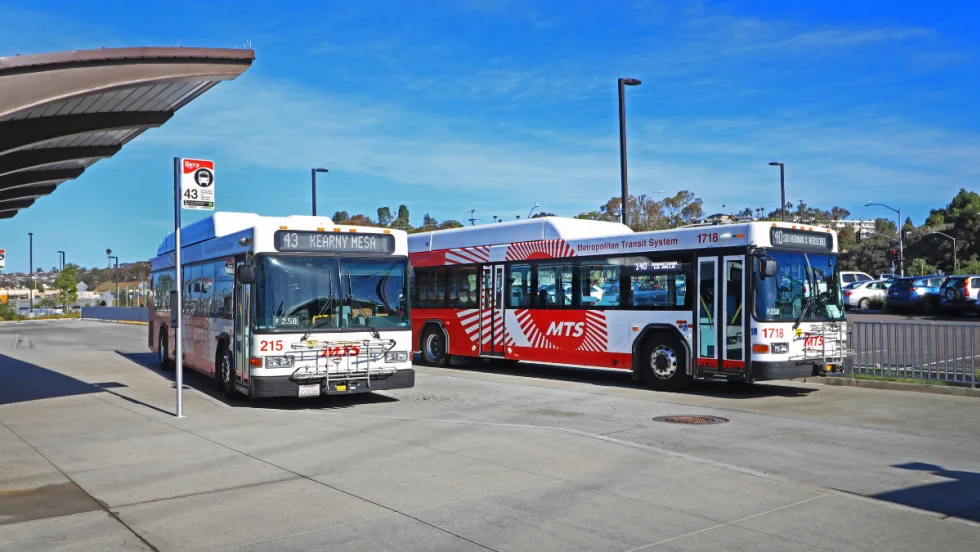
What’s Behind San Diego MTS’s Award-Winning Transit Strategy
Named one of APTA’s 2026 Outstanding Public Transportation Systems with 50 million or more annual passenger trips, California’s San Diego Metropolitan Transit System points to gains in ridership, safety, technology, and reliability as foundations of its success.
Read More →
Public Transit Conference Returning to GFX in 2027, Call for Papers Now Open
The Call for Papers is now open, allowing transit agency professionals and industry experts to help shape the PTC educational program by submitting session ideas for consideration.
Read More →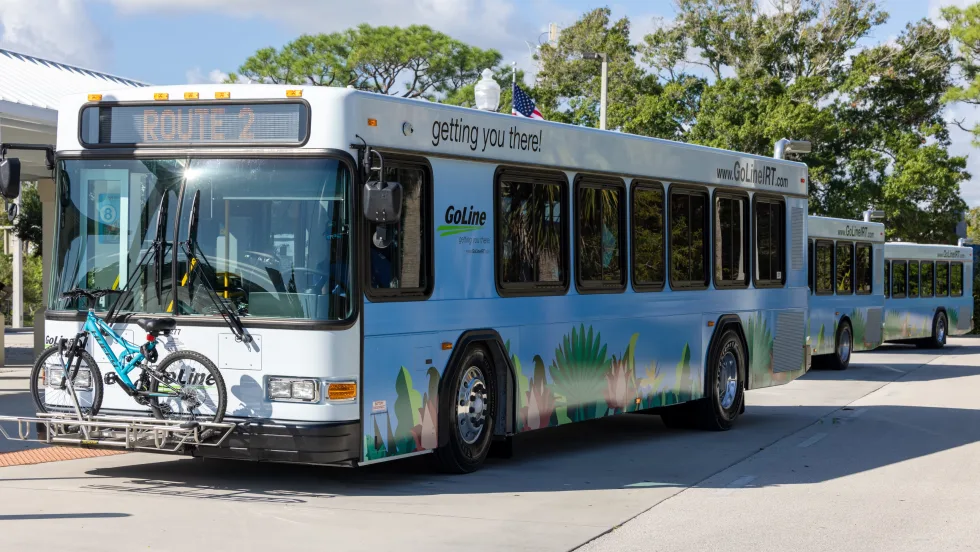
Indian River Transit’s Community-Focused Approach Earns National Recognition
Named APTA’s 2026 Outstanding Public Transportation System in its size category, Florida’s Indian River County transit system continues to grow ridership through fare-free service and a focus on evolving community needs.
Read More →
ENC Lands MATA Contract and More in Biz Briefs
In this edition of Biz Briefs, we spotlight the latest developments shaping the future of mobility.
Read More →
From Surviving to Thriving: Building Stronger Transportation Organizations
Bus Business Consultants founder Brian Dickson shares lessons on leadership, organizational health, and creating options for long-term success in a changing transportation industry.
Read More →
Everett Transit, Community Transit Outline Consolidation Agreement
The proposed agreement calls for a 50% increase in bus service in Everett, a new microtransit zone, continued paratransit service, and the transfer of Everett Transit operations to Community Transit.
Read More →
Strada360’s Steve Lassey on Turning Transit Data Into Better Decisions
From breaking down data silos to preparing for AI, Strada360 CEO Steve Lassey discusses how transit agencies can use technology to improve operations, customer information, and long-term decision-making.
Read More →