



Tech Report: Kinetic energy storage system increases efficient use of rail power
The Los Angeles County Metropolitan Transportation Authority recently completed the installation of a VYCON kinetic energy storage system at Metro’s Red Line Westlake/MacArthur Park station.
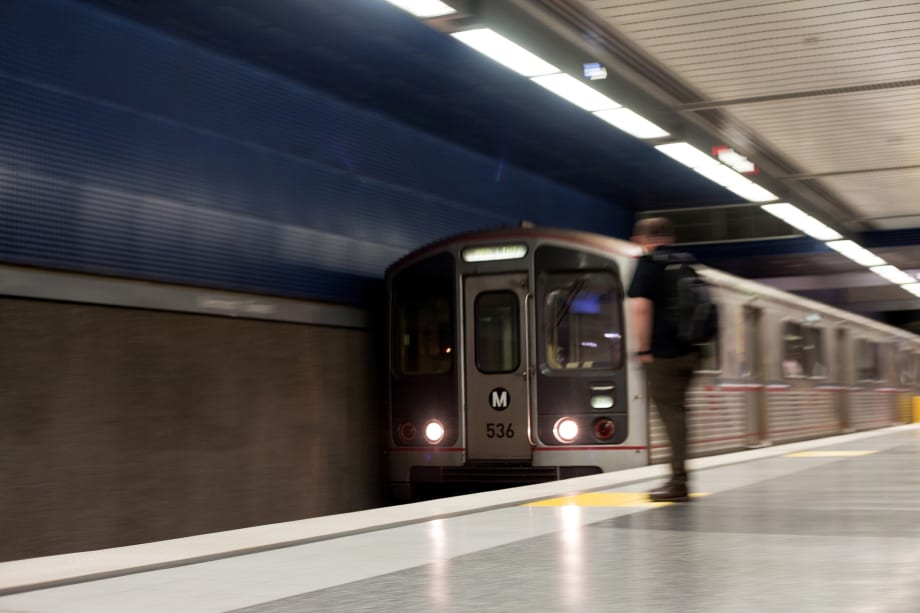
Photo courtesy L.A. Metro
Photo courtesy L.A. Metro
The Los Angeles County Metropolitan Transportation Authority (Metro) recently completed the installation of a kinetic energy storage system at Metro’s Red Line Westlake/MacArthur Park station.
The equipment, provided by Southern California-based flywheel power solution developer, VYCON, is being used in Metro’s Wayside Energy Storage Substation-WESS Project.
The project will demonstrate how VYCON’s green regenerative technology stores energy generated by braking trains and redistributes that energy to rail lines to accelerate trains — vastly improving energy usage that otherwise would be wasted in the form of heat.
“When a train comes into a station, much like when a hybrid car is braking, the motors in that train actually become regenerators, so they are actually generating the power, which is braking the train, and that power is being transmitted through this traction power station,” explained Frank DeLattre, president of Vycon. “Normally, if you don’t have anywhere to put that energy, you would have to dissipate it with resistor banks, which burns off the electricity and converts back to heat.”
Peak Power
In addition to energy recycling, VYCON’s REGEN also captures the DC train’s power and uses it to reduce peak power demands in the system and provide voltage support where low voltages are critical during operation. The peak power and voltage support capabilities are at their greatest during rush hours when the utility power demands are at a premium price.
“Typically, utility companies penalize customers who have these types of conditions where they are constantly drawing peak power, so with the flywheels being there it eliminates the need to have the peak power at that particular substation because of the fact it’s coming from the flywheels instead of the utility,” DeLattre said. “Ultimately, what benefits both Metro and the taxpayer is the energy savings to be had with the energy storage.”
The VYCON system stores kinetic energy in the form of a rotating mass and is designed for high power, short discharge applications. Patented technology used within this system includes a high-speed motor/generator, contact-free magnetic bearings used to levitate and sustain the rotor during operation, and a control system that provides system information and performance. These technologies enable the VYCON system to charge and discharge at high rates for hundreds of thousands of cycles, making it an ideal energy storage solution for electric rail applications.
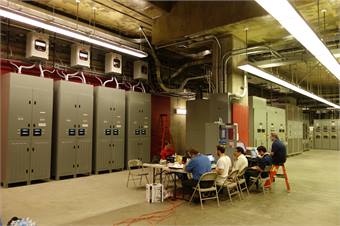
VYCON completed installation of its kinetic energy storage system on a portion of L.A. Metro’s Red Line in March and is set to be finished fine-tuning the control system on the flywheels to maximize the energy storage levels by May.
Collaboration
Metro began collaborating with VYCON on the project several years ago, with the two presenting a paper on the amount of energy that could be saved through the installation of an energy storage system at 2008’s APTA EXPO. Further down the road, the company performed a cost-versus-benefits analysis of five different Los Angeles stations, before eventually being awarded a $3.6 million contract in November 2012, for the supply of the main core equipment and the commissioning of the entire system.
The project was funded by a $4.4 million FTA grant under the Transit Investments for Greenhouse Gas and Energy Reduction (TIGGER) Program.
The company completed installation of its solution in March. As of May, VYCON was still fine-tuning the control system on the flywheels to maximize the energy storage levels, explained DeLattre. The system is expected to store 6 megawatts of power.
He added that since the Metro installation was a first-of-its-kind project, there was quite a bit of non-reoccurring engineering to develop the solution and controls, which, having now been completed, will result in the solution being more economically feasible for next installation or expansion of the solution.
More Rail
Amtrak, CN Reach Agreements to Strengthen Passenger Rail Service, Safety
The agreement resolves a more than decade-long proceeding before the Surface Transportation Board concerning the terms and conditions for Amtrak services, such as the City of New Orleans, Illini/Saluki, and Wolverine.
Read More →
New York MTA Advances Final Contract for Second Avenue Subway Expansion
Contract Four is the largest in the Second Avenue Subway Phase 2 project and includes construction of station infrastructure, tracks, and signals for the subway expansion, MTA officials said. Work on Contract Four will begin in 2027.
Read More →
San Diego MTS Breaks Monthly Trolley Ridership Record
Agency officials said July’s ridership indicates MTS’s continued recovery from the pandemic.
Read More →
Report Examines NJ TRANSIT Reliability, Funding Challenges
The Garden State Initiative analysis examines the roles of Amtrak infrastructure, fleet management, and agency operations while recommending a more performance-based approach to improving reliability.
Read More →
Stadler, CapMetro Sign Long-Term Rail Fleet Support Agreement
Beginning in 2027, Stadler will provide on-site technical expertise, spare parts support, training, and obsolescence management to help extend the reliability and longevity of CapMetro’s GTW fleet.
Read More →
Biz Briefs: Alstom Lands Canadian Contract, LYT to Supply California TSP, and More
In METRO's latest installment, we take a look at recent news from Complete Coach Works, Beep, FlixBus, and more partnerships making headlines across the transportation sector.
Read More →
CATS Gold Line Marks 5 Years of Service, 2.8M Passenger Trips
With a six-mile expansion planned, the Charlotte streetcar is positioned to connect more neighborhoods and major transit hubs across the region.
Read More →
Why Simulating Pedestrian Movement Has Become Essential for Modern Rail Stations
Pedestrian microsimulation is helping rail planners identify bottlenecks, test station designs, and prepare complex transit hubs for growing passenger volumes.
Read More →
Amtrak Begins Major Construction at New York’s Sunnyside Yard
The new maintenance facility will support Amtrak’s Airo trainsets while improving maintenance efficiency and turnaround times in New York.
Read More →
Chicago Leaders Unveil Plans for O’Hare Airport Express Train
The privately developed project would offer a 15-minute trip between downtown and O’Hare’s Terminal 2, with trains operating every 15 minutes on a dedicated track. The service would use battery-electric trains and three existing freight rail rights-of-way.
Read More →