



The Evolving Role of Program Management in Transit Delivery
Brian Buchanan, HDR’s transit program management lead, discusses how agencies can strengthen governance, anticipate risk and deliver large-scale projects more effectively.

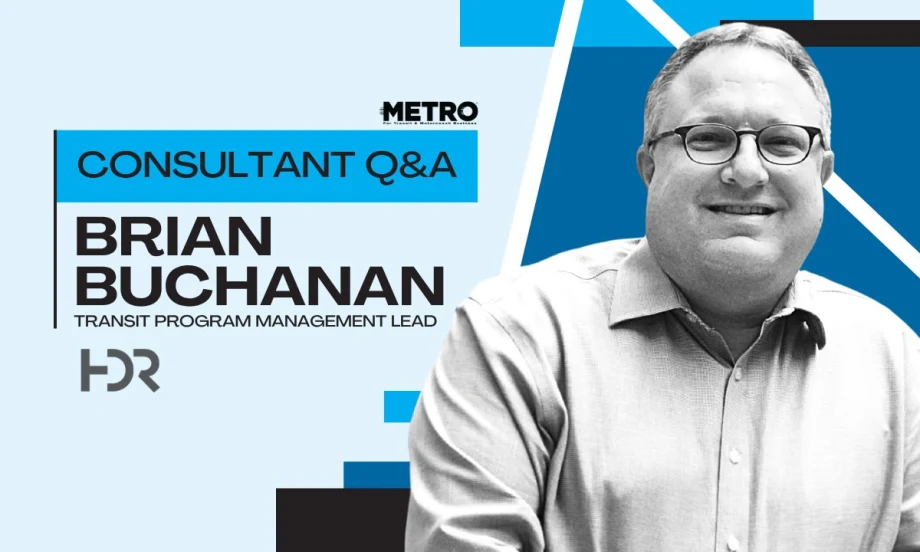
With a background that includes leading major initiatives such as Austin’s Project Connect light rail program and the $1.4 billion Phoenix Light Rail New Starts project, Brian Buchanan has deep expertise in federal and local funding processes, multi-jurisdictional project delivery, and long-range strategic planning.
HDR/METRO
- Brian Buchanan emphasizes the importance of strengthening governance in transit program management to improve project outcomes.
- Agencies are encouraged to anticipate and mitigate risks to enhance the effectiveness of delivering large-scale transit projects.
- Effective management in transit delivery involves adopting strategies that streamline processes and improve overall efficiency.
*Summarized by AI
Brian Buchanan, HDR’s transit program management lead, brings extensive experience delivering complex, large-scale transportation programs nationwide. Based in Columbia, South Carolina, Buchanan works across HDR’s transit and program management practices to support multifaceted projects, including bus rapid transit, streetcars, commuter rail, light rail, and heavy rail.
With a background that includes leading major initiatives such as Austin’s Project Connect light rail program and the $1.4 billion Phoenix Light Rail New Starts project, Buchanan has deep expertise in federal and local funding processes, multi-jurisdictional project delivery, and long-range strategic planning.
In this Consultant Roundtable, Buchanan talks about the challenges and opportunities shaping transit program delivery and how agencies can successfully navigate increasingly complex capital programs.
Challenges and Large, Complex Capital Programs
Q: From your perspective, what are the biggest challenges transit agencies face today in managing large, complex capital programs?
Buchanan: I think the biggest challenge right now is that capital programs have never been more visible — or more complicated. It’s not just about delivering a rail line or a bus facility anymore. These programs are directly tied to long-term regional growth, economic competitiveness, and community development. That’s a broader mandate than we saw even a decade ago.
At the same time, agencies are navigating funding that can be episodic or politically sensitive, supply chains that are still stabilizing, and construction markets that remain highly competitive. You can have a well-scoped program, but if steel prices shift dramatically or key system components are delayed, the ripple effect can impact the entire portfolio.
Another challenge is stakeholder alignment. These programs affect property, traffic, jobs, and neighborhood character. Agencies must balance technical execution with public expectations and long-term stewardship. Managing that intersection of engineering, finance, governance, and community priorities is where disciplined program management becomes essential.
Q: How has HDR adapted its program management approach to help clients manage supply chain volatility and cost escalation?
Buchanan: We’ve had to become much more proactive and forward-looking. The traditional model of setting a baseline and updating it periodically just isn’t sufficient in a volatile market.
We’re helping clients build dynamic cost and schedule models that account for escalation, commodity risk, and supplier constraints from the outset. Instead of reacting to cost increases, we’re working with agencies to anticipate them — identifying long-lead materials early, evaluating alternative technical solutions, and in some cases advancing procurement strategies to lock in pricing.
We’re also placing greater emphasis on collaborative delivery models. Bringing contractors into the process earlier — through progressive design-build or similar approaches — helps validate cost assumptions and improve constructability before major commitments are made.
But beyond the technical tools, one of the biggest shifts has been how we position ourselves alongside our clients. We’re not just overseeing delivery — we’re becoming strategic partners. That means embedding within the organization, understanding its governance structure, risk tolerance, and long-term objectives. We become part of the agency's fabric, engaging in strategic thinking rather than operating at arm’s length.
Where that really pays dividends is in knowledge transfer. We’re intentional about building internal capability as we deliver programs — sharing tools, frameworks, and decision-making methodologies, so teams grow in skill set and confidence. The goal isn’t dependency; it’s strengthening the organization’s ability to manage complexity over the long term.
At its core, it’s about strengthening governance and decision discipline while building institutional resilience. Agencies need reliable data, defined risk thresholds, and clear escalation protocols — but they also need teams who are confident in using them. That’s where the partnership model makes the difference.
Changing Perceptions, Better Managing Programs
Q: What’s one misconception agencies often have about program management that you wish would change?
Buchanan: A common misconception is that program management is primarily about reporting — dashboards, schedules, and monthly updates. That’s the visible component, but it’s not the real value.
Effective program management is strategic. It aligns long-term objectives with day-to-day execution. It integrates funding strategy, procurement methods, technical standards, stakeholder coordination, and risk management into a cohesive delivery framework.
When agencies treat program management as administrative oversight instead of a strategic capability, they limit its potential impact. The strongest programs are those where program management is embedded at the leadership level — helping shape decisions, not just document them.
Q: Looking ahead, what capabilities should transit agencies build internally to better manage increasingly complex programs?
Buchanan: Data fluency will be critical. Agencies need teams that can interpret cost trends, risk profiles, and performance metrics in real time. Digital delivery platforms — BIM, integrated cost and schedule systems, portfolio dashboards — are becoming foundational tools for managing large programs effectively.
Enterprise risk governance is another key capability. Agencies should continue maturing their ability to quantify risk, prioritize mitigation strategies, and establish clear decision pathways tied to measurable triggers.
Finally, leadership development is essential. Future program leaders need to operate confidently across engineering, finance, procurement, and public engagement. Large transit programs shape communities for generations. Agencies that invest in building multidisciplinary leadership capacity will be better positioned to deliver resilient, high-performing infrastructure that stands the test of time.
Quick Answers
Program management is crucial in transit delivery as it strengthens governance, helps anticipate risks, and ensures the effective and timely execution of large-scale projects.
*Summarized by AI
More Management

LA Metro Board Awards 220 Battery-Electric Bus Contract to ENC
The contract, which is the largest base award of battery-electric buses by a U.S. transit agency, will be built in Southern California, sustaining good jobs as LA prepares to welcome the world in 2028
Read More →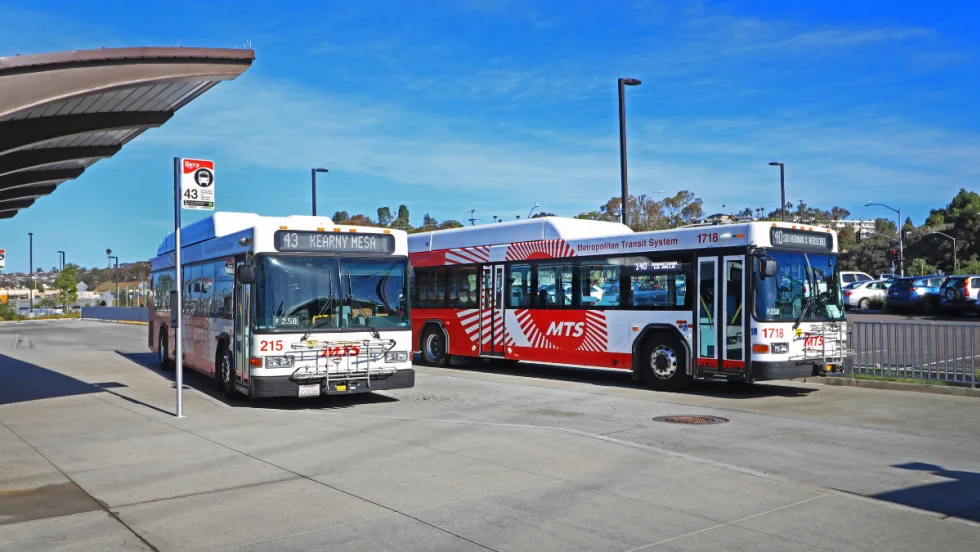
What’s Behind San Diego MTS’s Award-Winning Transit Strategy
Named one of APTA’s 2026 Outstanding Public Transportation Systems with 50 million or more annual passenger trips, California’s San Diego Metropolitan Transit System points to gains in ridership, safety, technology, and reliability as foundations of its success.
Read More →
Public Transit Conference Returning to GFX in 2027, Call for Papers Now Open
The Call for Papers is now open, allowing transit agency professionals and industry experts to help shape the PTC educational program by submitting session ideas for consideration.
Read More →
Indian River Transit’s Community-Focused Approach Earns National Recognition
Named APTA’s 2026 Outstanding Public Transportation System in its size category, Florida’s Indian River County transit system continues to grow ridership through fare-free service and a focus on evolving community needs.
Read More →
ENC Lands MATA Contract and More in Biz Briefs
In this edition of Biz Briefs, we spotlight the latest developments shaping the future of mobility.
Read More →
From Surviving to Thriving: Building Stronger Transportation Organizations
Bus Business Consultants founder Brian Dickson shares lessons on leadership, organizational health, and creating options for long-term success in a changing transportation industry.
Read More →
Everett Transit, Community Transit Outline Consolidation Agreement
The proposed agreement calls for a 50% increase in bus service in Everett, a new microtransit zone, continued paratransit service, and the transfer of Everett Transit operations to Community Transit.
Read More →
Strada360’s Steve Lassey on Turning Transit Data Into Better Decisions
From breaking down data silos to preparing for AI, Strada360 CEO Steve Lassey discusses how transit agencies can use technology to improve operations, customer information, and long-term decision-making.
Read More →
People Movement: Phil Washington Joins HNTB, Denver RTD Launches CEO Search, and More
In this edition, we also spotlight recent personnel moves at STV, the Eno Center for Transportation, and more, highlighting the people taking on new roles across the transportation industry.
Read More →
SEPTA Details Accelerate Vision for Transit System
The plan outlines investments in trolley modernization, new Metro and Regional Rail vehicles, accessible stations, and more frequent bus and rail service.
Read More →