



Intercity Bus Lines Make Big Moves, Heightening Competition and Customer Choice
The Road for Intercity Bus Lines Riddled with Hazards Until Summer
Cash shortfalls will make the next four or five months a tumultuous time, particularly for scheduled bus lines with asset-intensive business models.
by Joseph Schwieterman
April 15, 2021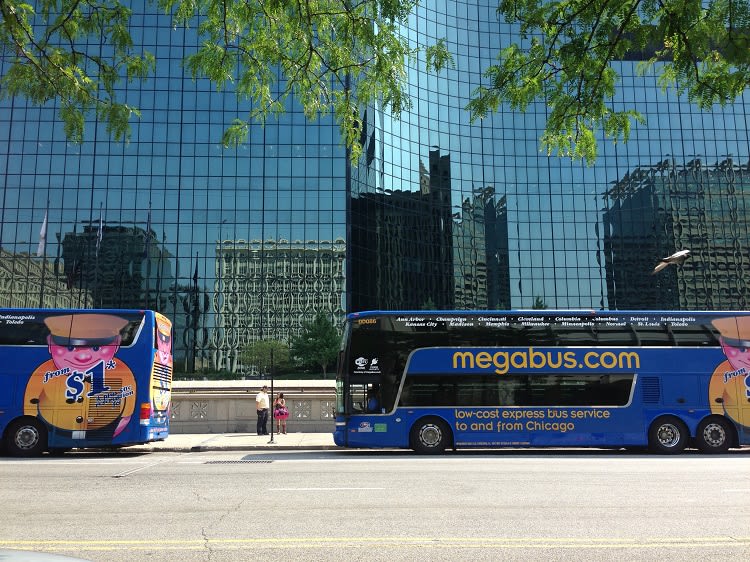
According to the Chaddick Institute for Metropolitan Development, the sector appears poised to regain its vitality once the pandemic is behind us.
Credit:
Megabus/Chaddick Institute
5 min to read
The road ahead for the country’s intercity bus industry will be riddled with hazards through mid-summer. Cash shortfalls will make the next four or five months a tumultuous time, particularly for scheduled bus lines with asset-intensive business models.
We make these and other warnings in our new study, “On the Brink: 2021 Outlook for the Intercity Bus Industry,” the latest in DePaul University’s annual review of the scheduled motorcoach sector. Although we are optimistic about the sector’s long-term potential, major bus lines, such as Greyhound, Megabus, Peter Pan, and Flixbus, smaller carriers as well must first get through the pandemic.
Bookings Still Sluggish
Scheduled bus lines have been jostled by more than their share of setbacks since the pandemic began. These common carriers have fared poorly compared to airlines, passenger railroads, and mass transit in recent federal bills providing financial relief to transportation industries.
The Coronavirus Economic Relief for Transportation Services Act, enacted in late December 2020, provides temporary relief for the ailing intercity bus industry. The amount of financial support set aside for motorcoaches in this legislation, however, is relatively meager. It includes just $2 billion to be divided up between all types of motorcoach operators (including charter and tour companies), private school bus operators, and passenger maritime vessels.
“The amount was far short of the $10 billion that motorcoach advocacy groups requested,” noted Crystal Bell, one of the study’s co-authors.
We estimate that revenue losses to scheduled intercity bus operators in the first year of the pandemic alone will exceed $1.5 billion, with more heavy losses coming in the second year. Several carriers, like Lakefront Lines, have already shut down. Still, the federal help does come at a pivotal time and will partially close a financial gap that has left many bus lines teetering on a financial cliff.
The slow pace of the recovery casts a shadow on the sector’s near-term prognosis. Bookings on scheduled bus lines, such as Greyhound, Megabus, and Peter Pan, ended the last calendar year in the Northeast region at just 16% of the previous year’s levels and at 24% of last year in the West, based on data provided to our study team from Transcor. Bookings were somewhat stronger in other parts of the country, at 32% to 38% of last year.
Amid such turbulence, we believe the next six months could see a “downsizing event,” in which a major carrier or series of small carriers cut back and dispose of equipment. How and when such a contraction occurs is impossible to predict — let’s hope it can be avoided — but it would hurt the mobility for many travelers who cannot afford or choose not to drive.
Our study nonetheless points to encouraging signs. The sector appears poised to regain its vitality once the pandemic is behind us. We expect a sharp turnaround starting in late July, when summer travel kicks into gear and vaccines have become widely disseminated to all age groups. Almost all universities should return to in-person classes shortly thereafter and the downtown districts of major cities should gradually return to life.
“We’re optimistic that many carriers can generate the cash and gain access to the loans and grants they need to cover the expenses until a summer recovery,” notes Brian Antolin, another co-author of the study, adding that “booking activity could be back to 60 percent of pre-pandemic levels by the end of summer, compared to only 20 to 25 percent nationwide today.”
Optimism Abound
The policies of the Biden Administration could result in a more forceful federal response to the industry’s financial losses. President Biden is regarded as a champion of Amtrak and will likely push for sustained investments in Amtrak and public transit, beyond that in the recent stimulus bill.
This is likely to include more targeted efforts to leverage the combined strength of the bus and rail systems. That could mean funds for new or improved intermodal transportation centers, matching funds for bus routes into underserved areas, and more extensive use of buses to complement Amtrak service in corridors.
Coordinated bus/rail schedules are proving to be a winning strategies in California, Michigan, Oregon, and other states, which have large built “Amtrak Thruway” networks made possible by state direction and investment. Such integration of rail and bus service helps stabilize the large system of bus routes supported by interline agreements that are sold on the Greyhound computer reservation system and available on greyhound.com and through its partner carriers. “New strategies will be needed to sustain service on thinly traveled routes,” notes Bell.
Strengthening the Transportation Network
We warn in our report that the national bus network that encompasses many carriers and is sold on greyhound.com and at ticket counters at hundreds of bus stations needs help. On secondary routes, our data show, the duration of trips on the network has lengthened markedly over the past several years, partially due to pandemic-related schedule cuts. In our evaluation of 180 secondary routes that lack Amtrak or direct express coach service, the length of the average trip increased almost an hour between 2016 and 2021.
Much of the slowdown was due to the need to wait longer for connecting buses at transfer points and the vehicles having to make more stops. We are hopeful that, as demand rebounds, much of the service that was cut will be restored. Whether — or how quickly — that happens remains to be seen.
The Chaddick Institute at DePaul pushes a free quarterly e-newsletter on intercity bus travel. To join the listserv (no spam), obtain a copy of our study (free download), or reach the study team, email chaddick@depaul.edu or visit chaddick.depaul.edu.
Joseph Schwieterman, Ph.D., is Professor and Director of the Chaddick Institute for Metropolitan Development at DePaul University in Chicago.
Subscribe to Our Newsletter
More Motorcoach

From Surviving to Thriving: Building Stronger Transportation Organizations
Bus Business Consultants founder Brian Dickson shares lessons on leadership, organizational health, and creating options for long-term success in a changing transportation industry.
Read More →
Report: Canadian Motorcoach Industry Generates $4.4B in Economic Impact
The 2025 Motorcoach Economic Impact Report finds motorcoach travel supported nearly 25,000 jobs and generated $980 million in federal, provincial, and local taxes.
Read More →
Prevost Opens Expanded Chicago-Area Service Center
The $8.1 million Elk Grove Village investment nearly triples facility space while adding service capacity, parts storage, and customer amenities.
Read More →
People Movement: Dan Dipert Coaches Adds Third-Generation Leader, Keolis Names New Valley Metro VP/GM, and More
In this edition, we also cover recent appointments and announcements at the Wabtec, SilverRide, HNTB, and more, showcasing the individuals helping to shape the future of transportation.
Read More →
METRO Opens Submissions for 2026 Motorcoach Awards
Nominations are now being accepted for METRO Magazine’s Operator of the Year and Innovative Operator of the Year awards.
Read More →
Biz Briefs: Alstom Lands Canadian Contract, LYT to Supply California TSP, and More
In METRO's latest installment, we take a look at recent news from Complete Coach Works, Beep, FlixBus, and more partnerships making headlines across the transportation sector.
Read More →
Biz Briefs: RIPTA Unveils New Frontrunners, Clevland RTA Adds New Siemens, and More
In METRO's latest installment, we take a look at recent news from Siemens, Prevost, Dodge, and more partnerships making headlines across the transportation sector.
Read More →
People Movement: Holly Arnold Joins Transdev and More
In this edition, we also cover recent appointments and announcements at Pace, CamTran, MCI, and more, showcasing the individuals helping to shape the future of transportation.
Read More →
ABA Report: Motorcoach Travel Generates $161.6B Economic Impact
The 2025 analysis finds motorcoach travel supported nearly 900,000 jobs and generated $28 billion in federal, state, and local taxes.
Read More →
CharterUP’s Armir Harris on Technology, AI, and the Future of Group Mobility
In a recent episode of METROspectives, CharterUP Founder/CEO Armir Harris discussed the company’s evolution from an online charter bus marketplace into a technology platform supporting public- and private-sector mobility and much more.
Read More →