



The Road to Motorcoach Refurbishment
Buying a new motorcoach to replace an aging vehicle is not always financially possible, but refurbishment can be a viable alternative. Choosing the right company, considering financing options and making a detailed refurb plan are essential to getting the most out of your coach.
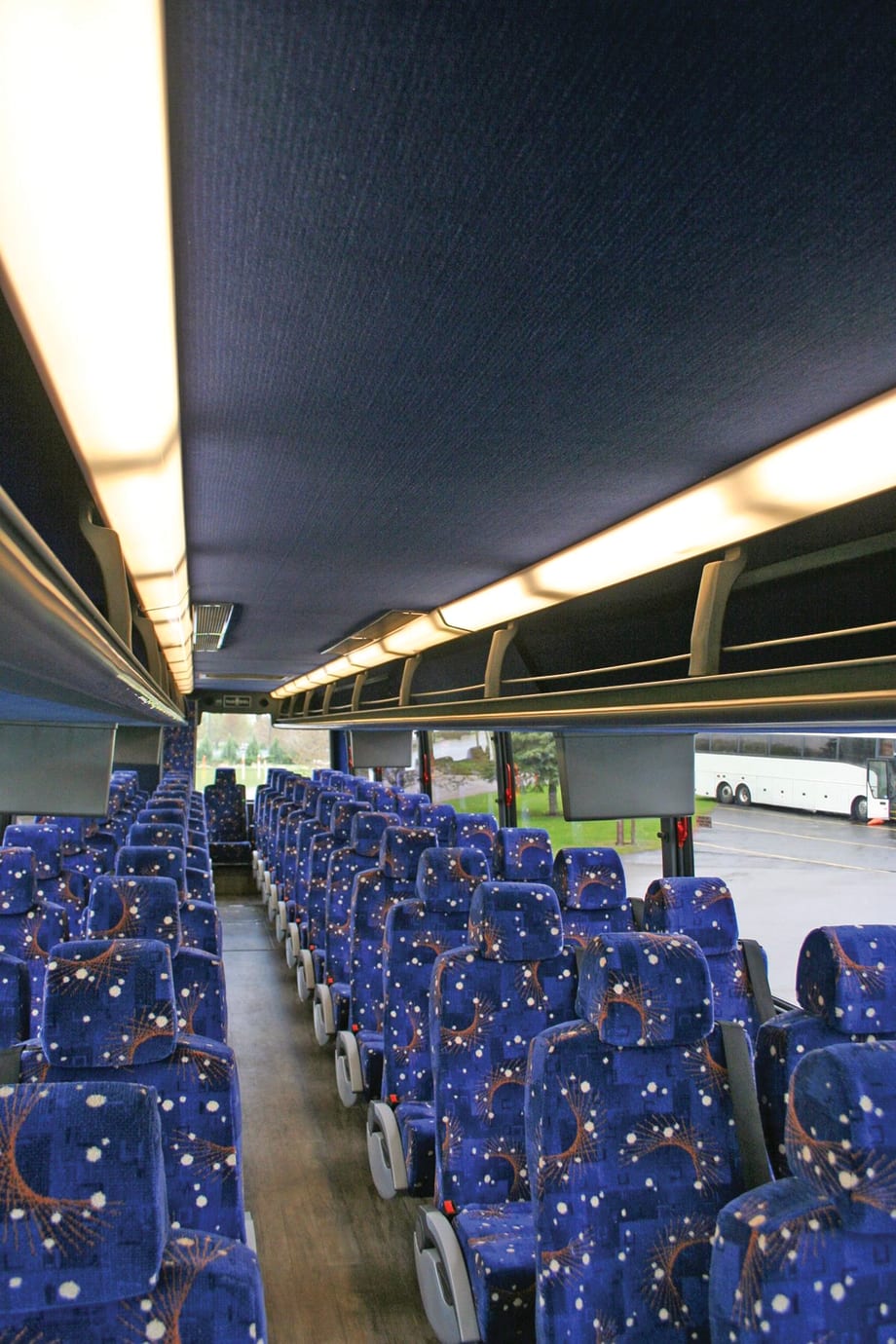
For the typical operator, purchasing brand new motorcoaches to replace an aging fleet is simply not a possibility. But, refurbishment can give new life to a worn out coach for about one-third the cost of a new vehicle, and the refurbishment process can cover structural, mechanical and even cosmetic issues.
So, how do you know if refurbishment is right for your fleet? METRO Magazine spoke with leaders in the refurbishment industry to find out what kinds of operators will benefit from this service.
Is your coach a candidate?
Operators want to know if they are getting the value they want if they put money into updating an older coach. Big Rig Collision Group (BRC) VP, Business Development, Rob Pek says that operators must take a hard look at the condition of the vehicle to make that decision.
“If the bus is up to sound safety standards mechanically, then it probably does make a good candidate for refurbishment,” he explains. “But if they have to go in and rebuild the bus mechanically — new engine, new transmission, electrical work, as well as brakes, suspension, etc. — then you really have to ask yourself: does it make sense to put a couple hundred thousand into a 12-year-old bus?”
On average, the cost to remanufacture a coach is $125,000 while a new coach will typically cost $400,000, according to statistics provided by CoachCrafters Inc. Besides the difference in costs, though, operators need to consider whether or not they can have a coach out of service for the two months it usually takes to complete the refurbishment process.
“The majority of our buses are supplied by customers,” says Wayne Wolf, VP of Coachcrafters. “This may not be practical for many smaller motorcoach operators who don’t have the luxury of having several coaches down for six weeks.”
Loaner vehicles available
Having a coach in the shop for two months can become a major inconvenience for operators. However, it doesn’t have to be a deal breaker, according to Pek.
Although BRC does not sell refurbished coaches, it does have a small fleet of repaired vehicles that it loans out to clients.
“We do have three coaches that we’ve acquired over the years that have been in collisions. We repaired the coaches, and now, we loan them out as part of a rental fleet,” says Pek. “If we have a client that brings in a bus, either for refurbishment or repair, and they’re short a bus in their rotation, we lend them or lease them back our refurbished bus. It works well as a client perk for us.”
Determine the ‘scope of work’
Once an operator has decided to refurbish a vehicle, the chosen refurbisher will start “the process of determining the scope of work,” says Louis Hotard, director of technical services for ABC Companies.
In many cases, the geographic location of the vehicle will determine what needs to be attended to. In snowy regions, “those coaches will traditionally see more corrosion challenges,” Pek says. “So, a lot of what we’ll do for that coach is the usual structural repairs.”
BRC will often start by cleaning up dents on the body of the vehicle and replacing the panels and rear wheel tubs. Corrosion, Pek points out, can start under the vehicle flooring — especially in high-traffic areas where passengers are tracking in corrosive elements from outside.
“Once corrosion starts, you can’t stop it,” he explains. “You literally have to go in there, and in a lot of cases, replace the entire steel structure to bring the integrity of the coach back to OEM-like conditions.”
CoachCrafters starts by pressure washing, de-scaling and sandblasting the undercarriage of a vehicle once it is disassembled. The disassembly process includes a complete structural inspection and a written plan.
“I always stress to our customers that good planning and attention to detail is essential if you want a successful overhaul,” Wolf says.[PAGEBREAK]
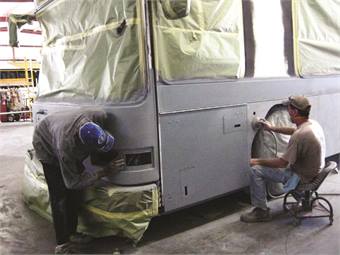
CoachCrafters technicians perform body and paint repairs in the company’s 22,000 square foot facility in Tavares, Fla.
A menu of upgrades
Coach refurbishment can be as simple as replacing worn panels and flooring and as complicated as stripping the vehicle down to the frame and starting from scratch.
BRC lets clients choose retrofits such as front and rear caps to modify the look of the bus, new paint schematics, external LED lighting, audio visual equipment, HVAC systems and more. By the end of the refurbishment process, “from the ridership standpoint, they wouldn’t know any different if it’s a brand new bus or a 12-year-old bus,” Pek says.
“Once we understand what the customer wants, then the process will flow based on what his recommendation is or what he chooses to do,” says Hotard. “Then, we’ll order engines, transmissions, undercarriage components or whatever is needed to fit the bill of materials that we’ve designed to match his request.”
Similarly, once CoachCrafters has inspected a vehicle and given their recommendations, its clients must approve the refurb plan, which includes general goals, documentation of all product and installation instructions, drawings, inspection forms, inventory control parts and labor identification through job cost tracking. The company keeps a stock of over a quarter of a million parts at its warehouse facility.
“We always work from a very detailed specification,” Wolf explains. “There are typically over 600 different part numbers and subassemblies that go into an overhaul. Labor can easily climb to more than 1,000 labor hours per bus.”
Keeping safety in mind
Many operators are finding seat belts and wheelchair lifts are essential to the clients they serve. Rather than purchase a new fully equipped coach, Hotard says he sees many operators opting to add these items to existing vehicles.
“Some customers have to provide seat belts to fulfill their contracts, and if they don’t have all-new buses with seat belts, they can add them,” he explains. “[Refurbishment] is a more economical way to provide a fleet uniformity; they can provide seat belts to certain schools or colleges or whoever might require seat belts.”
Pek points out that adding seat belts to a bus or motorcoach involves some structural work.
“We need to insure that we work with the manufacturer to insure the sub-floor structure that will be holding the wheelchair can keep up with the new seat belts, because it’s certainly adding a lot more torsion on the old structure,” Pek says. “In a lot of cases, you have to go back in and rebuild the entire structure.”[PAGEBREAK]
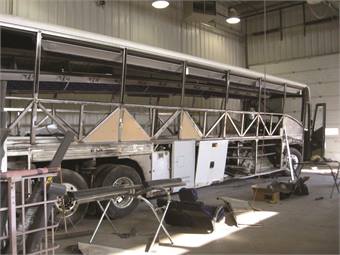
The Big Rig Collision Group offers extensive structural, mechanical and cosmetic services to its refurbishment customers at bus body shops located across the U.S. and Canada.
Save on infrastructure costs
Another benefit of refurbishing a pre-existing coach is cost-savings when it comes to existing inventory as well as time saved on driver training.
“Some of our customers are doing refurbishments because it’s equipment that they are very familiar with already,” Hotard says. “They don’t have to retrain their drivers.”
By keeping the old coach, the operator can also keep any parts it may have acquired to service the coach.
“The parts inventory doesn’t have to change, so from the infrastructure standpoint, there’s not a lot of investment in retraining and restocking parts, as opposed to if you’d bought a new bus,” Hotard adds.
Financing the project
Deciding you want to refurbish your coach is only the first step — now you have to figure out how to pay for it. There is more than one financing option to consider.
“Many customers who are at or near the end of their financing term can now use the equity in their current coach and refinance the upgrades they select,” Hotard explains. “It is a great option for operators to upgrade their fleet with minimal cash outlay, reduced monthly maintenance expenses and manageable monthly payments.”
Pek points out that this option is “a good way for coach owners to add some life to an existing coach without having to spend $500,000 on a new coach.”
Another option is for operators to finance upgraded coaches with lease or load terms and “take advantage of Section 179 tax deductions on used equipment,” Hotard says.
Section 179 of the IRS tax code allows businesses to deduct the full purchase price of qualifying equipment purchased or financed during the tax year. In other words, if an operator buys or leases a piece of qualifying equipment, the full purchase price of that equipment can be deducted from the operator’s gross income.
Refurbishment financing is available through both BRC and ABC Companies.
“For companies that are just a little strained for capital, we’ll work with them to finance the cost of their refurbishment over a three-year period,” Pek says. “That makes it just a little more affordable for them.”
Find a reputable refurbisher
Pek cautions operators against using “the big repair shop next door” when refurbishing coaches.
“Just because they do a good job of doing some collision work, doesn’t mean they know how to access the parts,” he says. “The electronic matrix of buses is more complicated than they’re used to, and the bus ends up out of commission for six months.”
Having a coach out of commission longer than expected will put a dent in an operator’s revenue. A company that specializes in refurbishment can finish a coach in 30 to 45 days, according to Pek.
“There are a half a dozen really strong companies out there that offer bus refurbishment,” he adds. “The benefit to working with those top four or five companies is that this is their focus. They know the buses inside and out, and in some cases, maybe even better than the operators do.
“If [an operator] is going to go down that road to refurbishment, I would suggest they do their homework and make sure that they are sending their bus to a reputable company to refurbish,” Pek adds.
More Motorcoach

METRO Opens Submissions for 2026 Motorcoach Awards
Nominations are now being accepted for METRO Magazine’s Operator of the Year and Innovative Operator of the Year awards.
Read More →
Biz Briefs: Alstom Lands Canadian Contract, LYT to Supply California TSP, and More
In METRO's latest installment, we take a look at recent news from Complete Coach Works, Beep, FlixBus, and more partnerships making headlines across the transportation sector.
Read More →
Biz Briefs: RIPTA Unveils New Frontrunners, Clevland RTA Adds New Siemens, and More
In METRO's latest installment, we take a look at recent news from Siemens, Prevost, Dodge, and more partnerships making headlines across the transportation sector.
Read More →
People Movement: Holly Arnold Joins Transdev and More
In this edition, we also cover recent appointments and announcements at Pace, CamTran, MCI, and more, showcasing the individuals helping to shape the future of transportation.
Read More →
ABA Report: Motorcoach Travel Generates $161.6B Economic Impact
The 2025 analysis finds motorcoach travel supported nearly 900,000 jobs and generated $28 billion in federal, state, and local taxes.
Read More →
CharterUP’s Armir Harris on Technology, AI, and the Future of Group Mobility
In a recent episode of METROspectives, CharterUP Founder/CEO Armir Harris discussed the company’s evolution from an online charter bus marketplace into a technology platform supporting public- and private-sector mobility and much more.
Read More →
People Movement: ABC Names John Walsh as Chief Commercial Officer
In this edition, METRO also covers recent appointments and announcements at the DART, STV, and more, showcasing the individuals helping to shape the future of transportation.
Read More →
From Surviving to Thriving: Building Stronger Transportation Organizations
Bus Business Consultants founder Brian Dickson shares lessons on leadership, organizational health, and creating options for long-term success in a changing transportation industry.
Read More →
Biz Briefs: Luminator Marks Milestone and More
From manufacturers and suppliers to transit agencies and motorcoach operators, these updates offer a snapshot of the projects, partnerships and business moves driving the industry forward.
Read More →
ABAF Study Reveals Growing Insurance Crisis for Motorcoach Operators
Preliminary findings show 98% of operators faced premium increases over the past five years, while shrinking insurer participation is putting added pressure on businesses and customers.
Read More →