



Rethinking the Road: Transportation Challenges for Smaller College Athletics
Smaller college athletic programs are rethinking fleet strategies as rising costs, driver shortages, and longer travel distances put new pressure on transportation budgets.

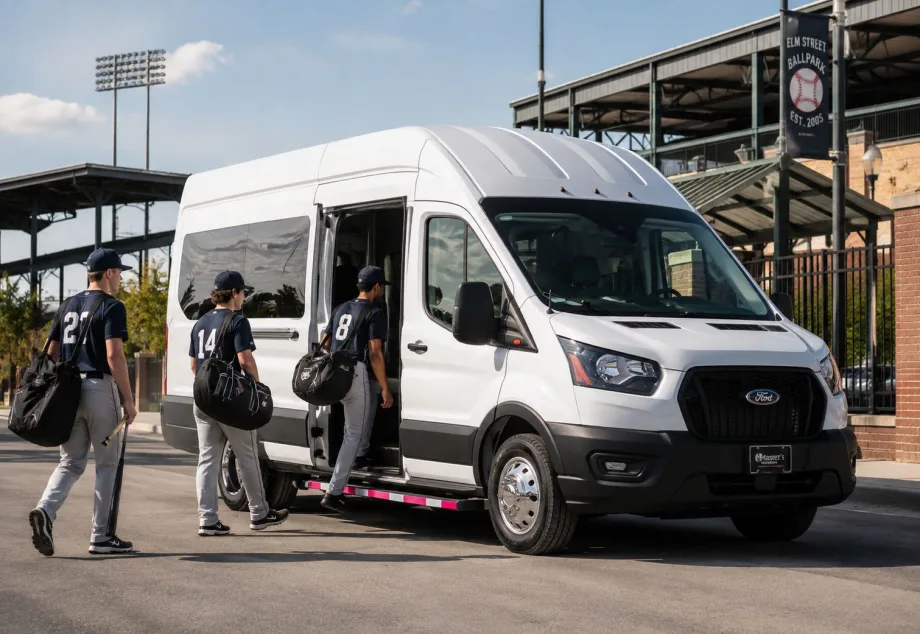
Rising charter costs, driver shortages, insurance expenses, vehicle availability, and longer conference travel distances are prompting schools to take a closer look at how they move athletes from campus to competition.
Master's Transportation
- Smaller college athletics are facing increased transportation costs and logistical challenges.
- The scarcity of drivers is complicating travel arrangements for these programs.
- Longer travel distances are leading to reevaluations of current fleet strategies.
*Summarized by AI
For smaller college athletic programs, transportation can be one of the least visible pieces of the operation. Teams still need to travel hundreds or even thousands of miles each season. Still, the resources available to manage those trips are often far more limited than those of larger athletic departments.
Rising charter costs, driver shortages, insurance expenses, vehicle availability, and longer conference travel distances are prompting schools to take a closer look at how they move athletes from campus to competition.
“Transportation is one of the most significant operational bottlenecks smaller college athletic programs face,” said John Goodbrake, CEO, Master's Transportation. “When you don't have the massive athletic budgets of a Division I powerhouse, every single mile counts against your bottom line.”
For smaller colleges and universities competing in the NAIA and NCAA Division II and III, transportation decisions increasingly involve more than selecting a vehicle for the next road trip. Athletic departments are evaluating fleet utilization, driver requirements, maintenance, seasonal demand, and the costs of owning vehicles that may sit unused for parts of the year.
Finding the Right Fit
One of the biggest challenges is finding a vehicle that matches a traveling team's size and needs.
A 15-passenger van may be too small for a typical athletic roster, while a 55-passenger motorcoach can offer far more capacity than needed. For a baseball team traveling with players, coaches, a trainer, and equipment, neither option may be an efficient fit.
“The gap is significant, and it has been one of the defining challenges in college athletics transportation for years,” Goodbrake said.
The gap has increased interest in 24- to 35-passenger vehicles. Mid-size buses can provide enough seating and luggage capacity for many athletic teams while keeping the group together.
“Keeping the entire travel party together in one vehicle matters more than people might expect,” Goodbrake said. “Team cohesion builds on the road. The bus ride is part of the experience.”
Vehicle design also has to account for the physical and logistical demands of athletic travel. Teams can carry substantial amounts of equipment, from team bags and coolers to trainers' kits and sport-specific gear.
Goodbrake said Master's Transportation developed its mid-size shuttle offerings after identifying limitations in vehicles traditionally designed for airport and hotel transportation.
“The vehicles available to college athletic programs were built for airport loops and hotel transfers, not for teams traveling four hours down a rural highway with 30 bags of gear,” he said. “If we were going to build something useful, it had to reflect the actual realities of athletic travel.”
The company's designs incorporate features such as rear luggage bays, overhead parcel racks, and movable luggage walls. Goodbrake said the vehicles are also designed with road conditions and athlete comfort in mind, including wider aisles, higher ceilings, and reclining seats.
Ownership vs. Flexibility
The vehicle itself is only part of the equation. How a school acquires and manages that vehicle has become increasingly important.
For athletic departments, full ownership can mean carrying insurance, maintenance, depreciation, and other costs even when vehicles are not being used.
“The decision really comes down to one fundamental question: how many months of the year does that vehicle actually work?” Goodbrake said. “When athletic directors start answering that honestly, the math often points away from full ownership and toward more flexible arrangements.”
Some schools are responding by creating smaller shared fleets that can serve multiple campus functions. Athletic departments can share vehicles with admissions, music programs, or other departments to increase utilization.
For programs with seasonal travel demands, leasing can provide another option. Goodbrake said Master's Transportation has structured nine-month higher education leases that cover the primary competitive period, allowing schools to return vehicles when demand declines.
Short-term rentals can provide another layer of flexibility for programs with unpredictable schedules or specific trip requirements.
Goodbrake said the broader shift is toward treating transportation as an operational function that requires deliberate planning.
“Athletic directors are becoming more disciplined about treating transportation as a managed cost center rather than an ad hoc expense,” he said. “The programs that do it well think like fleet managers, not just coaches trying to get their teams to the next game.”
Managing Drivers, Compliance, and Reliability
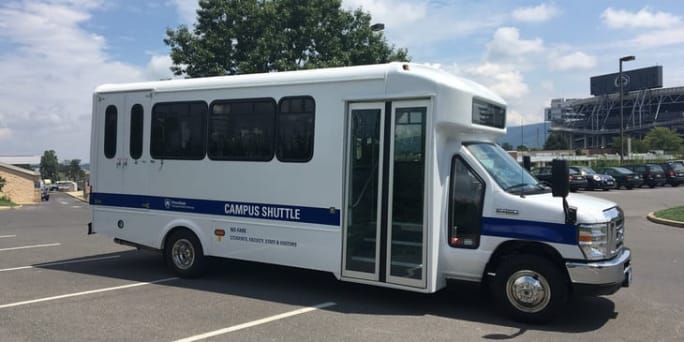
One of the biggest challenges is finding a vehicle that matches a traveling team's size and needs.
Penn State University
Driver availability adds another layer to fleet decisions.
Vehicles designed to carry 16 or more passengers, including the driver, bring CDL requirements into the equation. For smaller colleges without dedicated transportation personnel, finding qualified drivers who can accommodate late-night departures, weekends, and irregular athletic schedules can be difficult.
Some programs are responding by using vehicles that remain below the CDL threshold, while others are incorporating CDL-compliant vehicles into seasonal leasing strategies.
The issue matters more as conference realignment changes travel patterns for smaller schools. Goodbrake said changes at the Division I level have also affected smaller conferences, with some schools facing longer trips to conference opponents.
Schools that previously traveled an hour or two to an opponent may now face substantially longer road trips, increasing fuel, maintenance, and driver requirements.
The post-pandemic transportation environment has added further pressure. Goodbrake cited commercial driver shortages, higher insurance premiums, higher charter rates, and parts shortages as factors affecting transportation availability and cost.
“A bus that would have been back on the road in a few days can now sit sidelined for weeks, completely disrupting a program's travel schedule if the school does not have a reliable partner for parts and rapid maintenance,” he said.
For Master's Transportation, experience with smaller colleges has shaped its approach. The company has worked with NAIA programs for more than two decades, including an early relationship with Missouri Valley College.
“What we have learned over two decades is that smaller college athletic programs value reliability and flexibility above almost everything else,” Goodbrake said. “A transportation partner that cannot deliver a vehicle on time or cannot get a broken bus back on the road quickly is not a partner at all.”
For athletic departments operating with limited resources, those considerations can make transportation planning a strategic part of the overall operation. Rather than relying solely on traditional charter arrangements or maintaining vehicles year-round, schools are examining a broader range of fleet and leasing options to match transportation resources with actual demand.
“We did not just build a bus,” Goodbrake said. “We built a targeted logistics solution that allows athletic directors to reclaim control of their schedules, safely transport their gear, and protect their bottom line.”
Quick Answers
Smaller college athletic programs are facing challenges such as rising transportation costs, shortages of drivers, and increased travel distances, which are all putting pressure on their transportation budgets.
*Summarized by AI
More Motorcoach

Brian Dickson on Building Stronger, More Resilient Transportation Organizations
Bus Business Consultants Founder Brian Dickson discusses the leadership principles, operational discipline, and strategic planning that separate transportation companies positioned for long-term success from those stuck in survival mode.
Read More →
Roman Cornell on ABC Companies’ Evolution and the Future of Passenger Transportation
The company’s CEO discusses carrying forward a third-generation family legacy, ABC’s continued evolution in passenger transportation, support for increasingly complex fleets, and how technology and continued investment could help operators improve uptime.
Read More →
From Surviving to Thriving: Building Stronger Transportation Organizations
Bus Business Consultants founder Brian Dickson shares lessons on leadership, organizational health, and creating options for long-term success in a changing transportation industry.
Read More →
Report: Canadian Motorcoach Industry Generates $4.4B in Economic Impact
The 2025 Motorcoach Economic Impact Report finds motorcoach travel supported nearly 25,000 jobs and generated $980 million in federal, provincial, and local taxes.
Read More →
Prevost Opens Expanded Chicago-Area Service Center
The $8.1 million Elk Grove Village investment nearly triples facility space while adding service capacity, parts storage, and customer amenities.
Read More →
People Movement: Dan Dipert Coaches Adds Third-Generation Leader, Keolis Names New Valley Metro VP/GM, and More
In this edition, we also cover recent appointments and announcements at the Wabtec, SilverRide, HNTB, and more, showcasing the individuals helping to shape the future of transportation.
Read More →
METRO Opens Submissions for 2026 Motorcoach Awards
Nominations are now being accepted for METRO Magazine’s Operator of the Year and Innovative Operator of the Year awards.
Read More →
Biz Briefs: Alstom Lands Canadian Contract, LYT to Supply California TSP, and More
In METRO's latest installment, we take a look at recent news from Complete Coach Works, Beep, FlixBus, and more partnerships making headlines across the transportation sector.
Read More →
Biz Briefs: RIPTA Unveils New Frontrunners, Clevland RTA Adds New Siemens, and More
In METRO's latest installment, we take a look at recent news from Siemens, Prevost, Dodge, and more partnerships making headlines across the transportation sector.
Read More →
People Movement: Holly Arnold Joins Transdev and More
In this edition, we also cover recent appointments and announcements at Pace, CamTran, MCI, and more, showcasing the individuals helping to shape the future of transportation.
Read More →