



Tilting trains debut regular service in United Kingdom
Virgin Trains' new tilting train service has cut travel time between London and Manchester to just more than two hours, a time reduction of 22%.
More than 20 years after a pioneering prototype tilting train ran on Britain's busiest railway, regular services were finally introduced in late September.
The Advanced Passenger Train, as the prototype was known, was developed by British rail engineers in the late 1970s using tilting technology to enhance speeds through bends. It was abandoned in the early 1980s due to operating problems during public trials and adverse public reaction.
Virgin Trains is now running Fiat-developed Italian Pendolino trains between London and Manchester, cutting journey times on the 180-mile run to just more than 2 hours, a 22% time reduction. London-Birmingham times have been cut by 15 minutes to 1 hour and 15 minutes.
Beginning in December, the tilt mechanism will be available for the connection to Liverpool and for the route south of Preston, 210 miles from London's Euston Station.
Track and signaling upgrades to accommodate the new trains along the 400-mile west coast main line between Glasgow (Scotland) and London are now expected to cost $13.8 billion. Original estimates soared above $18 billion by 2002, but costs were brought under control after the decision to close sections of route for extended periods to allow the engineering to progress efficiently. Trains were diverted or replaced by bus services for weeks, and in some instances, months. Additionally, 600 miles of overhead wires were replaced, and 460 points installed.
By September 2006, 125 mph running speeds with tilting will be available along the whole route. In a second phase, further infrastructure work will allow speeds of 140 mph by 2009.
Alstom Transportation built the 53 electric-powered Pendolino train sets used on the system at a cost of $20 million each. Virgin also has a fleet of 125-mph tilting diesel trains, built by Bombardier, for use on routes that extend off the west coast main line on to non-electrified sections.
Once the 125-mph tilting technology is available throughout the route, Glasgow-London journey times will be reduced to 4 hours and 15 minutes, a 1-hour savings.
Virgin boss Sir Richard Branson said at the launch of the improved services, "I have waited 5 years for this. Today is a very emotional day both for myself and for the rail industry, which has made it happen."
"This is a great day for railways in Britain. Passengers on the west coast routes will now benefit from the first phase of the investment," said Prime Minister Tony Blair.
More Management

Public Transit Conference Returning to GFX in 2027, Call for Papers Now Open
The Call for Papers is now open, allowing transit agency professionals and industry experts to help shape the PTC educational program by submitting session ideas for consideration.
Read More →
Indian River Transit’s Community-Focused Approach Earns National Recognition
Named APTA’s 2026 Outstanding Public Transportation System in its size category, Florida’s Indian River County transit system continues to grow ridership through fare-free service and a focus on evolving community needs.
Read More →
ENC Lands MATA Contract and More in Biz Briefs
In this edition of Biz Briefs, we spotlight the latest developments shaping the future of mobility.
Read More →

From Surviving to Thriving: Building Stronger Transportation Organizations
Bus Business Consultants founder Brian Dickson shares lessons on leadership, organizational health, and creating options for long-term success in a changing transportation industry.
Read More →
Everett Transit, Community Transit Outline Consolidation Agreement
The proposed agreement calls for a 50% increase in bus service in Everett, a new microtransit zone, continued paratransit service, and the transfer of Everett Transit operations to Community Transit.
Read More →
Strada360’s Steve Lassey on Turning Transit Data Into Better Decisions
From breaking down data silos to preparing for AI, Strada360 CEO Steve Lassey discusses how transit agencies can use technology to improve operations, customer information, and long-term decision-making.
Read More →
People Movement: Phil Washington Joins HNTB, Denver RTD Launches CEO Search, and More
In this edition, we also spotlight recent personnel moves at STV, the Eno Center for Transportation, and more, highlighting the people taking on new roles across the transportation industry.
Read More →
SEPTA Details Accelerate Vision for Transit System
The plan outlines investments in trolley modernization, new Metro and Regional Rail vehicles, accessible stations, and more frequent bus and rail service.
Read More →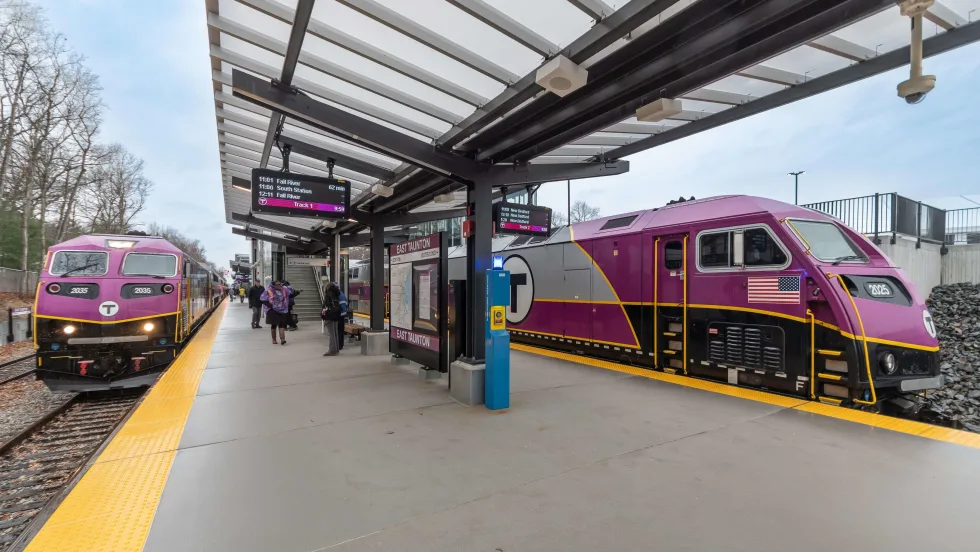
FTA Ends Direct Oversight of MBTA Safety Actions
The federal agency closed its remaining special directive to the Massachusetts Department of Public Utilities following a safety review that began in 2022.
Read More →
Report: Transit Bus Manufacturing Supports 34,100 Jobs, $5.1B in GDP
The “Buses Mean Business” report examines the transit bus manufacturing industry’s economic footprint, supply chain, and rising demand for vehicle replacements.
Read More →