Transforming Transit Yards: The Practical Benefits of RTLS
RTLS technology, which allows for the precise tracking of vehicles, equipment, and personnel within transit yards, is transforming how these facilities operate, providing tangible benefits in terms of efficiency, cost savings, and safety.
by James Varvill
September 13, 2024
Currently in North America, various transit agencies are leveraging RTLS to streamline their bus operations.
4 min to read
In the fast-paced world of public transportation, efficiency, safety, and cost management are more critical than ever.
As transit agencies seek to modernize their operations, one technology is proving to be a game-changer: Real-Time Location Systems (RTLS).
Ad Loading...
RTLS technology, which allows for the precise tracking of vehicles, equipment, and personnel within transit yards, is transforming how these facilities operate, providing tangible benefits in terms of efficiency, cost savings, and safety.
The Role of RTLS in Modernizing Transit Yards
Transit yards are the nerve centers of public transportation networks. However, the complexity of these operations can lead to inefficiencies, especially in large yards where multiple activities occur simultaneously.
RTLS technology addresses these challenges by providing real-time visibility into the location and status of all assets within the yard.
By equipping vehicles and equipment with tags that communicate with a network of sensors, RTLS enables transit managers to monitor movements and status in real-time.
allows for more precise coordination of activities, reducing the likelihood of delays, congestion, and errors.
Ad Loading...
Moreover, the integration of RTLS with other yard management systems can automate processes such as dispatching, maintenance scheduling, and inventory management.
For example, when a bus enters the yard, the system can automatically log its arrival, update its maintenance schedule, and even trigger alerts if any issues need immediate attention. This level of automation not only improves efficiency but also frees up staff to focus on higher-value tasks.
The automation of routine tasks, such as logging vehicle arrivals and departures, tracking maintenance schedules, and managing inventory, allows for a more streamlined operation.
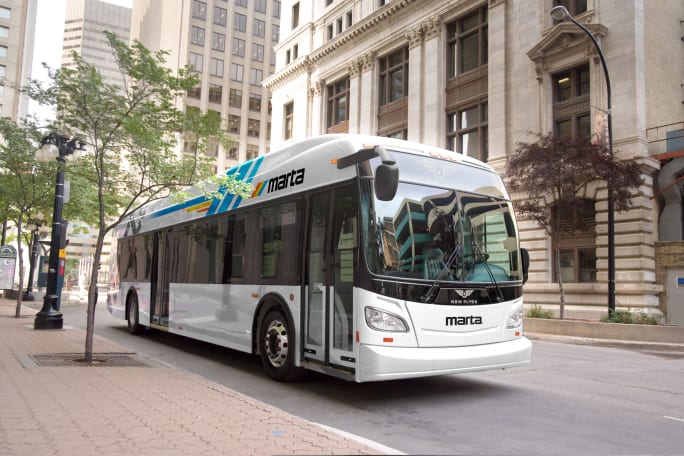
Photo: MARTA
Case Studies, Real-World Applications
One compelling example of RTLS in action is its implementation by Transports publics Fribourgeois (TPF) in Switzerland.
TPF faced challenges common to many transit agencies: a large, complex yard where managing the movement and maintenance of vehicles was increasingly difficult.
By implementing an RTLS solution, TPF gained real-time visibility into their operations, allowing them to optimize vehicle movements, reduce idle time, and improve overall yard efficiency.
Ad Loading...
The results were significant.
TPF reported a reduction in operational costs due to better utilization of their fleet and a decrease in the time vehicles spent in the yard.
Maintenance schedules became more predictable, leading to fewer disruptions in service.
Additionally, the ability to track and monitor vehicles in real-time enhanced safety within the yard, reducing the risk of accidents and collisions.
are leveraging RTLS to streamline their bus operations.
By integrating RTLS with their existing fleet management systems, these agencies can now automate the dispatching process, ensuring that buses are dispatched on time and with optimal routing. This has led to improved on-time performance and customer satisfaction.
Benefits in Terms of Cost Savings, Operational Efficiency
The benefits of RTLS in transit yards extend beyond just improving day-to-day operations.
One of the most significant advantages is the potential for cost savings. With real-time visibility into asset locations, transit agencies can reduce the time and resources spent searching for vehicles and equipment.
The reduction in idle time translates into lower fuel costs, decreased wear and tear on vehicles, and more efficient use of labor.
By analyzing the data collected by the RTLS system, agencies can identify underutilized assets and make informed decisions about whether to reassign, retire, or repurpose vehicles.
The data-driven approach to fleet management can result in significant cost savings over time.
Operational efficiency is another critical area where RTLS makes a substantial impact.
Ad Loading...
The automation of routine tasks, such as logging vehicle arrivals and departures, tracking maintenance schedules, and managing inventory, allows for a more streamlined operation. This efficiency not only reduces the risk of human error but also ensures that resources are allocated where they are needed most.
RTLS is helping transit managers to make informed decisions quickly.
Whether it's re-shuffling parked buses due to an unexpected delay or reallocating resources to address an urgent maintenance issue, the ability to respond in real-time can significantly enhance the overall performance of the transit system.
Transit yards are the nerve centers of public transportation networks.
Looking Ahead
As transit agencies continue to face increasing demands for efficiency, safety, and cost-effectiveness, technologies like RTLS offer a viable solution for modernizing operations.
The ability to track and monitor assets in real-time, automate routine processes, and make data-driven decisions is already transforming how transit yards operate.
Ad Loading...
As more transit agencies adopt this technology, we can expect to see continued advancements in how public transportation systems are managed, ultimately leading to better service for passengers and more sustainable operations for agencies.
For those interested in exploring how RTLS can benefit their operations, there are various RTLS solutions tailor-made to the transit hubs now on the market. Many of these offer free consultations.
About the Author:James Varvill is Marketing Communications Lead at Ubisense.
CEO Magnus Friberg discusses Luminator’s shift toward becoming a digital partner, the growing importance of software and interoperability, and how AI can help agencies improve operations and passenger experience.
Reliability-Centered Maintenance helps transit agencies move beyond routine checklists to focus limited resources on the assets and failures that have the greatest impact on safety, reliability, and service.
More than 1,500 buses now feature upgraded technology designed to improve arrival predictions and provide free Wi-Fi, with deployment expected to reach nearly 2,000 buses by the end of 2026.
John Hroncich discusses BAE Systems’ modular and scalable approach, lessons learned from decades of real-world operations, and how agencies can identify electrification strategies that fit their fleets.
In METRO's latest installment, we take a look at recent news from Complete Coach Works, Beep, FlixBus, and more partnerships making headlines across the transportation sector.
What if transit leaders could ask any operational question and get a trusted answer in seconds? Conversational AI is transforming how agencies use their data.
More than $191 million in federal funding will help three transit agencies replace aging rail vehicles and support a new autonomous shuttle service in Chattanooga.
LA Metro’s Obed Mejia discusses technician training, evolving maintenance technology, fleet replacement, and strategies for getting the most out of today’s transit fleets.
In METRO's latest installment, we take a look at recent news from Siemens, Prevost, Dodge, and more partnerships making headlines across the transportation sector.
Pedestrian microsimulation is helping rail planners identify bottlenecks, test station designs, and prepare complex transit hubs for growing passenger volumes.