



Transit systems tap video’s storytelling ability to attract, inform riders
As a growing number of riders and the general public look to online videos for information and entertainment, some transit systems are producing their own videos to more effectively reach out to and inform their customers.


California’s OCTA was looking to share information about its many transportation options by telling stories. It created the “OCTA Adventure Series,” seven short online videos that take viewers on a journey aboard vanpools, carpools, trains, buses and bikes.

California’s OCTA was looking to share information about its many transportation options by telling stories. It created the “OCTA Adventure Series,” seven short online videos that take viewers on a journey aboard vanpools, carpools, trains, buses and bikes.
As a growing number of riders and the general public look to online videos for information and entertainment — video consumption in the U.S. has been generally increasing, according to comScore — some transit systems are producing their own videos to more effectively reach out to and inform their customers.
Telling a story
One of those systems, Calif.’s Orange County Transportation Authority (OCTA), was looking to share information about its many transportation options by telling stories, according to Darrell Johnson, CEO, OCTA. The result is the “OCTA Adventure Series,” seven short online videos that take viewers on a journey aboard vanpools, carpools, trains, buses and bikes.
The videos, which the agency launched in April, are designed to encourage new riders to sample the wide variety of public transportation options available in Orange County and be an accessible and upbeat educational tool used by everyone from curious individuals to corporate transportation coordinators.
The transit system is also using banner ads to invite the public to visit octa.net, watch a video, then enter a sweepstakes for a chance to win prizes such as an iPad Air, $400 in gift cards, a new bike, and bus and Metrolink passes. Using Twitter, Facebook and other social media platforms, OCTA has kept interest high by publicizing the contest and the winners. So far, it has received 1,700 sweepstakes entries.
Adding a visual option
What prompted the series, Johnson says, was the need to devise a different channel of communication for people who prefer to receive information visually.
“People are gravitating toward [video], and OCTA is also reaching out to a younger generation, which is more comfortable with video,” Johnson says.
Additionally, the transit system is trying to communicate information in “a fun way.”
“We’re trying to [add] excitement, tell a story instead of just the standard dry public service announcement … this is about adventures, [for example] a father and son taking the train on the weekend,” Johnson explains.
During the first six weeks the “Adventure Series” videos had 4,400 views and more than 10,000 unique visitors.
OCTA expects to produce more videos, Johnson adds, particularly since the production cost is not as high as it used to be — each video cost about $8,000 — with more in-house production and desktop editing now available.
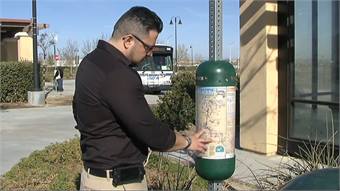
Antelope Valley Transit Authority is maximizing its travel training program with a YouTube channel, AVTAtv, which features travel training videos as part of a larger mobility management program.
Extending shelf life
The month or two it takes to develop and film the pieces pays off, Johnson explains, because the videos can be updated and modified to have a longer shelf life, as opposed to radio spots or newspaper advertisements, which are difficult to reuse.
Meanwhile, Lancaster, Calif.-based Antelope Valley Transit Authority (AVTA) is maximizing its travel training program with a YouTube channel, AVTAtv, which features travel training videos as part of a larger mobility management program.
The program has been funded by a Job Access Reverse Commute Grant for three years, Wendy Williams, communications director at AVTA, says. However, once the grant for the mobility management program is depleted, the transit system will no longer be able to continue a travel training program.
To continue to get travel training information to riders, the transit system created travel training videos that cover evergreen topics, such as how to ride the bus, for its website in an effort to improve the program’s shelf life and realized that a YouTube channel was the perfect spot to feature them.
AVTA’s marketing manager writes the scripts and shops them to local video producers for quotes. Each piece costs about $1,800 to produce. An independent contractor shoots the video and edits the piece, Williams explains.
The videos, which run between two and three minutes, have given AVTA a strong presence on You Tube, she adds. “Now we place all of our videos on AVTAtv, including commercials and special features.”
AVTA just released its latest piece, titled “First Time Rider,” which provides information on routes, schedules and paying fares, and plans to produce four more videos this year.
More Bus

New York MTA Plans Largest Bus Fleet Upgrade in More Than a Decade
The agency is seeking manufacturers for 650 new CNG buses to replace aging vehicles, improve reliability, and advance its broader fleet modernization strategy.
Read More →
Building a Flexible Path to Transit Electrification
John Hroncich discusses BAE Systems’ modular and scalable approach, lessons learned from decades of real-world operations, and how agencies can identify electrification strategies that fit their fleets.
Read More →
Bus Tech Talk: Keeping Transit Technicians Ahead of the Technology Curve
LA Metro’s Obed Mejia discusses technician training, evolving maintenance technology, fleet replacement, and strategies for getting the most out of today’s transit fleets.
Read More →
Biz Briefs: RIPTA Unveils New Frontrunners, Clevland RTA Adds New Siemens, and More
In METRO's latest installment, we take a look at recent news from Siemens, Prevost, Dodge, and more partnerships making headlines across the transportation sector.
Read More →
People Movement: Holly Arnold Joins Transdev and More
In this edition, we also cover recent appointments and announcements at Pace, CamTran, MCI, and more, showcasing the individuals helping to shape the future of transportation.
Read More →
The High Cost of Transit Buses: Industry Leaders Look to Procurement Reform
Transit leaders and policymakers examine how standardized bus designs, streamlined procurement, and predictable funding could help agencies stretch budgets and deliver better service.
Read More →
The Business Voice Behind Public Transportation
As chair of APTA’s Business Members Board of Governors, Ray Melleady explains how more than 850 business members are partnering with transit agencies to advance funding, innovation, and industry-wide collaboration.
Read More →
From Surviving to Thriving: Building Stronger Transportation Organizations
Bus Business Consultants founder Brian Dickson shares lessons on leadership, organizational health, and creating options for long-term success in a changing transportation industry.
Read More →
Finding the ‘Happy Medium’: Optimizing Maintenance Without Sacrificing Reliability
The key to maintenance optimization isn’t doing less work—it’s doing the right work at the right time on the right assets.
Read More →
LA Metro, City of West Hollywood, and Partners Advance Smarter Bus Lane Enforcement
The award-winning partnership combines AI-powered detection with human oversight to improve bus reliability, accessibility, and enforcement efficiency.
Read More →