



Transpo GM/CEO Hill talks 'benefits' of being a smaller transit agency
Under her leadership, Transpo has rebranded, transitioned to designated bus stops, and launched programs to increase ridership.

Transpo's Emil "Lucky" Reznik Administration, Maintenance, and Operations Facility opened in 2010 and is LEED Platinum-certified. CEO/GM Amy Hill shown (on right) in facility.
Jamie Hernandez
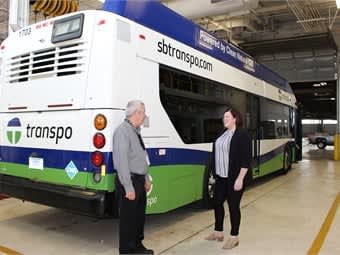
Transpo's Emil "Lucky" Reznik Administration, Maintenance, and Operations Facility opened in 2010 and is LEED Platinum-certified. CEO/GM Amy Hill shown (on right) in facility.
Jamie Hernandez
Amy E. Hill, MPA, is the GM/CEO of the South Bend Public Transportation Corp. (Transpo). She joined Transpo in April 2013 as director, marketing, and was named the Interim GM/CEO in December 2017. She was appointed to the permanent position in November 2018.
Under her leadership, Transpo has rebranded, transitioned to designated bus stops, and launched innovative programs to increase ridership. Amy currently serves on the Small Operations and Marketing & Communications committees for the American Public Transportation Association.
As a smaller transit agency, what are some of your challenges?
Funding is always a challenge for us. The Public Mass Transportation Fund (PMTF) for the state of Indiana has not seen a significant increase in years and the current funding structure favors larger agencies with additional resources to expand service and increase ridership.

Amy E. Hill
It is also a challenge to secure the local 20% match required with Federal Grants. Transpo was awarded $4.9 million in FY2018 Bus and Bus Facilities Infrastructure Investment Program to replace 12 diesel buses that have exceeded their useful life. We are still working to secure the required local match of $1.2 million dollars to move forward with the bus replacement. We are hoping to secure a state grant to use towards the local share.
Another challenge is maintaining competitive and affordable health insurance for the organization and employees. In response to rising health insurance premiums, Transpo made the decision to join the county’s self-funded health insurance plan in 2017 to provide a more competitive option.
Are there any benefits to being a smaller agency?
Yes, as a smaller transit agency we have to be resourceful and creative to engage the community, raise awareness of the value, and economic impact of public transportation in our community while working to improve service and increase ridership.
As a smaller agency, we also work to leverage partnerships with other businesses and organizations in the community. By building relationships, we are able to launch new programs and initiatives such as our Game Day Express route that launched in 2017 to provide an express connection between downtown South Bend and the University of Notre Dame for Football Saturdays. Through our partnerships, we are able to offer the service for free to the public.

As a smaller agency, the number of employees we have ensures that we all know each other, creating a cohesive team and positive work environment, says Transpo GM/CEO Amy Hill (center).
Jamie Hernandez
Finally, as a smaller agency, the number of employees we have ensures that we all know each other, creating a cohesive team and positive work environment.
Discuss some of measurable benefits, including cost-savings and sustainability of your LEED-certified maintenance facility.
Our Emil 'Lucky' Reznik Administration, Maintenance, and Operations Facility opened in 2010 and is LEED Platinum-certified. The current facility is twice the size of the previous 100-plus-year-old facility, but operational costs have been maintained. All our vehicles are now stored inside the facility, which is a significant cost and time savings, particularly in the winter months. Here are some additional highlights and cost-savings measures:
Solar panels on the roof of the facility generate a portion of the electricity.
Low-flow and sensor-activated water systems result in 40% less water being used; bus wash utilizes recycled water with only the final rinse being fresh water, which is captured and reused; 70% of water is recycled.
90% of work areas are illuminated by natural light from windows reducing the need for artificial lighting; 20 skylights in the garage /bus barn.
Geo-thermal heating and cooling — 48 geothermal wells that are 300 feet deep.
Maintenance area flooring provides 90% reflectivity for the work area; exterior concrete is heated to reduce cost/time with snow and ice removal in the winter.
Please discuss a current program/project.
We partnered with the Michiana Area Council on Governments (MACOG), operators of the Interurban Trolley, serving the cities of Elkhart and Goshen, in the adjacent county to launch the new Yellow Line route in August 2018. The route is jointly operated by Transpo and the Interurban Trolley. This integrated service expands regional connectivity by improving frequency from every 60 minutes to 30 minutes. This increased frequency provides riders the ability to connect with almost every transit route within 15 minutes at the transfer centers. By jointly operating the route, both agencies are able to maximize efficiencies, improve service, and provide better connections to employment opportunities throughout St. Joseph and Elkhart counties.
This summer, we have partnered with enFocus (https://sbenfocus.org/) to complete a technology assessment. This partnership will provide us with an inventory of current technology, review best practices in transit technology, and identify opportunities and areas for investment (along with funding resources) in technology to improve efficiencies and the rider experience.
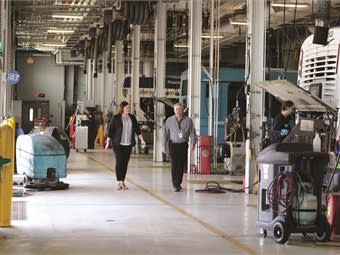
As a smaller transit agency, Transpo has to be resourceful and creative to engage the community and raise awareness of the value and economic impact of public transportation, says Transpo GM/CEO Amy Hill (shown left).
Jamie Hernandez
Discuss Transpo's recent AdWheel award win and what it entailed?
Transpo won a first place AdWheel award for 'Best Marketing and Communications to Increase Ridership or Sales' for our 2018 K-12 Summer Travel Program. Transpo goes on to compete for the AdWheel Grand Prize round (announced at the APTA Annual Meeting in October).
Transpo launched a Summer Travel Pass in 2013 for a discounted rate of $30. In 2018, Transpo launched a new Summer Travel program to reach more K-12 students and provide free unlimited travel during the summer months. The goal was to introduce and educate students on the ease and convenience of using public transportation. The long-term goal was to increase ridership during the school year and develop life-long public transit supports and riders.
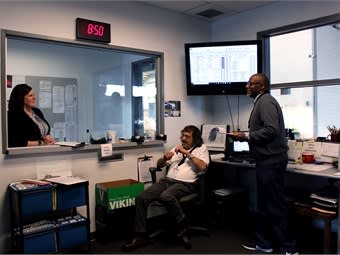
We were able to accomplish this on a 'shoestring' budget by engaging our community partners. The program was announced with a creative roving press conference on board a Transpo bus. The media were joined by representatives from Transpo, area school corporations, parks, and community centers. The 75-minute tour highlighted many aspects of the community accessible by transit.
Jamie Hernandez
Several weeks later, Transpo created a music video showcasing local students to promote the Summer Travel Program. The video was sponsored on social media all summer with the goal of obtaining 12,000 K-12 student rides — we averaged 5,977 with the discounted Summer Travel Pass 2013-2017. The program exceeded all expectations with record-setting ridership of 27,751. The overall budget for the program was $3,555.
Are you looking to explore different zero-emission technologies?
Our facility was designed with the intent to pursue alternative fuels. In 2014, as part of Transpo’s Fleet Replacement Program, we began replacing aging vehicles with new buses powered by compressed natural gas (CNG). Out of our 47 fixed-route vehicle fleet, 22 buses are now CNG with federal funding secured to replace an additional 12 diesel buses with CNG.
In 2016, Transpo opened a CNG Fueling Facility in partnership with the City of South Bend.
At this time, our plans are to continue replacing aging diesel vehicles with CNG, subject to available funding, but we continue to be open to other zero-emission technologies as we move forward.
How are you working to fill service gaps or provide alternative mobility options?
The City of South Bend was selected by Bloomberg Philanthropies to receive a $1 million grant to develop a Transportation-as-a-Benefit program in partnership with local employers (https://mayorschallenge.bloomberg.org/ideas/south-bend/). The intent of this program will be to fill public transportation service gaps and offer alternative mobility options to low-income employees. This will also be leveraged to promote the use of public transportation where applicable.
We have also worked with Lime to provide bike-share and e-scooters as first/last-mile options.
More Management
New York MTA Launches Historic $1.9B Signal, Track Modernization Project
Funded in part by congestion pricing revenue, the project will replace nearly century-old signals along the A and C lines in Brooklyn and Queens.
Read More →
Brian Dickson on Building Stronger, More Resilient Transportation Organizations
Bus Business Consultants Founder Brian Dickson discusses the leadership principles, operational discipline, and strategic planning that separate transportation companies positioned for long-term success from those stuck in survival mode.
Read More →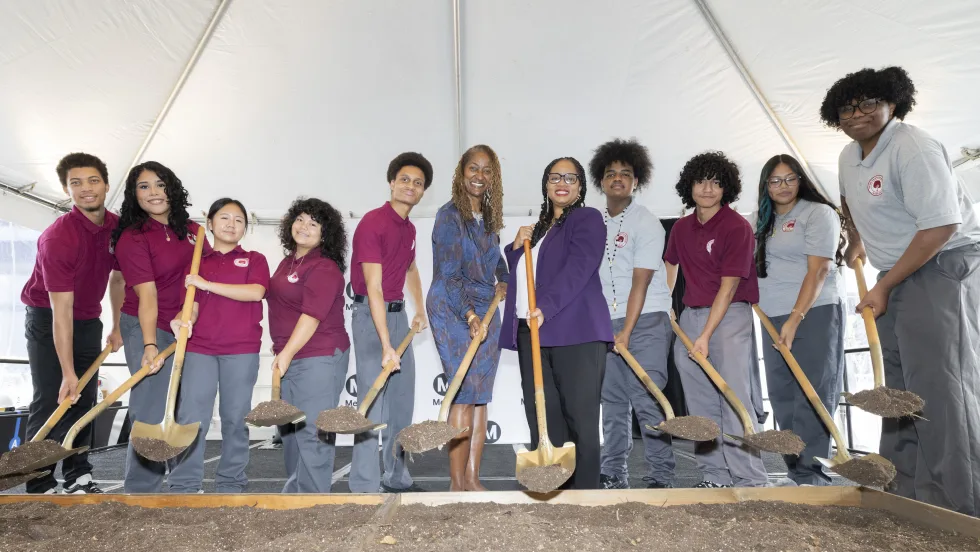
LA Metro Breaks Ground on Vermont BRT Project
The 12.4-mile corridor is projected to serve 66,200 daily riders, reduce travel times by up to 24%, and create the nation's busiest bus rapid transit corridor.
Read More →
Building Stronger Leaders, More Resilient Transit Teams
Dr. Carol Parker Walsh discusses leadership development, employee retention, workplace culture, and preparing transit’s workforce for AI and automation.
Read More →
Roman Cornell on ABC Companies’ Evolution and the Future of Passenger Transportation
The company’s CEO discusses carrying forward a third-generation family legacy, ABC’s continued evolution in passenger transportation, support for increasingly complex fleets, and how technology and continued investment could help operators improve uptime.
Read More →
CATS Launches West Charlotte Microtransit Zone, Expands Transit Services
The new microtransit zone connects residents to key destinations as Charlotte Area Transit System rolls out the first phase of its 2055 Transit System Plan.
Read More →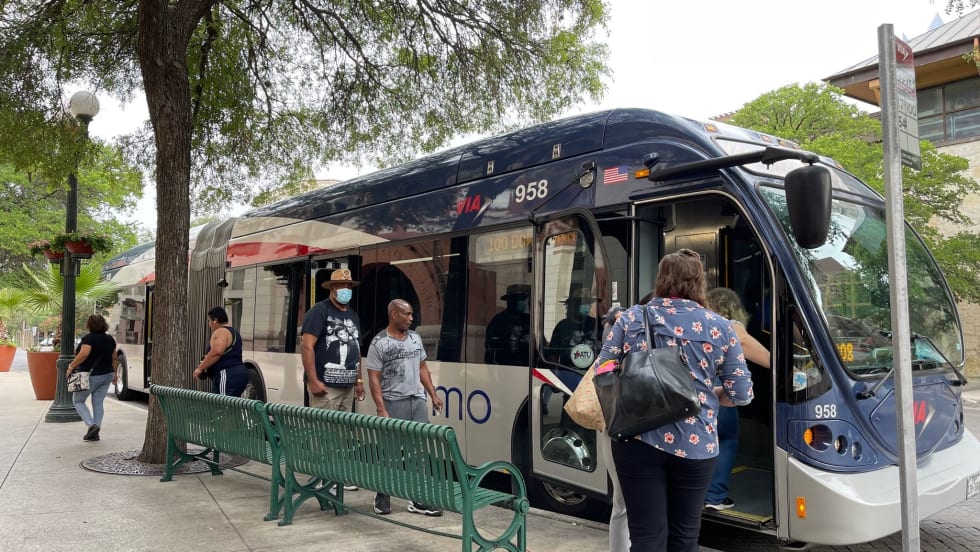
VIA Bus Ridership Grows 10.1% Through August 2026
San Antonio's VIA Metropolitan Transit reported the highest bus ridership growth among major Texas transit systems. Federal Transit Administration data ranked it second among the nation's 50 largest transit systems.
Read More →
CSA Group Releases Climate Resilience Standard for Transit, Passenger Rail
Developed with support from the Standards Council of Canada, CSA D700 guides assessing climate-related risks and planning adaptation measures for transit and passenger rail systems.
Read More →
ETA CEO John Maglio on Transit Technology, Innovation, and Building Agency Trust
ETA founder and CEO John Maglio explores the evolution of transit technology, the importance of reliable systems, and how stronger partnerships can help agencies improve operations and the passenger experience.
Read More →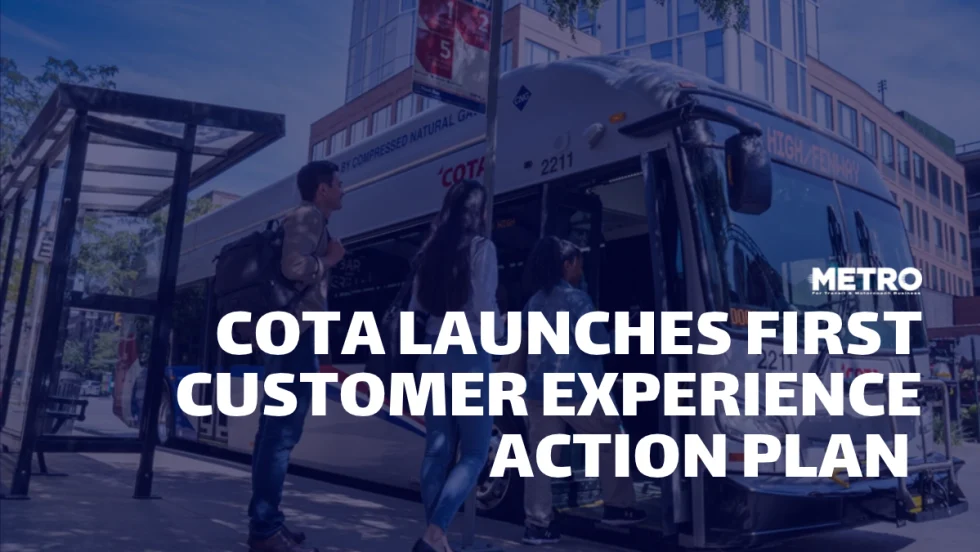
COTA Launches First Customer Experience Action Plan to Improve Transit Service
The new plan outlines improvements to service reliability, accessibility, communication, and the overall rider experience across Central Ohio's transit system.
Read More →