



UTA's quest to build public support
Campaign by Utah Transit Authority results in successful tax referendum.

The U.S. Census reports that the state of Utah encompasses about 85,000 square miles, making it one of the largest states in the nation by land area. However, nearly three-fourths of the state’s 2.3 million residents dwell along a narrow, 100-mile strip of land known as the Wasatch Front. This region also happens to be the fastest growing area in the state, and the high population density has caused its share of problems. Among them are traffic congestion and air pollution — standard justifications for a public transit remedy. But for the past 30 years, the state government and other agencies, particularly the Utah Transit Authority (UTA), consistently encountered resistance when attempting to expand public transportation. Procuring the necessary funding was always the primary stumbling block. Finally, UTA decided that an increase in the local sales tax — something the agency had never before achieved — would be the best way to up the transit budget. A campaign to inform Pinpointing three counties for the sales tax boost, UTA employed the services of R&R Partners, an ad agency with offices in Salt Lake City. With its help, UTA built a comprehensive ad campaign using television spots, print advertisements and direct mail pieces. The goal was to inform and educate the public on the benefits of public transportation. “By state law, as a transit agency, the UTA is not allowed to champion any public referendum one way or another,” said Kyle Curtis, UTA account leader for R&R Partners. “But we also set up another group of concerned citizens called People for Sensible Transportation. They were able to do some of the direct lobbying for the tax increase.” The principal slogan chosen by UTA and R&R was “even if you don’t ride it, you use it.” The emphasis was on how public transportation could prevent traffic patterns from growing out of control and cut down on both congestion and pollution. One ad, for instance, described how UTA’s planned transit expansion would take enough cars off the road each day to fill a three-lane roadway bumper to bumper from Ogden to Provo, a distance of 45 miles. PR and community events Additionally, UTA and R&R conducted a focused public relations program aimed at holding special public events, including a commuter rail demonstration project and a transportation conference that gave media outlets the opportunity to provide in-depth coverage of UTA’s plan. Said Curtis, “Since part of the long-range plan was building commuter rail, we took the media on a railcar tour down the same line that the commuter rail would go on if the tax referendum passed.” Public relations integrated with advertising and behind-the-scenes lobbying proved to be the right formula, he added. Ultimately, voters in all three counties approved the sales tax increase. As a result, UTA received an additional $42 million in revenues, allowing the agency to enlarge the light rail system, improve bus service and establish a commuter rail line. State officials believe that traffic problems and air pollution have also been greatly reduced. According to both UTA and R&R, the key to success was building ongoing support among non-riders. “The campaign was special with its long-term focus that public transit benefits all of Utah’s citizens,” said John Inglish, general manager of UTA.
More Management
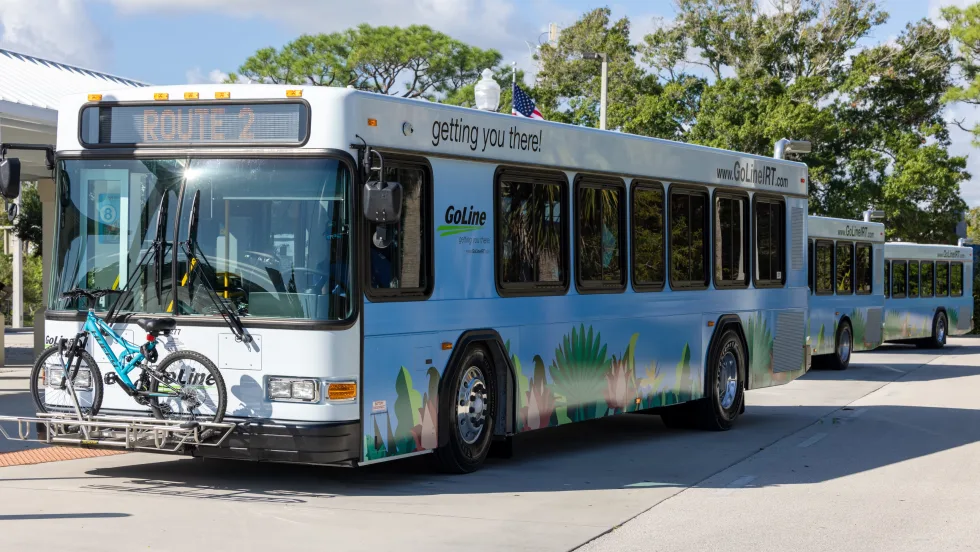
Indian River Transit’s Community-Focused Approach Earns National Recognition
Named APTA’s 2026 Outstanding Public Transportation System in its size category, Florida’s Indian River County transit system continues to grow ridership through fare-free service and a focus on evolving community needs.
Read More →
ENC Lands MATA Contract and More in Biz Briefs
In this edition of Biz Briefs, we spotlight the latest developments shaping the future of mobility.
Read More →
From Surviving to Thriving: Building Stronger Transportation Organizations
Bus Business Consultants founder Brian Dickson shares lessons on leadership, organizational health, and creating options for long-term success in a changing transportation industry.
Read More →

Everett Transit, Community Transit Outline Consolidation Agreement
The proposed agreement calls for a 50% increase in bus service in Everett, a new microtransit zone, continued paratransit service, and the transfer of Everett Transit operations to Community Transit.
Read More →
Strada360’s Steve Lassey on Turning Transit Data Into Better Decisions
From breaking down data silos to preparing for AI, Strada360 CEO Steve Lassey discusses how transit agencies can use technology to improve operations, customer information, and long-term decision-making.
Read More →
People Movement: Phil Washington Joins HNTB, Denver RTD Launches CEO Search, and More
In this edition, we also spotlight recent personnel moves at STV, the Eno Center for Transportation, and more, highlighting the people taking on new roles across the transportation industry.
Read More →
SEPTA Details Accelerate Vision for Transit System
The plan outlines investments in trolley modernization, new Metro and Regional Rail vehicles, accessible stations, and more frequent bus and rail service.
Read More →
FTA Ends Direct Oversight of MBTA Safety Actions
The federal agency closed its remaining special directive to the Massachusetts Department of Public Utilities following a safety review that began in 2022.
Read More →
Report: Transit Bus Manufacturing Supports 34,100 Jobs, $5.1B in GDP
The “Buses Mean Business” report examines the transit bus manufacturing industry’s economic footprint, supply chain, and rising demand for vehicle replacements.
Read More →
LIT Marks 10-Year Milestone at Annual Summit
Hosted by the COTA from September 10 to 13, the Summit carried the theme “Celebrating 10 Years of Excellence, Leadership, and Impact,” with every part of the program honoring the people, agencies, and partners who built LIT over its first decade.
Read More →