



Vehicle wash systems evolve to clean better, faster, sustainably
Transit agencies are looking for more automation to decrease human error and other factors.
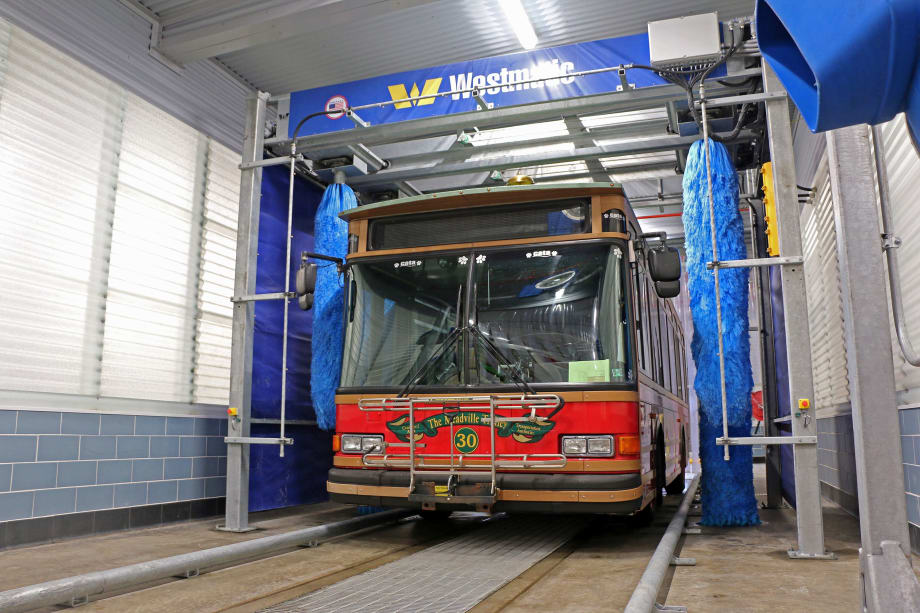
Westmatic
Westmatic
As technology continues to evolve, transit agencies are looking for more and more automation from their wash systems for numerous reasons.
“[Transit agencies] want to speed it up, increase accountability, and let their staff focus on their business,” explains Steve Wawro, president, Westmatic Corp. “They also need an easy way to handle changes in fleet size or configuration and to find a way to reduce human error.”
“What we are seeing [in transit] is a demand for heavy-duty wash systems that require little, if any, maintenance,” adds Jeff Ross, president, Ross and White Co.
Another trend suppliers are seeing is a move toward different brush technology, explains Jack Jackson, owner/president of Awash Systems Corp.
“Most prospects and customers are very keen on moving away from touchless/high pressure washing and would like to purchase a soft touch system,” he says. “Their concern is scratching of the vehicles, especially high end paint and graphics. Today’s technology on foam brushes eliminates those issues.”
Jackson adds that another concern is water usage, especially as more and more agencies continue to make moves toward becoming more sustainable.
METRO takes a look at some of the latest wash systems on the market today.
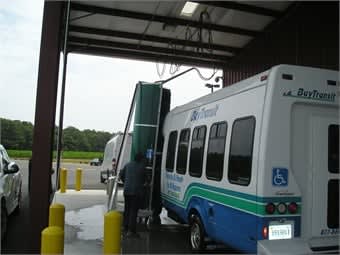
AWash
Awash (Ecowash) Systems Corp.
Awash’s (Ecowash) efficient bus wash system uses less water, energy, and soap than any other machine or method of washing in the industry. Available in any size, the only metered soap system available enables users to wash a bus in less than five minutes with only an ounce of soap and about 25 gallons of water per cycle.
www.awashsystems.com
Bitimec International Inc
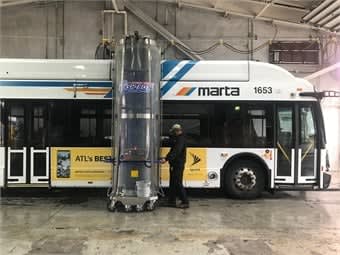
Bitimec
.
Bitimec’s Wash-Bots range from the affordable fixed-bay 101-BB electric to the top-of-the-line battery-powered Portable 626-EZ. Both models allow “one” operator to do exterior bus-washing as fast as a five-to-six-person-strong wash crew. The operator simply walks the power systems around the vehicle, as “they” apply soap, power-brush, and rinse, with a touch of a button. The small footprint systems do not need a dedicated building and can be tucked out of the way when not in use.
www.wash-bots.com
Interclean
InterClean Equipment LLC
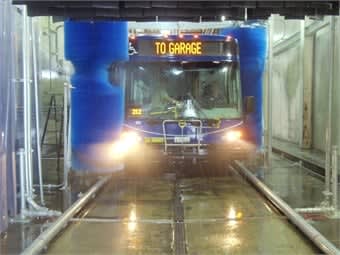
The washing and water recycling systems InterClean designs, builds, and commissions are based on decades of experience and include a drive-through Hybrid Wash System that combines friction and touchless cleaning. The XJ Wash System uses friction cleaning on the top, sides, and back with some touchless cleaning for sensitive (bike racks and mirrors) parts of the bus. The company also offers the newly redesigned Ultra Gantry System that can be configured for touchless-only, friction-only, or a combination of both cleaning technologies. All of the wash systems are available with InterClean’s EQ 100 water-recycling system, adding to the sustainability of its product line.
www.interclean.com
Ross and White Co.
Ross and White Co.
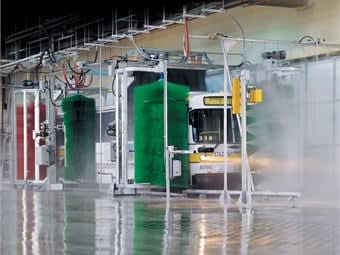
The 4X4-HPF-OM sets the transit standard for a high-volume drive-through transit bus wash. The system consists of a four-column, four-brush, wraparound bus wash, with oscillating overhead mop, high-pressure front, lower body, and wheel sprays.
www.rossandwhite.com
NS Wash
NS Wash Systems
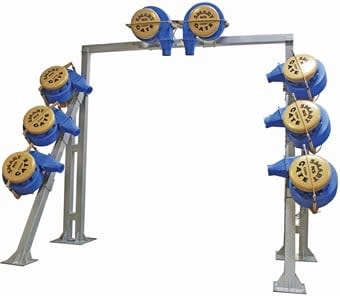
An upgrade to your blower system, the Smart Gate is a pneumatically-operated gate that opens and closes the inflow of air into the impeller chamber, reducing the power required to operate. When no vehicle is in service, the gate will close, eliminating frequent start-ups that drain the life of the motors. Most motors have a limit of approximately eight starts per hour; with the Smart Gates, you can keep the motors on while saving power. Minimize the unnecessary and onerous starts and stops, while reducing power usage. The Smart Gate attaches to most blowers; works with small compressors; reduces power consumption on idle by half; reduces starting power spikes; prolongs motor life; and reduces noise pollution.
www.nswash.com
Westmatic
Westmatic
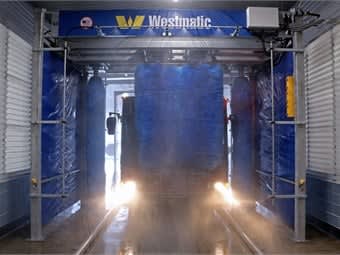
The versatile Transit-Master Brush Drive-Through Wash System is compact in size and features either four or six electronically-controlled brushes fully capable of washing the front, sides, and rear of the vehicle. Advanced engineering and full-density brushes provide a superior wash result while protecting mirrors and surface graphics. Its industry-exclusive overlapping brush movement eliminates any striping on the front and rear of the bus. Ideal for public transit buses or trolleys with front-mounted bicycle racks.
www.westmatic.com
More Bus

New York MTA Plans Largest Bus Fleet Upgrade in More Than a Decade
The agency is seeking manufacturers for 650 new CNG buses to replace aging vehicles, improve reliability, and advance its broader fleet modernization strategy.
Read More →
Building a Flexible Path to Transit Electrification
John Hroncich discusses BAE Systems’ modular and scalable approach, lessons learned from decades of real-world operations, and how agencies can identify electrification strategies that fit their fleets.
Read More →
Bus Tech Talk: Keeping Transit Technicians Ahead of the Technology Curve
LA Metro’s Obed Mejia discusses technician training, evolving maintenance technology, fleet replacement, and strategies for getting the most out of today’s transit fleets.
Read More →
Biz Briefs: RIPTA Unveils New Frontrunners, Clevland RTA Adds New Siemens, and More
In METRO's latest installment, we take a look at recent news from Siemens, Prevost, Dodge, and more partnerships making headlines across the transportation sector.
Read More →
People Movement: Holly Arnold Joins Transdev and More
In this edition, we also cover recent appointments and announcements at Pace, CamTran, MCI, and more, showcasing the individuals helping to shape the future of transportation.
Read More →
The High Cost of Transit Buses: Industry Leaders Look to Procurement Reform
Transit leaders and policymakers examine how standardized bus designs, streamlined procurement, and predictable funding could help agencies stretch budgets and deliver better service.
Read More →
The Business Voice Behind Public Transportation
As chair of APTA’s Business Members Board of Governors, Ray Melleady explains how more than 850 business members are partnering with transit agencies to advance funding, innovation, and industry-wide collaboration.
Read More →
From Surviving to Thriving: Building Stronger Transportation Organizations
Bus Business Consultants founder Brian Dickson shares lessons on leadership, organizational health, and creating options for long-term success in a changing transportation industry.
Read More →
Finding the ‘Happy Medium’: Optimizing Maintenance Without Sacrificing Reliability
The key to maintenance optimization isn’t doing less work—it’s doing the right work at the right time on the right assets.
Read More →
LA Metro, City of West Hollywood, and Partners Advance Smarter Bus Lane Enforcement
The award-winning partnership combines AI-powered detection with human oversight to improve bus reliability, accessibility, and enforcement efficiency.
Read More →