



Widespread use of heavy-duty hybrid plug-in buses predicted by 2020
Panelists at the Alternative Fuel Vehicle Institute's National Conference and Expo 2007 discussed the path to commercialization for heavy-duty plug-in hybrids.

The Alternative Fuel Vehicle Institute’s National Conference and Expo 2007 held in April in Anaheim, Calif., featured a session on the state of the heavy-duty plug-in hybrid market and whether the technology is close to commercialization.
There was no debate over whether or not plug-ins are a viable option, but session panelists predicted when they would be widely available and what barriers stand in the way.
The panelists spoke about their organizations’ efforts toward commercialization of plug-in hybrid electric vehicles (PHEV), stressing the effectiveness of research and development done through deployment programs.
The panelists all agreed that PHEVs are well suited to heavy-duty applications because their implementation would address rising fuel costs, aging fleets and environmental impact.
Odyne Corp. CEO Roger Slotkin explained that his company makes PHEV powertrains for new and older fleets, which he says are ideal for stop-and-start vehicles such as delivery vehicles and transit, school and cutaway buses. Odyne’s vehicle systems range from 20,000 to 30,000 pounds, said Slotkin, and the plug-in system is available for trucks, buses and other class 6, 7 and 8 vehicles.
Slotkin describes Odyne as being “fuel agnostic,” as they can handle conversions for vehicles that use any type of fuel to power the system’s generator, as well as all-electric applications. “The engine provides cruising power at constant rpm while reducing emissions and fuel consumption,” Slotkin said. One of Odyne’s first PHEV applications was for an ElDorado transit-style bus that was all-electric capable, including the air conditioning system.
Odyne’s PHEV powertrain uses the engine as a powerplant, Slotkin said, and any type of engine can be upfitted as a plug-in. The engine charges the batteries, with additional help from brake regeneration. Because Odyne can retrofit old vehicles, operators save on the cost of purchasing new vehicles, plus the additional fuel savings. “An electric mile is about 20% of the cost of a diesel mile,” Slotkin said.
Slotkin also noted that Odyne offers a variety of storage sizes, as well as the choice of either a charge-depleting versus a charge-sustaining system so operators can build a vehicle that best meets their needs.
“We allow fleet managers to access plug-in technology today, not years from now,” Slotkin said. Odyne’s end users include municipal transit agencies, refuse collection companies and organizations requiring shuttle buses.
While the first PHEV transit bus Odyne made cost $1 million, Slotkin notes that because battery and engine technologies are robust and rapidly evolving, costs are coming down. He said these days Odyne can produce a similar vehicle for about an eighth of the original cost, or $125,000.
Mark Duvall, representing the Electric Power Research Institute (EPRI), explained that the No. 1 barrier to widespread deployment is battery technology and the high costs involved.
EPRI works to directly contribute to the commercialization of PHEVs on a significant level, Duvall said, by gathering funding from partnerships with manufacturers and energy utilities to support research and development.
The automakers in the partnership then take on vehicle development, building prototypes and preparing for production if the PHEV model is found to be viable. Because PHEVs are ideal for vehicles that travel about 20 miles a day in stop-and-go traffic, Duvall said, EPRI is currently running a Sprinter Van program with DaimlerChrysler Commercial Buses N.A.
International Truck and Engine Corp. is involved with the manufacture of both school and commercial buses and is strongly interested in the commercialization of plug-ins. Randall Ray, manager of bus product development, said that the lithium ion batteries being developed are ready to be put on the road. “We’re looking for consistent and sustainable volume,” he said. Investment in lining up a supply chain is key to getting to commercialization by 2010 and widespread use by 2020, he added.
In a partnership with Advanced Energy, International is producing 19 PHEV school bus units for 11 buyers. As an OEM, Ray says International can validate all the technical systems on the bus, and brings the resources of service, technical support and a network of dealerships to the market. “We are ready for production,” he says. “We can take orders, we can build.”
More Management

Everett Transit, Community Transit Outline Consolidation Agreement
The proposed agreement calls for a 50% increase in bus service in Everett, a new microtransit zone, continued paratransit service, and the transfer of Everett Transit operations to Community Transit.
Read More →
Strada360’s Steve Lassey on Turning Transit Data Into Better Decisions
From breaking down data silos to preparing for AI, Strada360 CEO Steve Lassey discusses how transit agencies can use technology to improve operations, customer information, and long-term decision-making.
Read More →
People Movement: Phil Washington Joins HNTB, Denver RTD Launches CEO Search, and More
In this edition, we also spotlight recent personnel moves at STV, the Eno Center for Transportation, and more, highlighting the people taking on new roles across the transportation industry.
Read More →
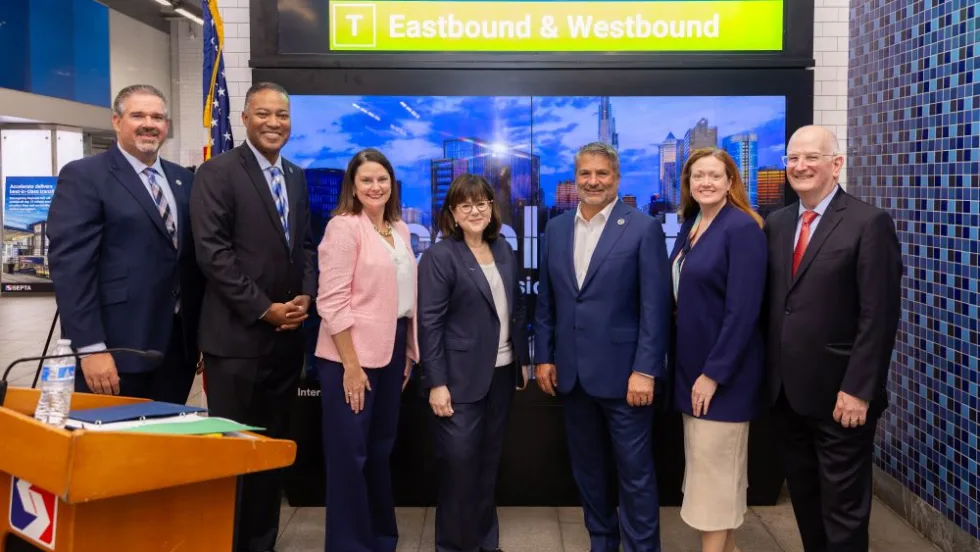
SEPTA Details Accelerate Vision for Transit System
The plan outlines investments in trolley modernization, new Metro and Regional Rail vehicles, accessible stations, and more frequent bus and rail service.
Read More →
FTA Ends Direct Oversight of MBTA Safety Actions
The federal agency closed its remaining special directive to the Massachusetts Department of Public Utilities following a safety review that began in 2022.
Read More →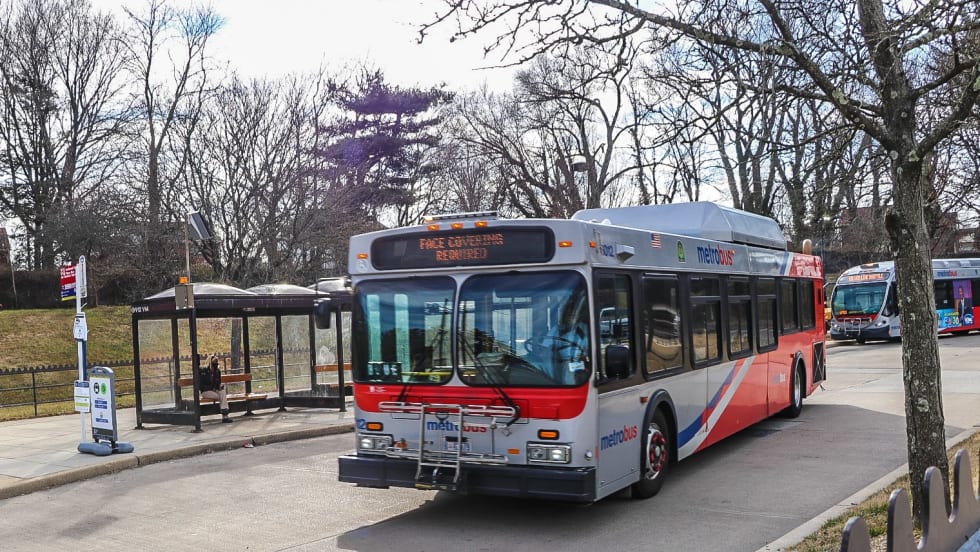
Report: Transit Bus Manufacturing Supports 34,100 Jobs, $5.1B in GDP
The “Buses Mean Business” report examines the transit bus manufacturing industry’s economic footprint, supply chain, and rising demand for vehicle replacements.
Read More →
LIT Marks 10-Year Milestone at Annual Summit
Hosted by the COTA from September 10 to 13, the Summit carried the theme “Celebrating 10 Years of Excellence, Leadership, and Impact,” with every part of the program honoring the people, agencies, and partners who built LIT over its first decade.
Read More →
People Movement: Dan Dipert Coaches Adds Third-Generation Leader, Keolis Names New Valley Metro VP/GM, and More
In this edition, we also cover recent appointments and announcements at the Wabtec, SilverRide, HNTB, and more, showcasing the individuals helping to shape the future of transportation.
Read More →
METRO Opens Submissions for 2026 Motorcoach Awards
Nominations are now being accepted for METRO Magazine’s Operator of the Year and Innovative Operator of the Year awards.
Read More →
New York MTA Advances Final Contract for Second Avenue Subway Expansion
Contract Four is the largest in the Second Avenue Subway Phase 2 project and includes construction of station infrastructure, tracks, and signals for the subway expansion, MTA officials said. Work on Contract Four will begin in 2027.
Read More →