



WMATA to employ "mystery riders" to enhance customer service
The Washington, D.C.-based Washington Metropolitan Area Transit Authority (WMATA) plans to begin a “mystery rider” program, and the Board of Directors has approved awarding a five-year contract to a winning bidder.
The Washington, D.C.-based Washington Metropolitan Area Transit Authority (WMATA) plans to begin a “mystery rider” program, and the Board of Directors has approved awarding a five-year contract to a winning bidder.
WMATA will hire a company to evaluate the quality of service on Metrobus and Metrorail. Experienced staff will rate the service from the customer’s perspective. This practice is commonly used in the retail, restaurant and banking industries.
“We need to be able to see the riders’ experience through their eyes. We want to know what works and doesn’t work, and what can be made better. This is one way to gather that information,” said Christopher Zimmerman, WMATA board chairman. Zimmerman asked WMATA to implement the program as part of a series of goals to improve service. The program could start as early as August.
Customer service and market research programs currently in place, such as WMATA’s customer service office, public outreach forum, public hearings and comprehensive customer satisfaction telephone surveys stratified by rail customers vs. bus customers, will inform the criteria used in the “mystery rider” program. “What I hope to do with the ‘mystery riders’ is to use the information that we currently have from our wealth of resources that tells us what’s important to customers and their expectations, to build criteria,” said Donna Murray, WMATA consumer research manager. “If safety is the number one priority, then I want to know whether the pay phones were functional, if the lights were operational. If you were out at night, was it well lit?” she adds.
Customer perception will play an integral role in the feedback received, notes Murray. The mystery shoppers’ observations will be crucial to the transit authority’s effort to improve customer service, by reporting back with a reality measured against a checked set of criteria drawn from customer perception in the surveys. “When we give a customer satisfaction survey, we’re getting perception, which is absolutely reality to that customer. But if I send in a team of trained observers with a checklist…I can see what [will require] communications, what’s going to require a change in operation, more money or more effort. A lot of times it’s communications.”
Murray emphasizes that the information from the mystery riders will be used in addition to — not instead of — customer feedback. “It’s never that the customer’s perception is not valid. A customer that is complaining about something or giving negative scores, there’s a reason they’re doing it, but I need to get an accurate picture of [the situation].”
As mystery rider information is compiled, issues will be addressed as soon as possible, depending on the available resources. “If I get a phone call that there are four lights out in [a] stairwell, that should be responded to in 24 hours or less. If there are continual bunches on a street due to a detour…you might respond to that immediately with a street supervisor, but it’s going to involve a review of the schedule,” said Murray.
The transit authority has used similar “mystery riders” programs in the past, but has had to cut them due to financial constraints, according to Candace Smith, public affairs officer for WMATA.
More Rail

Scenes from APTA TRANSform & EXPO 2026
Transit leaders, manufacturers, and industry professionals gathered in Chicago to explore new technologies, share ideas, and discuss the future of public transportation.
Read More →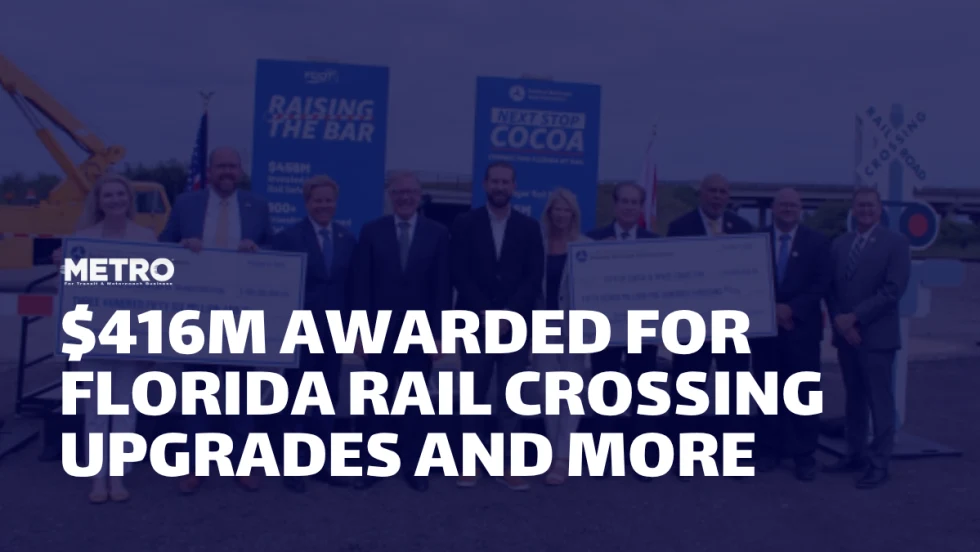
USDOT Awards $416 Million for Florida Rail Crossing Safety Upgrades, New Brightline Station
The projects aim to reduce risks for motorists and pedestrians at rail crossings while expanding passenger rail access along Florida’s Space Coast.
Read More →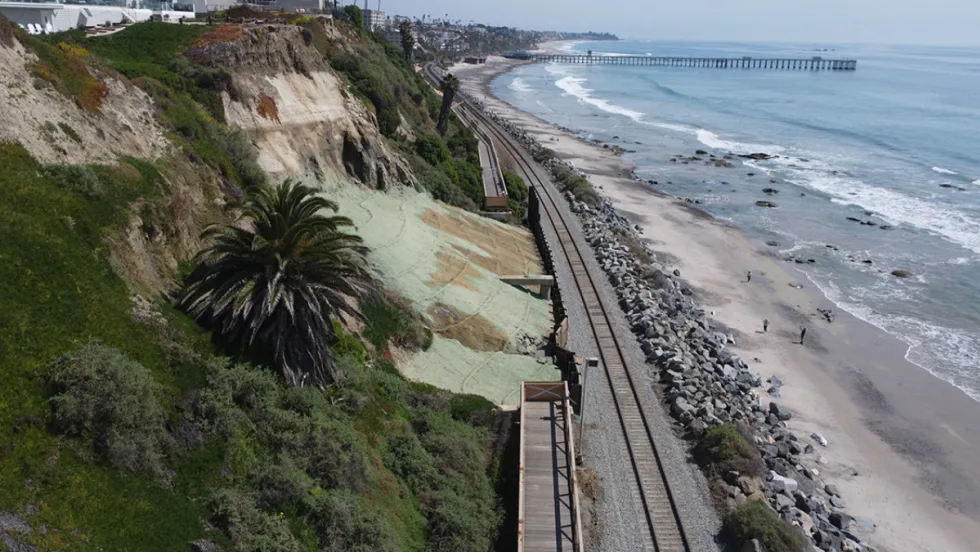
OCTA Declares Emergency to Protect Rail Corridor From Coastal Erosion
The California agency is accelerating shoreline protection and plans to place approximately 690,000 cubic yards of sand along the San Clemente coast to protect a key passenger and freight rail link.
Read More →
More Than a Summer Job: Building the Next Generation of Transit Talent
The Delaware River Port Authority and PATCO have transformed their internship program into a hands-on professional development experience that introduces students to the breadth of transportation careers — and creates a pipeline for future employees.
Read More →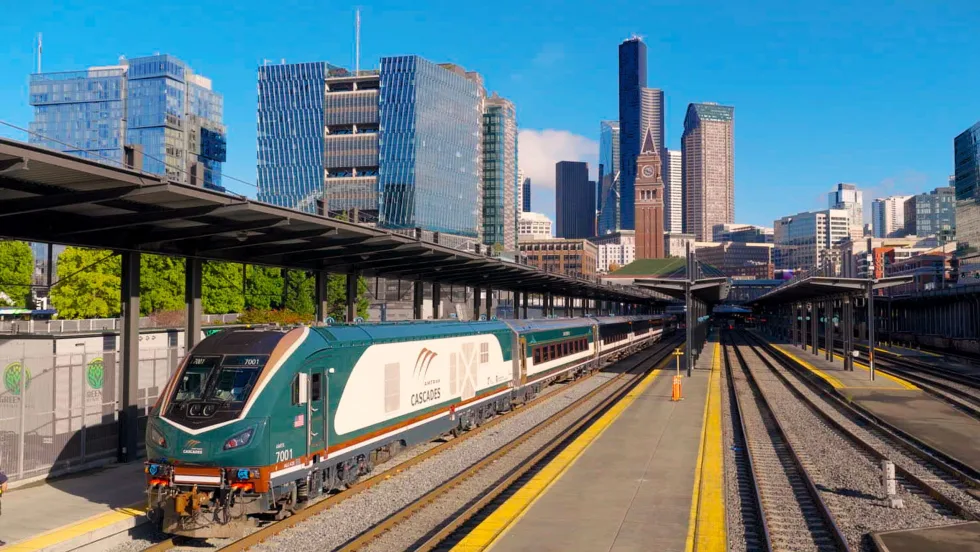
Airo Trains Make Their Amtrak Cascades Debut in the Pacific Northwest
Effective immediately, two cutting-edge Airo trainsets will join the Amtrak Cascades route, operating four daily trips between Vancouver, B.C., Seattle, Portland, and Eugene, Oregon, marking the first introduction of Airo trains into passenger service anywhere in the country.
Read More →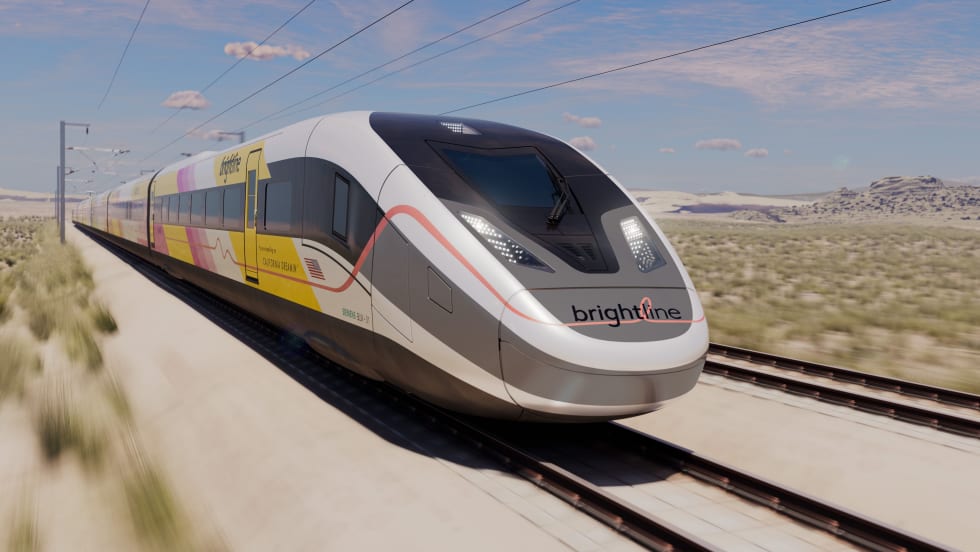
Florida's Brightline Announces Financial Restructuring
Brightline Florida says train operations will continue as normal as certain parent entities enter Chapter 11 and financial stakeholders provide $490 million in new long-term capital.
Read More →
ENC Lands MATA Contract and More in Biz Briefs
In this edition of Biz Briefs, we spotlight the latest developments shaping the future of mobility.
Read More →
Strada360’s Steve Lassey on Turning Transit Data Into Better Decisions
From breaking down data silos to preparing for AI, Strada360 CEO Steve Lassey discusses how transit agencies can use technology to improve operations, customer information, and long-term decision-making.
Read More →
SEPTA Details Accelerate Vision for Transit System
The plan outlines investments in trolley modernization, new Metro and Regional Rail vehicles, accessible stations, and more frequent bus and rail service.
Read More →
FTA Ends Direct Oversight of MBTA Safety Actions
The federal agency closed its remaining special directive to the Massachusetts Department of Public Utilities following a safety review that began in 2022.
Read More →