




Keep Reading: T&I Leaders Call for Improving Safety on US Transit Systems
High-Speed Rail Proposal Aims to Transform U.S. Passenger Rail Investment
The legislation pairs rail expansion with housing, safety, and economic development goals designed to reshape how regions grow around transit.
May 27, 2026
The American High Speed Rail Act also expands transit-oriented development incentives to grow affordable housing and spur commercial development around new rail hubs.
Credit:
METRO
2 min to read
- The proposal emphasizes integrating rail expansion with housing developments to promote regional growth around transit hubs.
- It incorporates safety measures within the expansion plan to enhance passenger rail systems.
- The initiative aims to leverage rail investment for broader economic development in affected areas.
*Summarized by AI
Congressman Seth Moulton (Massachusetts-06), along with Congresswoman Suzan DelBene (Washington-01), re-introduced the American High Speed Rail Act of 2026, a landmark piece of legislation that represents a “generational investment in America’s infrastructure, economy, and future.”
The bill authorizes up to $41 billion annually over five years to build a high-speed passenger rail system, putting the United States on par with nations in Europe and Asia that lead the world in modern rail travel.
“This isn’t just about improving convenience, it’s about creating smart, business-driven investment that will create millions of good-paying jobs, connect communities big and small, fight climate change, and ensure America leads the way in the infrastructure of the future,” Moulton said.
“By investing in a national high-speed rail network, we are not only alleviating strain on our highways and airports and creating safer communities, but we are also strengthening productivity and lowering carbon emissions,” DelBene said. “An expanded high-speed rail system would have an incredible value in the Pacific Northwest, connecting key population centers from Vancouver to Portland and beyond.”
The legislation lays out definitions for high-speed rail (186+ mph) and higher-speed rail (110-186 mph), establishes robust public-private partnership frameworks to maximize federal investment, and targets grants to projects that deliver equity, resilience, sustainability, and economic development for the communities they serve.
Bill Expands Transit-Oriented Development and Accelerates Rail Safety Reforms
The bill also expands transit-oriented development incentives to grow affordable housing and spur commercial development around new rail hubs.
It also takes steps to streamline project delivery by eliminating expenditure timelines, modernizing labor protections, and directing the Department of Transportation to fast-track performance-based safety regulations for advanced technologies already proven in global markets.
The reintroduction comes on the heels of a significant legislative victory for Congressman Moulton last week, when the House Transportation and Infrastructure Committee approved his amendment to include the Railway Safety Act in the surface transportation reauthorization package during the committee’s markup.
The Railway Safety Act strengthens federal oversight of the nation’s rail network by expanding safety requirements for hazardous materials transport, increasing the frequency of safety inspections, and giving regulators stronger tools to hold railroad operators accountable.
It also invests in workforce training and requires the adoption of proven safety technologies — closing critical gaps exposed by recent high-profile derailments.
Alongside Congressman Moulton and Congresswoman DelBene, the American High Speed Rail Act has 48 original cosponsors.
More Rail
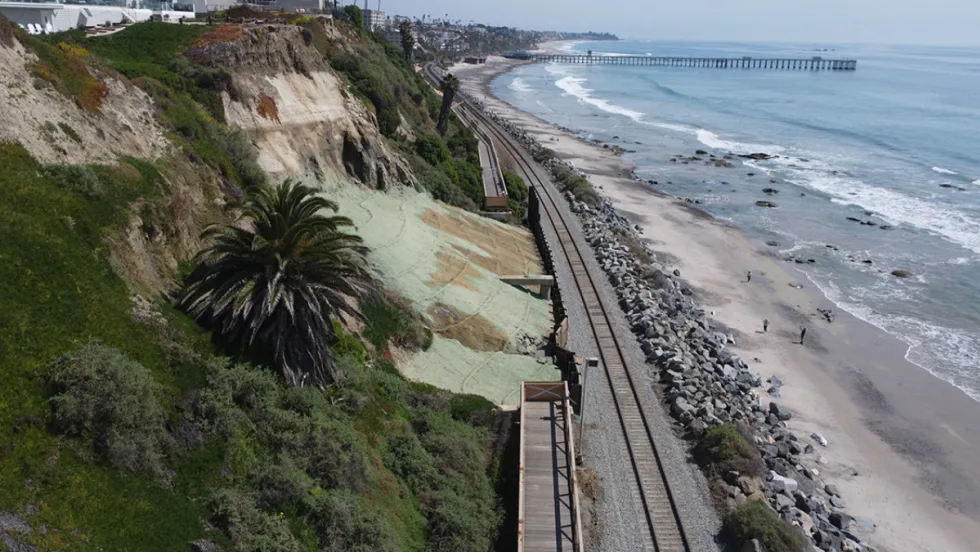
OCTA Declares Emergency to Protect Rail Corridor From Coastal Erosion
The California agency is accelerating shoreline protection and plans to place approximately 690,000 cubic yards of sand along the San Clemente coast to protect a key passenger and freight rail link.
Read More →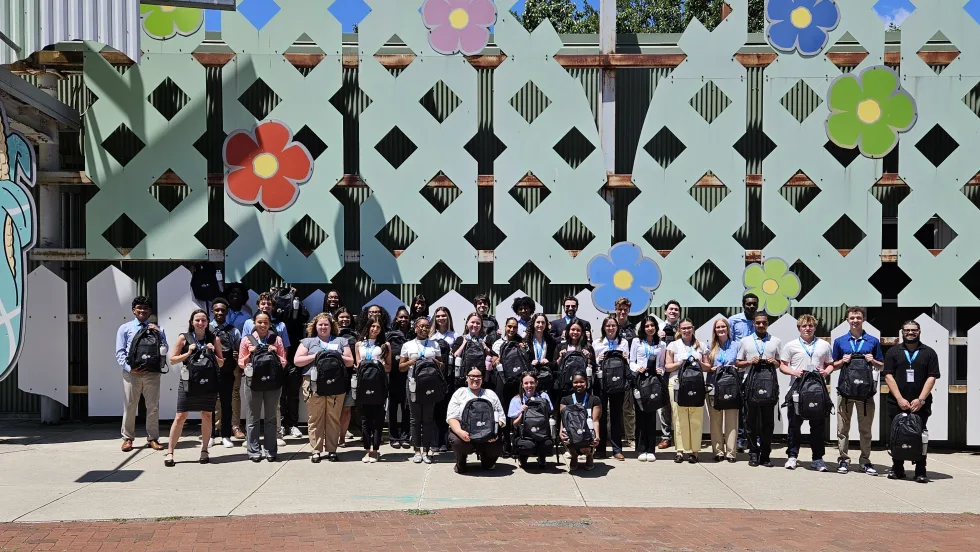
More Than a Summer Job: Building the Next Generation of Transit Talent
The Delaware River Port Authority and PATCO have transformed their internship program into a hands-on professional development experience that introduces students to the breadth of transportation careers — and creates a pipeline for future employees.
Read More →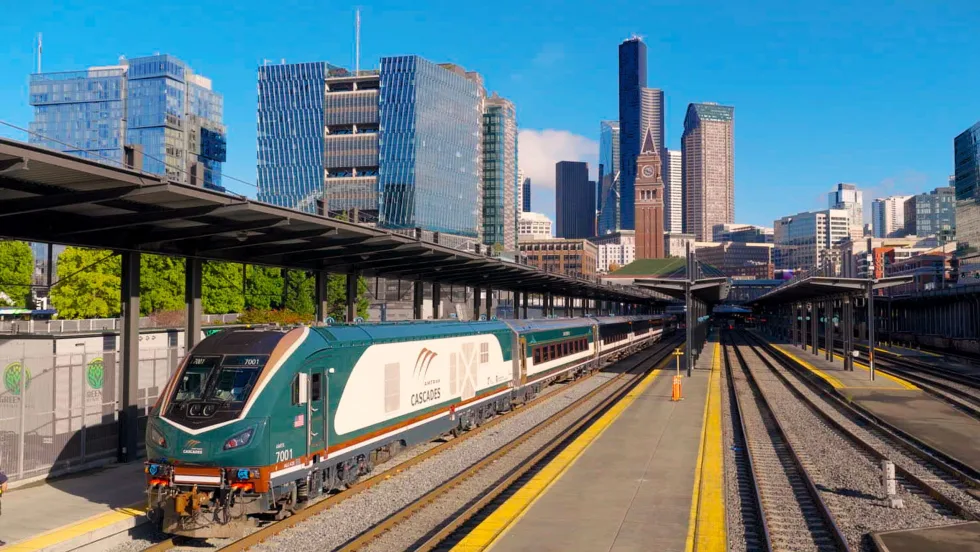
Airo Trains Make Their Amtrak Cascades Debut in the Pacific Northwest
Effective immediately, two cutting-edge Airo trainsets will join the Amtrak Cascades route, operating four daily trips between Vancouver, B.C., Seattle, Portland, and Eugene, Oregon, marking the first introduction of Airo trains into passenger service anywhere in the country.
Read More →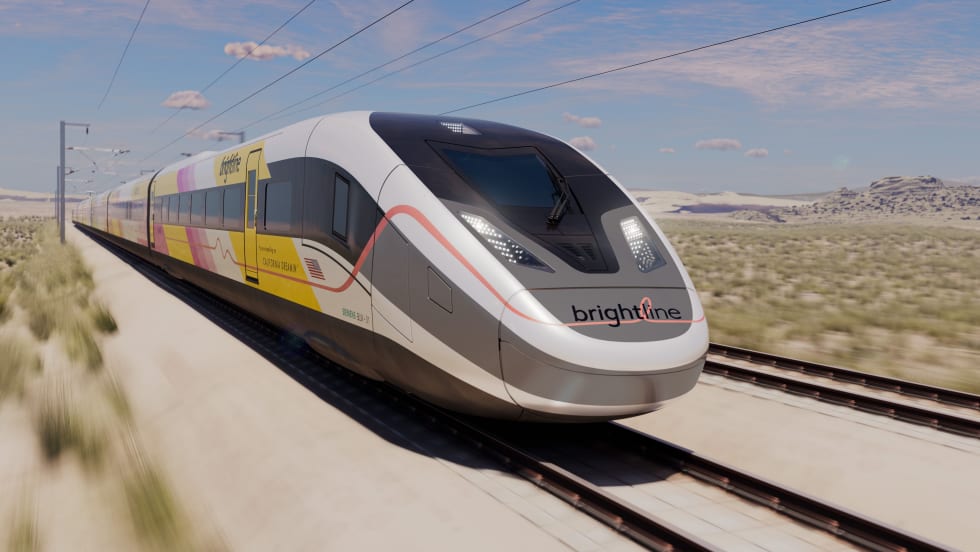
Florida's Brightline Announces Financial Restructuring
Brightline Florida says train operations will continue as normal as certain parent entities enter Chapter 11 and financial stakeholders provide $490 million in new long-term capital.
Read More →
ENC Lands MATA Contract and More in Biz Briefs
In this edition of Biz Briefs, we spotlight the latest developments shaping the future of mobility.
Read More →
Strada360’s Steve Lassey on Turning Transit Data Into Better Decisions
From breaking down data silos to preparing for AI, Strada360 CEO Steve Lassey discusses how transit agencies can use technology to improve operations, customer information, and long-term decision-making.
Read More →
SEPTA Details Accelerate Vision for Transit System
The plan outlines investments in trolley modernization, new Metro and Regional Rail vehicles, accessible stations, and more frequent bus and rail service.
Read More →
FTA Ends Direct Oversight of MBTA Safety Actions
The federal agency closed its remaining special directive to the Massachusetts Department of Public Utilities following a safety review that began in 2022.
Read More →
Amtrak, CN Reach Agreements to Strengthen Passenger Rail Service, Safety
The agreement resolves a more than decade-long proceeding before the Surface Transportation Board concerning the terms and conditions for Amtrak services, such as the City of New Orleans, Illini/Saluki, and Wolverine.
Read More →
New York MTA Advances Final Contract for Second Avenue Subway Expansion
Contract Four is the largest in the Second Avenue Subway Phase 2 project and includes construction of station infrastructure, tracks, and signals for the subway expansion, MTA officials said. Work on Contract Four will begin in 2027.
Read More →