Deputy Chief Innovation Officer for the Office of Extraordinary Innovation
Los Angeles County Metropolitan Transportation Authority
Los Angeles


 MENU
MENU SEARCH
Nadine Lee came into her position with the Los Angeles County Metropolitan Transportation Authority’s Office of Extraordinary Innovation two years ago after learning about its mission.

Lee is charged with planning mobility improvements in L.A. county.
Nadine Lee came into her position with the Los Angeles County Metropolitan Transportation Authority’s Office of Extraordinary Innovation two years ago after learning about its mission.
The office is tasked with developing a vision for the future of mobility in Los Angeles. The word “extraordinary” denotes the office’s mission to do things differently and to change the way people in Los Angeles County think about mobility and public transportation.

Lee is charged with planning mobility improvements in L.A. county.
“Sometimes I joke, if you don’t understand why “extraordinary” is there, you might be missing the point,” says Lee.
In 2015, Lee was working for Denver’s Regional Transportation District (RTD) and participating in a leadership program with the American Public Transportation Association (APTA). For her program, Lee was asked to interview Phillip A. Washington, the former CEO of RTD and current Metro CEO. At the time, Washington had just announced the creation of the Office of Extraordinary Innovation.
“After interviewing Phil and learning more about what he was doing, I said, who am I kidding, that is exactly the job I want,” says Lee. “I ended up writing to him personally — that was the first time I had done something like that in my career.”
ROLE FOCUS. Lee was eventually hired as the deputy chief innovation officer. The position was in complete alignment with everything that she had touched in her career prior. She is a passionate public transit advocate and has been a part of several large-scale, innovative transit endeavors.
A trained civil engineer, Lee was a project manager within RTD’s FasTracks program. Worth $6.9 billion, it became one of the largest voter-approved transit expansion programs in the country.
This eventually morphed into the Colorado Department of Transportation-led U.S. 36 project, to which Lee was a contributor. U.S. 36 brought 18 miles of Bus Rapid Transit (BRT) service between Downtown Denver and Boulder, Colo. The Flatiron Flyer is now the official name for the new and improved BRT service.
“Within the first few months, the ridership skyrocketed by 40 percent,” says Lee. “The reason it was so successful is because we reconfigured the routing of the bus system. We didn’t add stations or parking, but we priority-managed lanes on the highway with high-frequency services going in both directions throughout the entire day.”
FRESH CHALLENGES. Currently, Lee and her staff of 13 employees are in charge of strategically laying out the road map for mobility improvements in Los Angeles County over the next 10 years. The office also oversees Metro’s Private-Public Partnership program. The program allows the agency to receive outside ideas for improvement plans to its infrastructure and services through its unsolicited proposal policy and review process. Metro hopes to engage the private sector in order to find ways to deliver products faster and cheaper through partnerships.
“I have learned over the course of my career that you have to focus on the bigger goal, which is improvement of quality of life with transportation,” says Lee. “We want to work together to figure out how, in a city with some of the worst traffic congestion, we can improve people’s opportunities with efficient and improved travel so that riders have more time to spend enriching their lives.”
INVOLVEMENT. In addition to her full-time work, Lee is also active in both WTS and APTA. She was WTS’ Colorado chapter president from 2005 to 2006 and served on the international board from 2010 to 2014. Lee says her involvement has served her well over the past 25 years and inspires her to provide support to other industry employees as a mentor.
A big believer in trying new things, Lee also took up ballet five years ago. She takes lessons three times per week and had her first performance in May. “You can start anything as an adult, as long as you’re really committed to it,” says Lee.
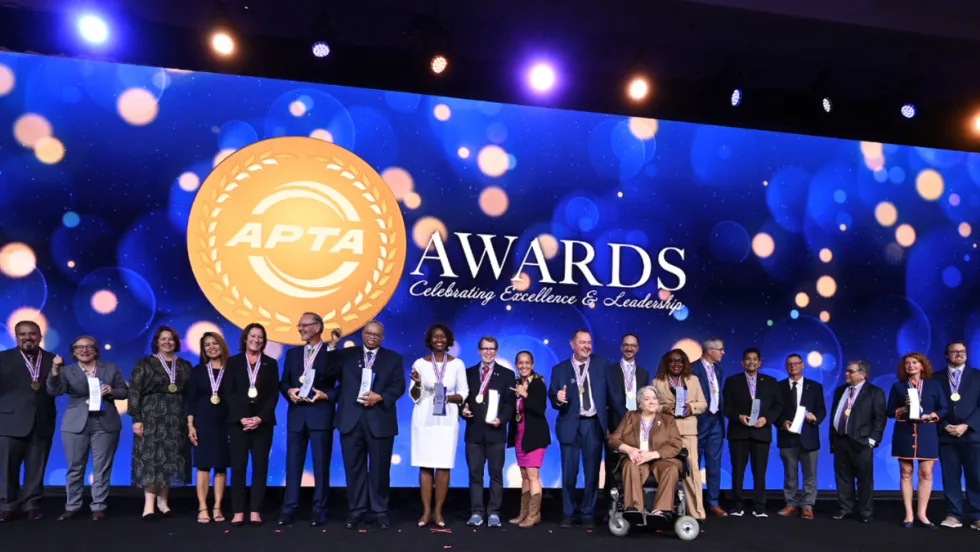
Innovations in autonomous and zero-emission transportation, standout transit systems, and industry leadership took center stage among this year's honorees.
Read More →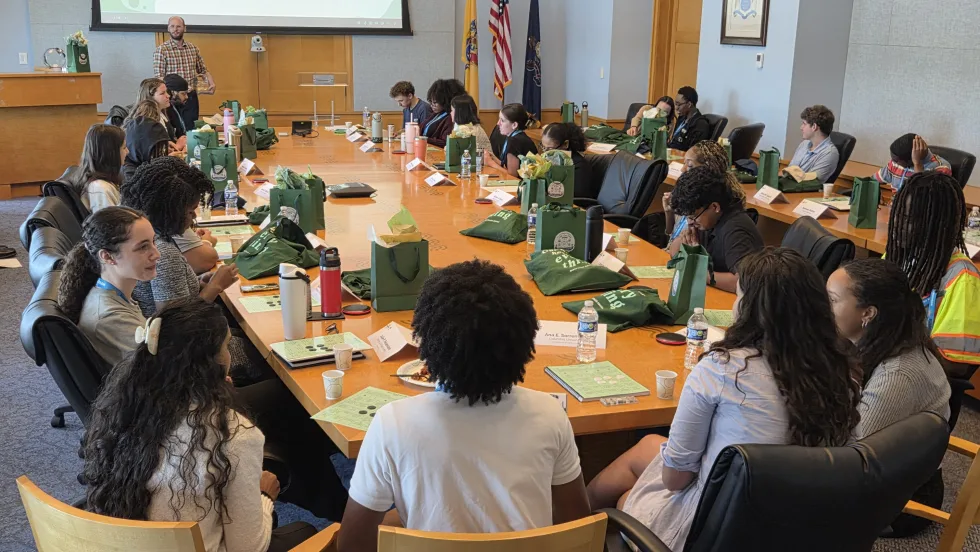
Lessons from DRPA/PATCO’s approach to creating a meaningful internship experience—and developing the next generation of transportation professionals.
Read More →
Transit leaders, manufacturers, and industry professionals gathered in Chicago to explore new technologies, share ideas, and discuss the future of public transportation.
Read More →
Dr. Carol Parker Walsh discusses leadership development, employee retention, workplace culture, and preparing transit’s workforce for AI and automation.
Read More →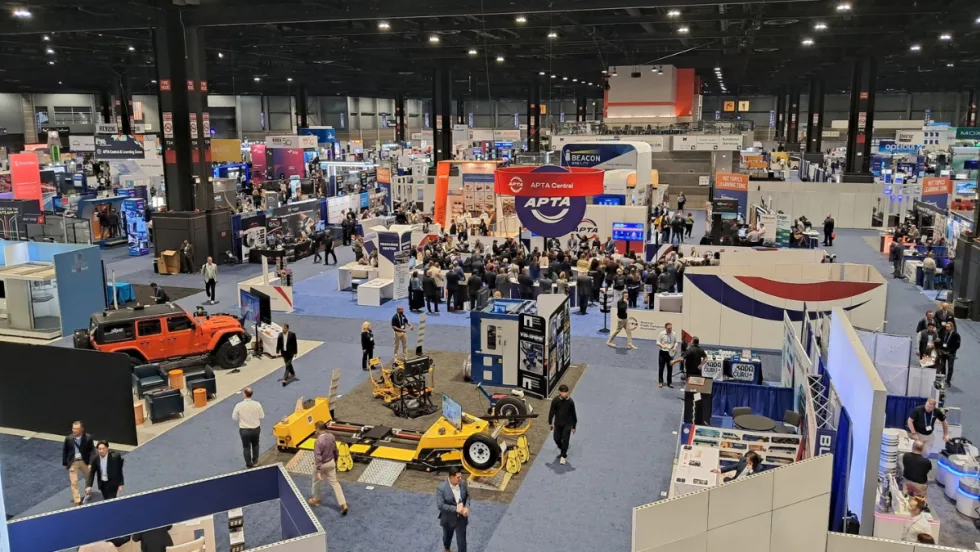
After 45 years, APTA returns to Chicago with a focus on next-generation fleets, AI, connected transit networks, and the funding strategies shaping public transportation’s future.
Read More →
The agency said tariffs on specialized imported components could reduce the purchasing power of its $23 billion investment in new subway cars, railcars, and buses.
Read More →
See the latest product launches, partnerships, technology updates, and transit industry announcements from APTA TRANSform & EXPO in Chicago.
Read More →
The APTA award-winning agency is pairing rapid system expansion with investments in workforce, safety, technology, and the fundamentals of transit service.
Read More →
In this episode of Bus Tech Talk, Complete Coach Works’ Business Development Manager Mark Hollenbeck and METRO’s Executive Editor Alex Roman sit down with Obed Mejia, Senior Technical Trainer for Bus Maintenance, at LA Metro to discuss how rapidly evolving bus technology is changing the maintenance shop — and the skills technicians need to keep pace.
Read More →
The longtime transportation executive will help Paslay Group grow its advisory and program management work across transit, highway, and other infrastructure sectors.
Read More →