
Valley Metro by the Numbers
- 41.7 million passenger trips in FY26
- 8.7% increase in ridership over the previous year
- 90% bus on-time performance
- 81% rail on-time performance
- 89% overall rider satisfaction


 MENU
MENU SEARCH
The APTA award-winning agency is pairing rapid system expansion with investments in workforce, safety, technology, and the fundamentals of transit service.
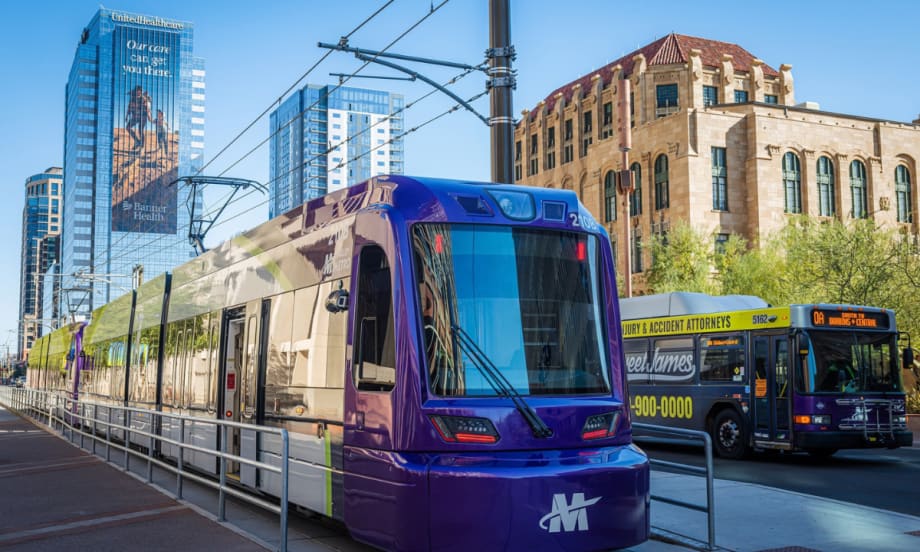
Valley Metro operates bus and light rail service across the Phoenix metropolitan region as the agency balances system expansion with investments in reliability, safety, and the rider experience.
Valley Metro
*Summarized by AI
Transit growth is often measured in miles of new service or riders added, but for Valley Metro, expansion across the Phoenix metropolitan region has also required a continued focus on safety, reliability, and customer experiences across the system.
Over the past four years, Valley Metro has added 10 miles of light rail with the opening of three rail projects, helping transform a system that opened in 2008 with one 20-mile line into a 35-mile, two-line network. At the same time, the agency has focused on improving reliability, maintenance, safety and security, fare modernization, customer communication, and operational efficiency.
That range of accomplishments helped earn Valley Metro the American Public Transportation Association’s 2026 Outstanding Public Transportation System Award in the more than 15 million but fewer than 50 million annual passenger trips category.
The recognition comes as the agency recorded more than 41.7 million passenger trips in FY26, up 3.3 million, or 8.7%, from the previous year.
“Receiving APTA’s Outstanding Public Transportation System Award in the 15- to 50-million annual trips category is an incredible honor,” Valley Metro CEO Jessica Mefford-Miller said. “Voted on by our peers, the award recognizes the progress Valley Metro and our regional partners have made over the past three years across several areas, including ridership, reliability, safety and security, customer experience, workforce development and fiscal stewardship.”
Those areas also illustrate a challenge facing agencies in growing regions. Adding service is only part of scaling a transit system. Existing operations must also keep pace with that growth.
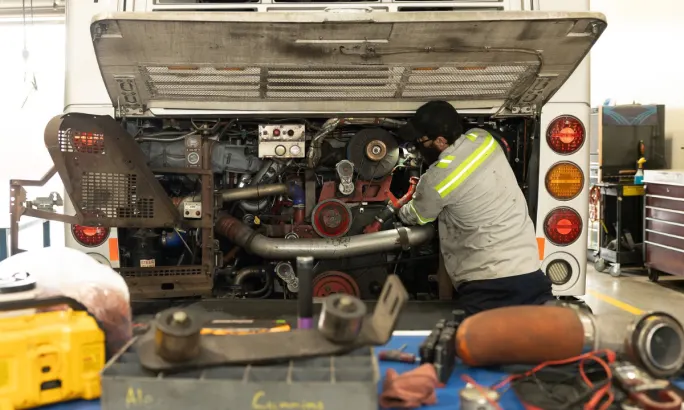
A Valley Metro technician works on a bus at the East Valley Bus Operations & Maintenance Facility. The agency says its reliability-centered maintenance program has helped triple bus fleet reliability.
Valley Metro
Maricopa County’s continued growth is shaping where Valley Metro goes next, but the agency’s recent experience suggests that expansion and operational performance cannot be treated as separate priorities.
As Valley Metro added rail service, it also developed proactive maintenance programs for its bus fleet and aging and expanding rail system. The agency said a reliability-centered maintenance program tripled bus fleet reliability, an enhancement that is especially relevant as Valley Metro prepares for continued regional growth.
The agency is now conducting a Bus Network Redesign examining frequency, span of service, and route geography against current and future travel needs. Riders, residents, and businesses are being brought into that process as Valley Metro considers how the bus network should respond to changing travel patterns.
Two additional rail projects are also in planning stages. The Rio East-Dobson Streetcar Extension would bring streetcar service into growing and densifying areas of north Tempe and west Mesa, while the West Phoenix Extension would extend light rail into west Phoenix, an area with significant existing transit ridership and projected population and employment growth.
Valley Metro is simultaneously evaluating other approaches with its member cities and regional planning partners, including bus rapid transit, microtransit, and service and fare program enhancements.
As the region continues to grow, the agency is considering not only where transit should expand, but which type of service best fits shifting travel patterns.
Growth has also changed how Valley Metro defines the customer experience.
Its five-year Strategic Plan identifies excellent customer experience as the agency’s “north star.” Rather than limiting that experience to the ride itself, Valley Metro looks at the complete journey, which includes planning a trip, paying fare, waiting, transferring, riding, and ultimately reaching a destination.
As part of that focus, Valley Metro increased its visible security presence on rail, with approximately 45-50 officers stationed along the system during peak hours, while partnerships with local law enforcement extend security efforts to bus riders and operators. Operation Blue Ride, for example, directs additional police and social service resources to higher-volume bus routes and stops.
From 2024 to 2025, the agency reported a 55% reduction in rail passenger assaults and a 60% reduction in bus operator assaults.
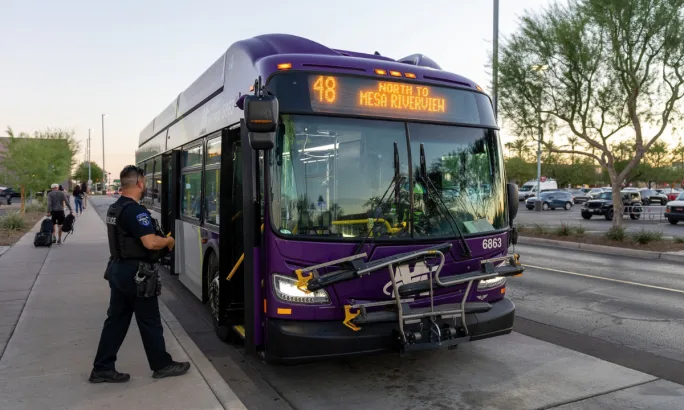
A Tempe Police officer stands alongside a Valley Metro bus during a Tempe Hope outreach effort. Valley Metro has expanded security and partnerships with local law enforcement and social service providers as part of its focus on rider and operator safety.
Valley Metro
At the same time, Valley Metro is working to address another safety challenge created partly by the nature of its system: interactions between street-running light rail vehicles and motorists.
In 2026 to date, 84% of light rail collisions resulted from motorist actions, according to the agency, and 80% involved illegal turns. After completing a rail collision reduction study in 2025, Valley Metro began using collision data to identify priority intersections and target them with signage changes, traffic signal optimization, and increased operator training and public education efforts.
The collision rate declined from 1.88 collisions per 100,000 vehicle miles in 2025 to 1.64 in 2026 to date.
“These challenges have reinforced the importance of using data and innovation, communicating clearly and working collaboratively with cities, peers, operators, riders and other partners to achieve lasting and impactful change,” Mefford-Miller said.
The same end-to-end view of the rider experience influences how the agency approaches technology.
Valley Metro’s Fare System Modernization project introduced Smart Fare, allowing riders to pay through a mobile device or reloadable Copper Card, with fare capping to ensure customers do not pay more than the daily, weekly, or monthly maximum.
An AI Virtual Transit Agent provides round-the-clock trip-planning assistance and customer support. For paratransit and RideChoice customers, the VM Connect platform allows riders to book and manage trips, update payment information, and track rides in real time.
Behind the scenes, the agency also uses the AlphaVu platform to consolidate feedback from calls, emails, social media, and web dialogue to identify recurring concerns and use them to inform service decisions.
Overall, the initiatives suggest technology helps remove friction at different stages of a transit trip while giving the agency more information about where that friction remains.
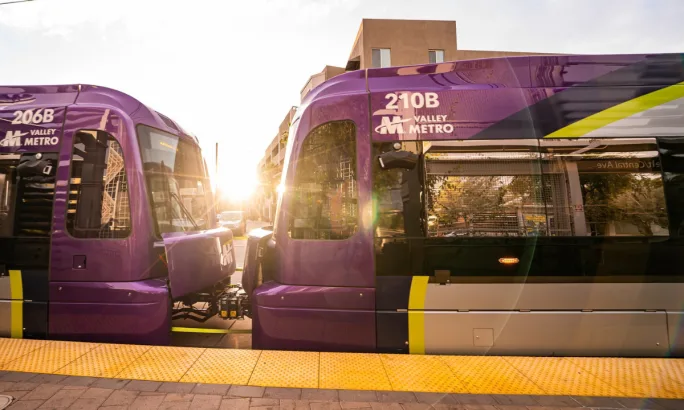
Valley Metro has added 10 miles of light rail over the past four years, growing its system to 35 miles and two lines as the Phoenix region continues to expand.
Valley Metro
The challenge is that improving and expanding service is happening in an increasingly expensive operating environment.
Valley Metro identified cost containment and affordability among the most significant challenges facing both the agency and the wider transit industry. Labor, wages, contracted personnel, and construction costs continue to rise, with construction costs posing a specific challenge in the rapidly growing Phoenix market.
That has led the agency to closely evaluate individual expenses and identify opportunities for greater operational efficiency. Valley Metro has explored streamlining, recompeted some contracts, and brought select functions in-house as part of its cost-containment strategy. Its FY27 operating budget came in 1.2% below FY26.
The agency has also looked outside its organization for lessons on controlling capital costs and minimizing community impacts as it builds future extensions.
Valley Metro described its contract-management model as bringing together internal expertise, contracted leadership and personnel, labor unions, and riders. The agency has also expanded collaboration across its 19 member communities, where individual cities bring different needs and priorities to a regional transit system.
A major challenge for transit agencies is securing funding for expansion, which is only part of the equation. Long-term planning must also account for the resources needed to sustainably operate and maintain the system after construction is complete.
The sustainability conversation also extends to the workforce. Valley Metro has expanded professional development through leadership programs, cross-functional training, tuition assistance, and online learning. Those programs reached 75% of employees in FY26.
The agency also conducted its first organization-wide Culture Survey, which drew 84% employee participation. Valley Metro is using the feedback to address communication, recognition, wellness, work-life balance, and process improvement. A Classification and Compensation Study established a new structure intended to support career progression and retention.
“We recognize that investing in talent is essential to delivering safe, reliable, and customer-focused transit, and we know that in our unique industry, we must cultivate talent inside of our organizations,” Mefford-Miller said.
Although new rail lines and buses can increase an agency’s capacity to move people, expansion also increases the infrastructure that must be maintained, the service that must be managed, the customer information that must be delivered, and the internal expertise an organization needs.
The APTA recognition captures what Valley Metro has accomplished during a period of significant growth. Its next phase will build on the operational practices developed alongside that growth as the agency continues to meet the needs of a growing region.

In this episode of Bus Tech Talk, Complete Coach Works’ Business Development Manager Mark Hollenbeck and METRO’s Executive Editor Alex Roman sit down with Obed Mejia, Senior Technical Trainer for Bus Maintenance, at LA Metro to discuss how rapidly evolving bus technology is changing the maintenance shop — and the skills technicians need to keep pace.
Read More →
The longtime transportation executive will help Paslay Group grow its advisory and program management work across transit, highway, and other infrastructure sectors.
Read More →
In this edition, we also spotlight recent personnel moves at Burns, UZURV, and more, highlighting the people taking on new roles across the transportation industry.
Read More →
The Delaware River Port Authority and PATCO have transformed their internship program into a hands-on professional development experience that introduces students to the breadth of transportation careers — and creates a pipeline for future employees.
Read More →
The contract, which is the largest base award of battery-electric buses by a U.S. transit agency, will be built in Southern California, sustaining good jobs as LA prepares to welcome the world in 2028
Read More →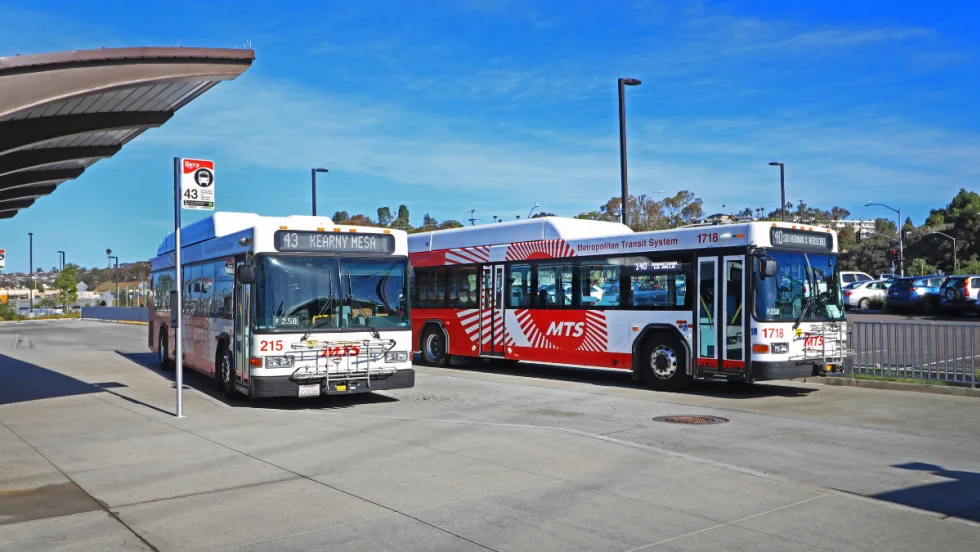
Named one of APTA’s 2026 Outstanding Public Transportation Systems with 50 million or more annual passenger trips, California’s San Diego Metropolitan Transit System points to gains in ridership, safety, technology, and reliability as foundations of its success.
Read More →
The Call for Papers is now open, allowing transit agency professionals and industry experts to help shape the PTC educational program by submitting session ideas for consideration.
Read More →
Named APTA’s 2026 Outstanding Public Transportation System in its size category, Florida’s Indian River County transit system continues to grow ridership through fare-free service and a focus on evolving community needs.
Read More →
In this edition of Biz Briefs, we spotlight the latest developments shaping the future of mobility.
Read More →Bus Business Consultants founder Brian Dickson shares lessons on leadership, organizational health, and creating options for long-term success in a changing transportation industry.
Read More →