



Working to Get Non-Transit Riders ON BOARD
Many transit systems assess reasons area residents give for not using transit, determine what factors can be addressed, and adjust routes and services. Others develop innovative marketing campaigns to attract non-riders.

Because Southern California lacks the transit infrastructure grid inherent to most East Coast cities, it’s harder for the numerous transit agencies in the region to attract riders. Destinations are more spread out, even in downtown areas, and it’s not uncommon to drive at least an hour to get to work or 20 minutes or more for a weekend activity, due to a combination of distance and traffic congestion.
The non-transit trend is spreading beyond the Southland, however. Nationwide, suburban sprawl has put residential neighborhoods farther away from urban centers, forcing people to drive greater distances to get to work, school, entertainment and shopping.
One solution championed by transit systems, local governments and developers alike has been transit-oriented developments (TODs), which are built near transit stations to attract homebuyers, who will, in turn, help reduce traffic congestion by riding instead of driving.
According to a June 30 article in the Los Angeles Times, apartment and condominium complexes have been built across Los Angeles County in the hopes of alleviating the expected traffic surge caused by the 6.3 million new residents that are expected in the area over the next 30 years.
The article points out that, despite these hopes, increased ridership has largely not been achieved. Reporters spent two months interviewing TOD residents and counting cars as they came and went from garages, and their research confirmed what recent studies have found: TOD residents are still choosing their cars over the bus or train.
Studies conducted jointly by the University of California, Berkeley, and Cal Poly Pomona, show that TOD residents were likely to use transit only if it took less time than driving, if they could walk to their destinations from the transit stop, if they had flexible work hours and if they had limited access to a car, the Los Angeles Times reports.
What can transit systems do to reverse this trend? METRO surveyed both riders and non-riders to find out how they make their transportation decisions, what systems can do to better serve them and how to get non-riders to change their habits.
Back behind the wheel
Lisa Croucher, assistant director at Duke University’s Education and Training Global Health Institute, lives in Carrboro, N.C., and commutes to Durham by car each day, a 30-minute trip.
Croucher is a believer in public transportation and thinks it is an essential public service. She used to ride Chapel Hill Transit’s fare-free bus or her bike or she would walk to work, but a job change that increased the distance of her daily commute outside Chapel Hill’s service area has made transit a less convenient option.
Croucher calls the switch to daily driving, “a challenging lifestyle transition.” She is currently weighing the convenience and time savings of commuting by car against the car-free lifestyle she values and the car-related expenses she could save by riding Triangle Transit Authority buses to work.
Whereas Chapel Hill Transit has a stop only a block from her house, Triangle Transit’s nearest stop is a 15-minute bike ride away. Then, once arriving at work, Croucher would have to walk 10 minutes from the bus stop to her office. Even though the express route is direct and fast (a 30-minute ride), taking her car is still faster.
Mass transit would be a more convenient option for Croucher if it was fare-free, she says, and if her employer offered a parking subsidy so that she could still drive occasionally without having to pay $60 per month for a parking pass she wouldn’t use every day. “Also, I’ve heard that the bus doesn’t come on time, but that might just be hearsay,” says Croucher.
Croucher points out an interesting factor that often negatively affects a transit system’s public image. Word of mouth spreads fast, and a system could unfairly be characterized as dirty, unreliable, or otherwise “unrideable,” based on one customer’s negative experience. Telling friends about this experience could prevent potential riders from trying public transportation.
Transit agencies commonly struggle to inform the public about their programs and services, facing limited marketing budgets and a high threshold for getting and retaining consumer attention, but the importance of effective publicity campaigns is underlined by the necessity to counteract misconceptions.
Toughing it out on train
Kristie Dugan, a resident of Bellflower, Calif., is the author of a blog detailing an impending move overseas to Norway (www.cultureshock.kristiejoy.net), where she looks forward to riding Oslo’s public transportation. Growing up in Southern California, Dugan was raised in the area’s “car culture.” It was a European friend who urged Dugan to try riding transit in the U.S., and she has been riding Los Angeles Metro’s four rail lines to work each day since April.
Dugan characterizes her experience riding transit as mixed. It takes her an hour and 45 minutes to commute by train, compared to 45 minutes or less by car. She debates whether the money she saves on gas and parking is worth the hassle of riding the trains, which involves a good deal of walking to and from the stations, long waits and unpleasant rides. “The Blue Line is always overcrowded,” she says. “I have witnessed a few fistfights and not once has anyone from Metro ever done anything. There are always people begging for money or preaching, and on hot days when there is standing room only and there is no air on the trains, it’s really miserable.”
Despite all this, she is still riding the train due to the money she is able to save on car expenses. Like Croucher, Dugan believes transit is an important service for residents of a metropolitan area, but laments the limited service area and generally unpleasant experience of riding transit in L.A.
She contends that if the Los Angeles County Metropolitan Transportation Authority raises fares, as the agency did in June, services should be improved with better maintenance, the addition of air conditioning, more frequent trains, better customer service or increased security.
For example, the agency broadcasts warnings to report any bags left unattended at Metro stations, Dugan says, but representatives were unresponsive when she called to make a report of a suspicious bag. “I was hung up on three times because it was noisy where I was waiting for my connecting train near a freeway,” she recalls.
Transit obstacles
Time concerns and the need for mobility options during the day at work posed challenges to riding transit for Carol Peters, who works in media relations for an electric utility company in Dallas.
Peters reports that it was pleasant to commute by train from her home in Fort Worth to downtown Dallas, citing the convenience of being able to get work done during her trip, not having to worry about parking and a relatively smooth transfer from the Trinity Railway Express, or "The T," which is a joint service with Dallas Area Rapid Transit (DART). “A number of my coworkers also rode either DART or the T, so it was a real collegial atmosphere on the train,” she says.
The train ride took Peters about an hour and 10 minutes, door to door, while commuting by car would take 45 minutes, depending on traffic, which was unpredictable. “I used to enjoy riding the train and watching the traffic jams from my window,” she says. “I had a certain smug feeling of satisfaction when I saw that. But it got to a point where I was spending too much time on the train and not enough time at home.”
As time went on, Peters’ hours at work started to be more irregular and she felt uncomfortable riding the train too late at night. The amount of time it took to commute, plus the many steps along the way — driving to the park-and-ride lot in the morning, making the transfer midway, walking from the station to the office and reversing the entire process at the end of the day — started to be a drain on Peters.
She sees the long intervals between trains and limited service area as key problems associated with riding the T that, if changed, would make it easier for her to take the train. “I think it’s a matter of maturity and growth of the mass transit system in Texas,” she says. “But there are plans, I understand, to expand the network.”
Fellow Texan Tory Gattis, who runs a small business from his home in Houston, says it’s the extra amenities that will get commuters out of their cars, where they have privacy, cargo space and the ability to choose their own music and adjust the air conditioning. He suggests that Wi-Fi services would be a good addition for commuter buses and would like to see an easier way to plan his total route, including transfers. He concurs with others that faster, more reliable transit options are the most critical factors in choosing public transportation over driving.
Agencies reach out
Many transit agencies are actively working to assess reasons area residents give for not using public transportation, determine what factors can be addressed and make changes to routes or services to reach non-riders. Some survey the public, others conduct focus groups composed of non-riders.
Michael Bolton, deputy executive director, strategic services, for Chicago’s Pace Suburban Bus system, says his agency has used custom software programs to analyze data collected from survey respondents and market research in order to develop a Transit Service Sketch Planning Tool, which helps the agency adjust existing service in mature suburban areas as well as develop services, routes and schedules that are directly based on customer input.
“We believe that we have a better understanding of the attitudes that our current riders have about transit and that we have a better understanding of the elements of the customer experience that will tip those in the other clusters to try transit,” says Bolton.
Understanding that where someone lives has an impact on whether or not they use public transportation, developers and transit agencies have both taken an interest in marketing to homebuyers.
Orange County, Calif.-based Metrolink has teamed up with developers to reach potential transit riders through a variety of innovative marketing programs, according to Colleen Mitchell, manager, division of marketing and sales. Over the past few years, the agency has actively pursued these partnerships to place Metrolink brochures and other promotional materials in sales offices for new developments within a 5-mile radius of all train stations. Potential homebuyers who pick up the brochures can request a trial ride by mail or online.
Metrolink staff and interns are continually updating the agency’s database and researching what new developments are coming online, Mitchell explains. The agency then contacts developers, sends them materials and offers to train sales reps, educating them about the Metrolink system and taking them out to ride the train. The sales reps are then authorized to give out free trial Metrolink passes to their prospective homebuyers. The agency later surveys the trial riders to find out if they purchased a home and if they continued to ride the train.
“With housing around here, especially in the Inland Empire, [developers] are taking a big hit,” Mitchell says. “They have a lot of inventory, so they’re really pushing for different ways to reach people and to offer incentives. They’re clamoring for ways to reach people who still want to move places where they would need to take the train.”
The tightening housing market has turned the tables, bringing developers to Metrolink in the hopes that a partnership will help attract buyers. Mitchell says these partnerships help the agency tap into a bigger marketing budget, as the housing developers will trade advertising for being able to offer a transit amenity to clients. “They’re already spending a lot of money out there in Southern California, and the media market is so expensive for us to pay for it with public agency dollars,” says Mitchell. “But when we leverage those dollars with a private company, we get our message out there with billboards, radio, direct mail — the kind of media exposure we generally can’t afford.”
One developer offers free two-year Metrolink passes to homebuyers, a potential $5,000 benefit. “This ensures we have a rider for the next two years that’s already paid for,” says Mitchell. ”We’ve had about 20 people who bought a home and got the free pass. For the developer, that translates into several million dollars’ worth of home sales. For us, it translates into probably around $50,000 to $100,000 of revenue that’s prepaid.”
More Management
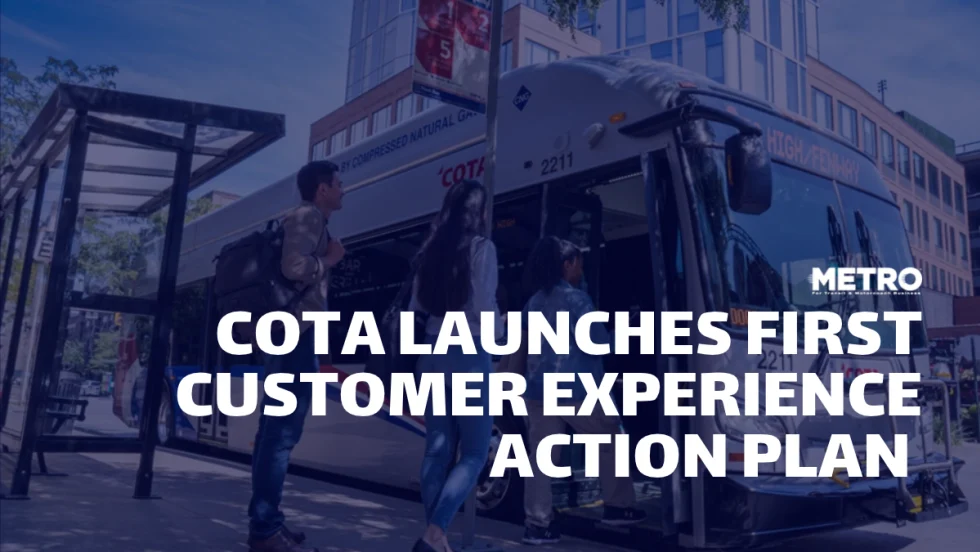
COTA Launches First Customer Experience Action Plan to Improve Transit Service
The new plan outlines improvements to service reliability, accessibility, communication, and the overall rider experience across Central Ohio's transit system.
Read More →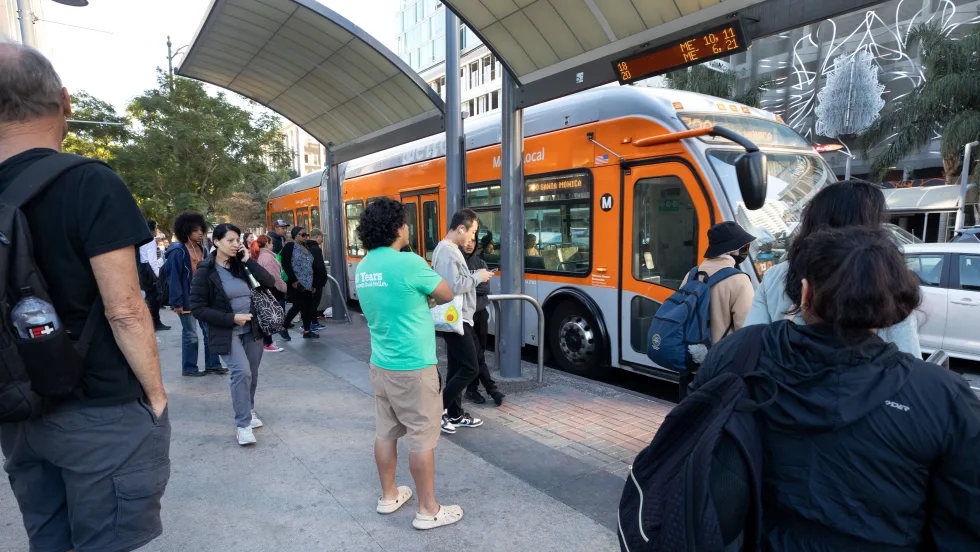
LA Metro September Ridership Climbs 3.9%, Led by Rail Growth
The agency recorded more than 27.2 million boardings, with rail ridership increasing 12.4% year over year and the D Line posting the largest gains.
Read More →
Utilimarc Launches SmartReplace to Optimize Fleet Replacement Decisions
AI-powered SmartReplace helps fleets prioritize vehicle replacements, model budget scenarios, and build more defensible long-term strategies.
Read More →
APTA Honors 2026 Award Winners, Hall of Fame Inductees at TRANSform & EXPO
Innovations in autonomous and zero-emission transportation, standout transit systems, and industry leadership took center stage among this year's honorees.
Read More →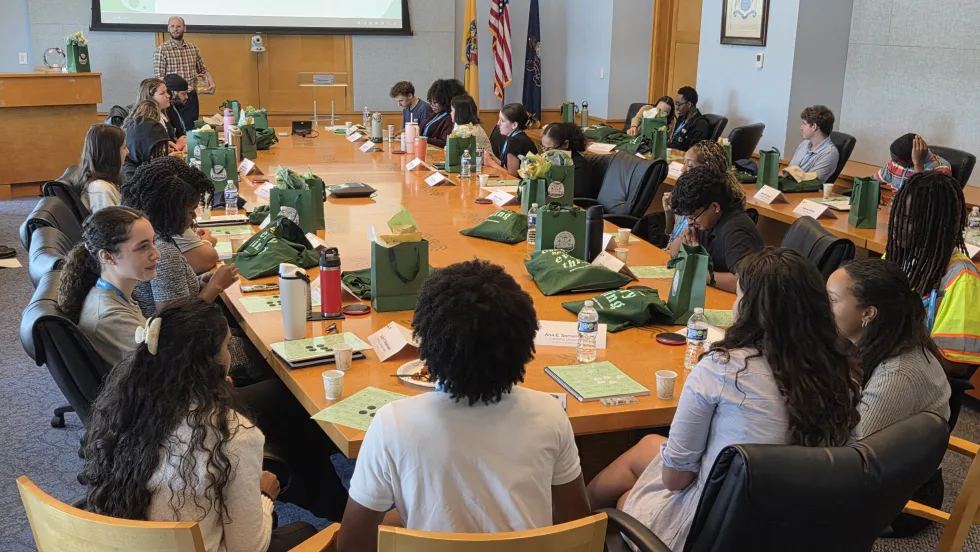
7 Ways to Build a Better Transit Internship Program
Lessons from DRPA/PATCO’s approach to creating a meaningful internship experience—and developing the next generation of transportation professionals.
Read More →
Scenes from APTA TRANSform & EXPO 2026
Transit leaders, manufacturers, and industry professionals gathered in Chicago to explore new technologies, share ideas, and discuss the future of public transportation.
Read More →
Building Stronger Leaders, More Resilient Transit Teams
Dr. Carol Parker Walsh discusses leadership development, employee retention, workplace culture, and preparing transit’s workforce for AI and automation.
Read More →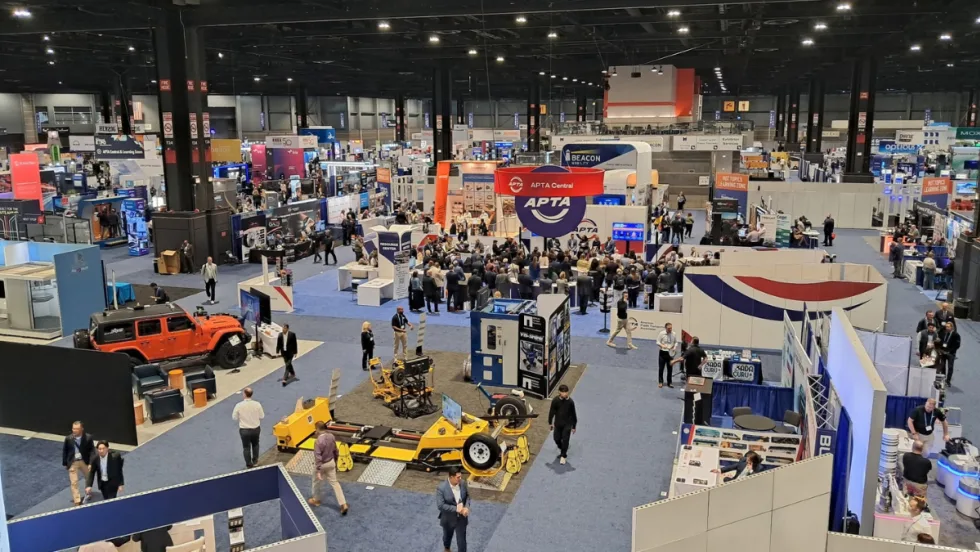
APTA 2026 TRANSform & EXPO Kicks Off in Chicago
After 45 years, APTA returns to Chicago with a focus on next-generation fleets, AI, connected transit networks, and the funding strategies shaping public transportation’s future.
Read More →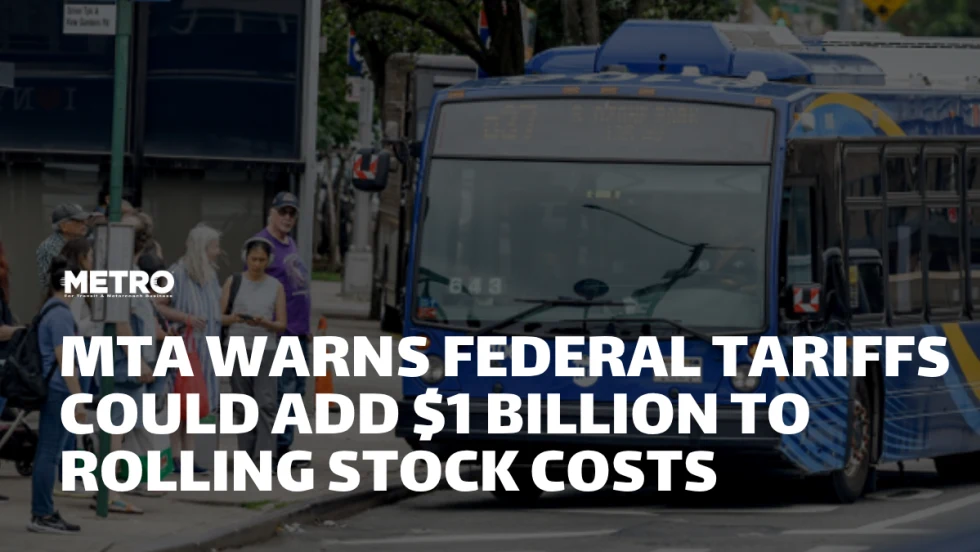
New York MTA Warns Federal Tariffs Could Add $1 Billion to Rolling Stock Costs
The agency said tariffs on specialized imported components could reduce the purchasing power of its $23 billion investment in new subway cars, railcars, and buses.
Read More →
From the Show Floor: What Happened at APTA TRANSform & EXPO 2026
See the latest product launches, partnerships, technology updates, and transit industry announcements from APTA TRANSform & EXPO in Chicago.
Read More →