



TAPTCO, MSTCO create course to help drivers pass CDL test
The course is available in hard copy containing seven interactive CDs together with a trainer’s guide, a driver’s study guide, and a book of practice tests. Alternately, the course is available over the web through a learning management system, so that applicants can go through the training and practice tests from any location.

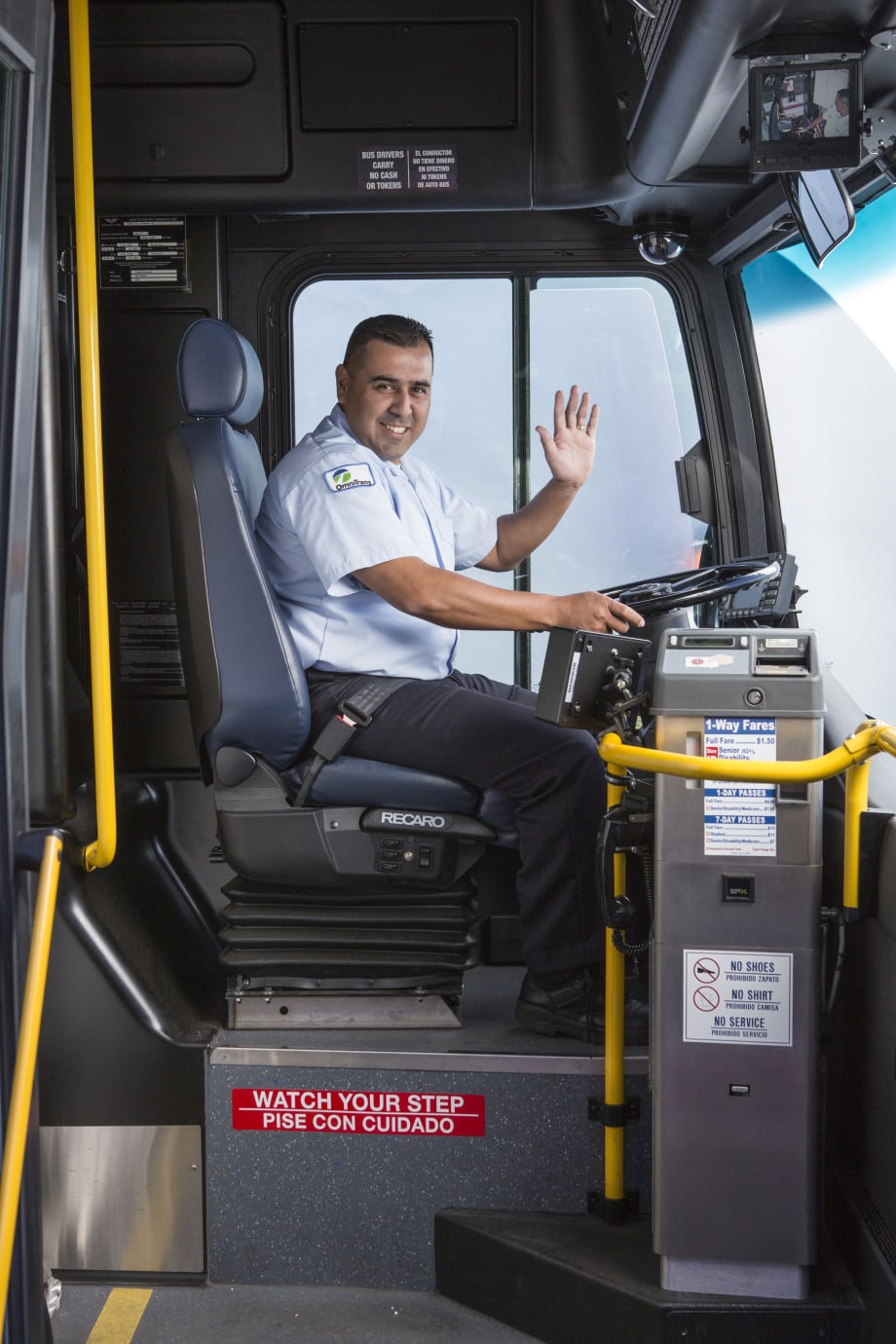
Omnitrans
Omnitrans
The Transit & Paratransit Co. (TAPTCO) and the Motorcoach Safety Training Co. (MSTCO) completed the creation of a training course to help applicants pass the Commercial Driver’s License (CDL) written test.
“As we all know, there are driver shortages everywhere. A major hurdle in hiring enough drivers is helping them pass the CDL written test. Many of our customers have been asking for help in reducing the number of applicants lost due to the complexity of the CDL written test. It can take between eight to 20 hours of study for an applicant to pass this test and it is cumbersome and hard work to achieve,” explained Jeff Cassell, president of TAPTCO and MSTCO. “Consequently, many applicants drop out at this stage. With our new interactive CD based training course, we have reduced this time to around six hours and made it easier to learn.”
“We put considerable thought into how to make this training more interesting and effective and in our testing of the finished product, the outcome has been excellent,” Cassell added. “We have two narrators in all the six programs who interact with each other and include humor in, many of the presentations. We also include a third narrator who provides many test tips to the trainee, to help pass the test. As they go through the training, applicants are repeatedly questioned on the subjects taught and guided if they answer any questions wrong.”
CD # 7 includes 11 practice tests totaling 386 questions and these are presented in the same manner as the test at the DMV. After each test the trainee is told their score and then has the ability to review the test, identifying where they were wrong and what is the correct answer.
“In creating this training course, we learned how complex the training and testing is,” said Cassell. “Creating this course was far more difficult and extensive than we envisioned when we started. This really is needed and we hope to help many more interested applicants overcome this hurdle.”
The course is available in hard copy containing seven interactive CDs together with a trainer’s guide, a driver’s study guide, and a book of practice tests. Alternately, the course is available over the web through a learning management system, so that applicants can go through the training and practice tests from any location.
More Bus

New York MTA Plans Largest Bus Fleet Upgrade in More Than a Decade
The agency is seeking manufacturers for 650 new CNG buses to replace aging vehicles, improve reliability, and advance its broader fleet modernization strategy.
Read More →
Building a Flexible Path to Transit Electrification
John Hroncich discusses BAE Systems’ modular and scalable approach, lessons learned from decades of real-world operations, and how agencies can identify electrification strategies that fit their fleets.
Read More →
Bus Tech Talk: Keeping Transit Technicians Ahead of the Technology Curve
LA Metro’s Obed Mejia discusses technician training, evolving maintenance technology, fleet replacement, and strategies for getting the most out of today’s transit fleets.
Read More →
Biz Briefs: RIPTA Unveils New Frontrunners, Clevland RTA Adds New Siemens, and More
In METRO's latest installment, we take a look at recent news from Siemens, Prevost, Dodge, and more partnerships making headlines across the transportation sector.
Read More →
People Movement: Holly Arnold Joins Transdev and More
In this edition, we also cover recent appointments and announcements at Pace, CamTran, MCI, and more, showcasing the individuals helping to shape the future of transportation.
Read More →
The High Cost of Transit Buses: Industry Leaders Look to Procurement Reform
Transit leaders and policymakers examine how standardized bus designs, streamlined procurement, and predictable funding could help agencies stretch budgets and deliver better service.
Read More →
The Business Voice Behind Public Transportation
As chair of APTA’s Business Members Board of Governors, Ray Melleady explains how more than 850 business members are partnering with transit agencies to advance funding, innovation, and industry-wide collaboration.
Read More →
From Surviving to Thriving: Building Stronger Transportation Organizations
Bus Business Consultants founder Brian Dickson shares lessons on leadership, organizational health, and creating options for long-term success in a changing transportation industry.
Read More →
Finding the ‘Happy Medium’: Optimizing Maintenance Without Sacrificing Reliability
The key to maintenance optimization isn’t doing less work—it’s doing the right work at the right time on the right assets.
Read More →
LA Metro, City of West Hollywood, and Partners Advance Smarter Bus Lane Enforcement
The award-winning partnership combines AI-powered detection with human oversight to improve bus reliability, accessibility, and enforcement efficiency.
Read More →