



San Diego MTS Trolley cars find new home at TSA training facility
The Siemens vehicles, which weigh about 80,000 pounds each, were cut in half, hoisted by crane and strapped down to flatbed trucks for their 1,300-mile trip.

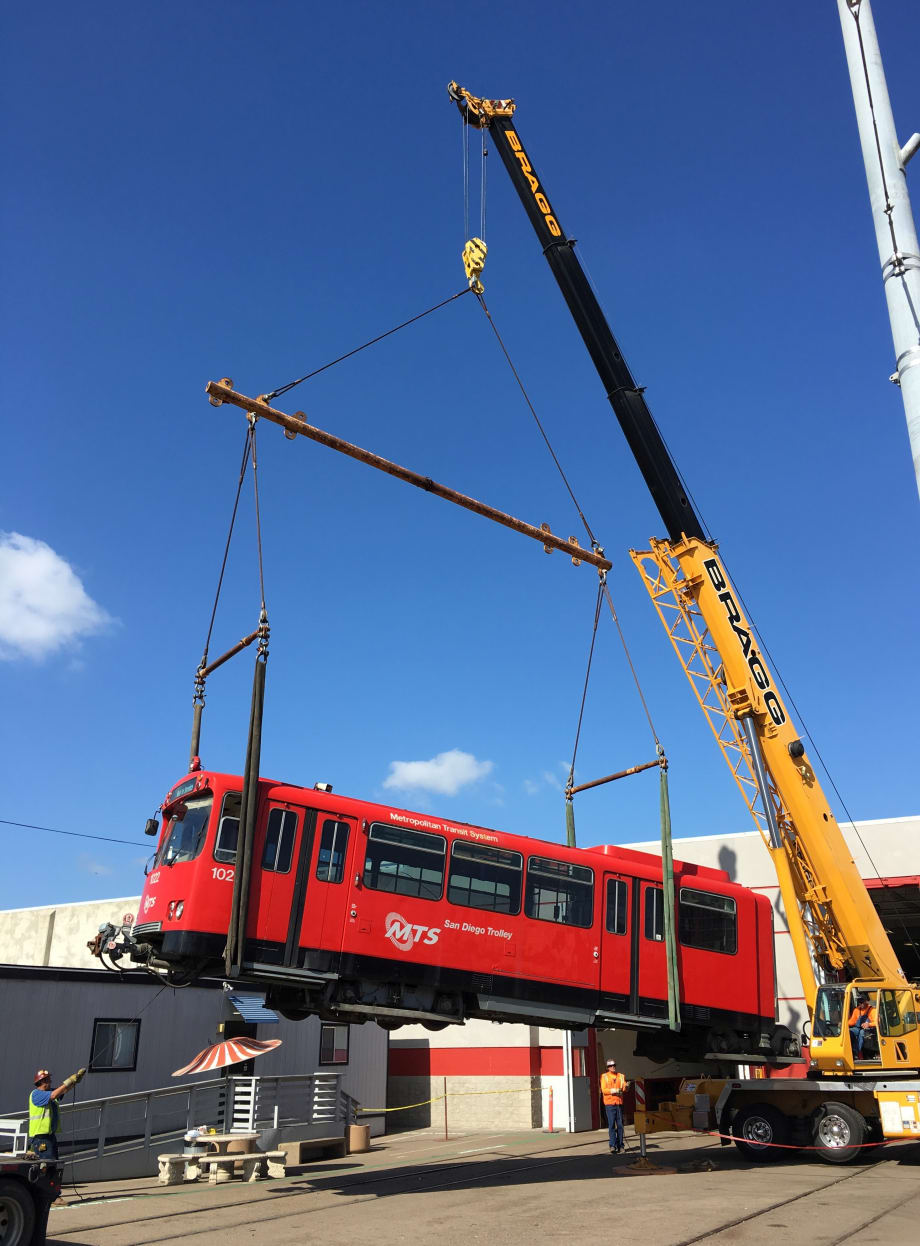
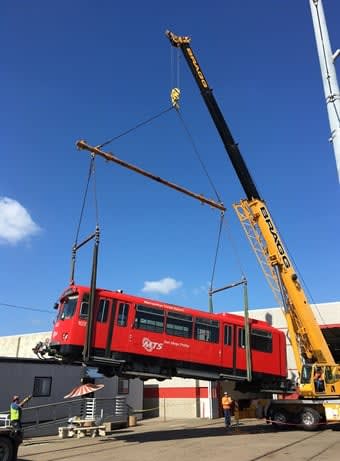
Two of the original light rail vehicles that have been serving San Diego patrons of Metropolitan Transit System’s (MTS) Trolley were loaded onto flatbed trucks for their final journey to San Antonio. The U2 Trolley cars will be used for the Transportation Security Administration and Department of Homeland Security National Explosives Detection Canine Team Program (NEDCTP).
The vehicles, which weigh about 80,000 pounds each, were cut in half, hoisted by crane and strapped down to flatbed trucks for their 1,300-mile trip. It is estimated that each car carried approximately nine million passengers since beginning service in 1981. The cars were manufactured in Germany by Siemens, which now has a manufacturing plant in Sacramento, Calif., and continues to supply MTS with new light rail vehicles.
“These cars were the workhorses of our system since the inception of our light rail system,” said Paul Jablonski, CEO of MTS. “It is satisfying to see that their life has been extended and will play a role in keeping transit system patrons safe throughout the United States.”
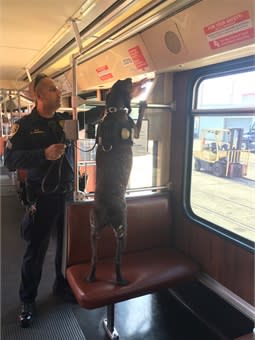
All TSA-trained canine teams attend the 10-week training at the Lackland Air Force Base in San Antonio. The dogs are trained to detect explosive devices at transit facilities and on-board all types of vehicles. The MTS cars will provide the dogs a real-life environment in which to train.
Two firms worked with MTS to load and transport the cars. Bragg Crane Service lifted the cars onto flatbed trucks supplied by Value Express Trucking. The trip from San Diego to San Antonio is expected to take two days.
More Management

Building Stronger Leaders, More Resilient Transit Teams
Dr. Carol Parker Walsh discusses leadership development, employee retention, workplace culture, and preparing transit’s workforce for AI and automation.
Read More →
Roman Cornell on ABC Companies’ Evolution and the Future of Passenger Transportation
The company’s CEO discusses carrying forward a third-generation family legacy, ABC’s continued evolution in passenger transportation, support for increasingly complex fleets, and how technology and continued investment could help operators improve uptime.
Read More →
CATS Launches West Charlotte Microtransit Zone, Expands Transit Services
The new microtransit zone connects residents to key destinations as Charlotte Area Transit System rolls out the first phase of its 2055 Transit System Plan.
Read More →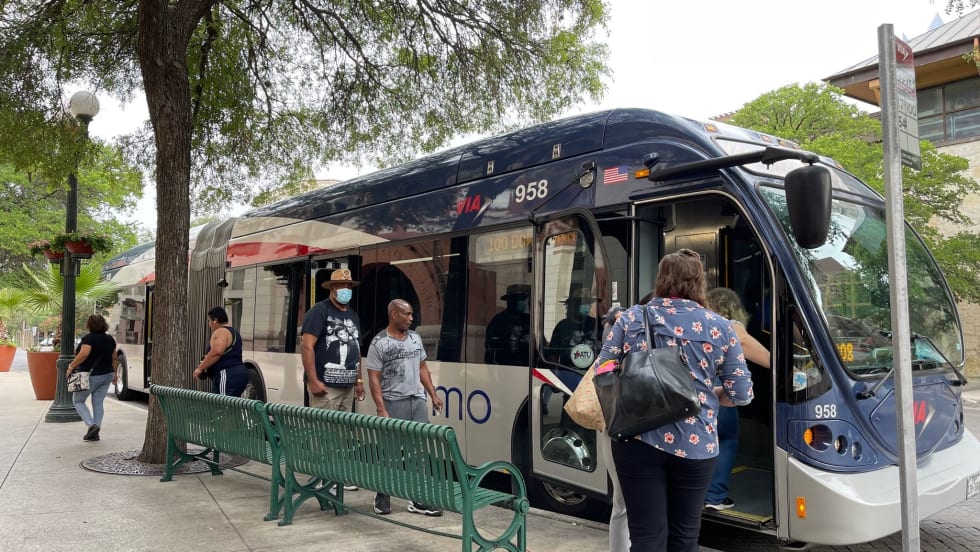
VIA Bus Ridership Grows 10.1% Through August 2026
San Antonio's VIA Metropolitan Transit reported the highest bus ridership growth among major Texas transit systems. Federal Transit Administration data ranked it second among the nation's 50 largest transit systems.
Read More →
CSA Group Releases Climate Resilience Standard for Transit, Passenger Rail
Developed with support from the Standards Council of Canada, CSA D700 guides assessing climate-related risks and planning adaptation measures for transit and passenger rail systems.
Read More →
ETA CEO John Maglio on Transit Technology, Innovation, and Building Agency Trust
ETA founder and CEO John Maglio explores the evolution of transit technology, the importance of reliable systems, and how stronger partnerships can help agencies improve operations and the passenger experience.
Read More →
COTA Launches First Customer Experience Action Plan to Improve Transit Service
The new plan outlines improvements to service reliability, accessibility, communication, and the overall rider experience across Central Ohio's transit system.
Read More →
LA Metro September Ridership Climbs 3.9%, Led by Rail Growth
The agency recorded more than 27.2 million boardings, with rail ridership increasing 12.4% year over year and the D Line posting the largest gains.
Read More →
Utilimarc Launches SmartReplace to Optimize Fleet Replacement Decisions
AI-powered SmartReplace helps fleets prioritize vehicle replacements, model budget scenarios, and build more defensible long-term strategies.
Read More →
APTA Honors 2026 Award Winners, Hall of Fame Inductees at TRANSform & EXPO
Innovations in autonomous and zero-emission transportation, standout transit systems, and industry leadership took center stage among this year's honorees.
Read More →