



California Bay Area Transit Agencies Adopt Standard Sign Designs
The design guides are intended to make it easier for riders to identify information and use transit by delivering clear, predictable, and consistent information across service areas and county lines.

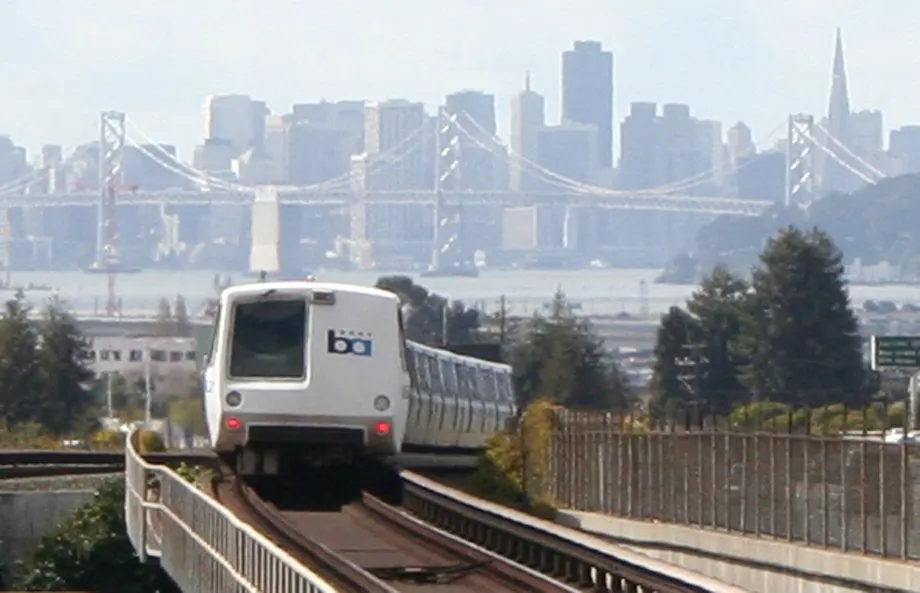
The RNM Council includes top executives from MTC, the San Francisco Municipal Transportation Agency, BART, AC Transit, the Santa Clara Valley Transportation Authority, Caltrain, SamTrans, and the Golden Gate Bridge, Highway, and Transportation District, as well as three GMs representing all other transit agencies serving Bay Area communities.
BART
- The RNM Council approved transit wayfinding design guides to create a uniform look for signs and maps throughout the Bay Area.
- These guides aim to deliver clear and consistent transit information across different service areas and counties.
- The design guides define a new transit network identity and provide guidelines for near-term implementation at transit stops.
*Summarized by AI
Northern California’s Regional Network Management (RNM) Council approved the first set of transit wayfinding design guides to help Bay Area transit agencies establish a uniform look for signs and maps, from individual bus stops across the region to major hubs where multiple systems connect.
The design guides are intended to make it easier for riders to identify information and use transit by delivering clear, predictable, and consistent information across service areas and county lines.
A New Network Identity
The action by the RNM Council, which is composed of the executive director of the Metropolitan Transportation Commission and GM-level representatives of Bay Area transit agencies, finalizes the region’s new transit network identity and provides transit stop sign guidelines that MTC and agencies can use in the near term. In contrast, guidance for all transit stops and stations is refined and finalized.
The Regional Network Identity Design Guide defines a consistent “look and feel” for the Bay Area transit network, finalizing designs first introduced in January 2024 and used throughout the test locations at El Cerrito del Norte BART station and the Santa Rosa Transit Mall and Santa Rosa downtown SMART station.
The Network Identity Design Guide includes specifications for the colors and symbols to be used, as well as the hierarchy for presenting information across all transit wayfinding materials.
The Transit Stop Signage Design Guide provides guidance for designing, installing, and maintaining transit stops — typically bus stops — using a new regional design that works across rural, suburban, and urban environments while accommodating stops with many routes, special services, or multiple transit agencies.
Consistent signage at the Bay Area’s approximately 21,000 transit stops is expected to improve legibility for riders and reduce long-term design, fabrication, and maintenance costs for transit agencies.
“The Regional Mapping and Wayfinding Project is a standout example of regional cooperation,” said Bob Powers, chair of the Regional Network Management (RNM) Council, which guides regionwide transit policy by bringing together executives of Bay Area transit agencies and MTC. “Putting customers’ interests first is the cornerstone of our Transit Transformation Action Plan to increase ridership by making transit faster, cleaner, more comfortable, more convenient, and easier to navigate.”
What’s Next?
MTC will use these two design guides for future pilot or test locations around the region.
SFMTA has already used the designs to make signage improvements at the Castro Muni Metro station, and other agencies with time-sensitive sign replacement projects are also considering using the new guidelines in the near term, with assistance from MTC as needed. These prospective projects include:
- BART: Installing bus bay numbers at transit hubs.
- County Connection with WestCAT and Tri Delta Transit: Testing new sign designs at three-agency shared stops in Martinez.
- SolTrans and WestCAT: Installing new signage for 2026 service restructures.
An update to the comprehensive regional transit connections map, which enables riders to discover key destinations reachable on the Bay Area's extensive bus, rail, and ferry network, was also released.
The RNM Council includes top executives from MTC, the San Francisco Municipal Transportation Agency, BART, AC Transit, the Santa Clara Valley Transportation Authority (VTA), Caltrain, SamTrans, and the Golden Gate Bridge, Highway, and Transportation District, as well as three GMs representing all other transit agencies serving Bay Area communities.
MTC is the regional transportation planning, financing, and coordinating agency for the nine-county San Francisco Bay Area.
Quick Answers
The purpose of the design guides is to help Bay Area transit agencies establish a uniform look for signs and maps, making it easier for riders to identify information and use transit effectively across the region.
*Summarized by AI
More Management

METRO Opens Submissions for 2026 Motorcoach Awards
Nominations are now being accepted for METRO Magazine’s Operator of the Year and Innovative Operator of the Year awards.
Read More →
New York MTA Advances Final Contract for Second Avenue Subway Expansion
Contract Four is the largest in the Second Avenue Subway Phase 2 project and includes construction of station infrastructure, tracks, and signals for the subway expansion, MTA officials said. Work on Contract Four will begin in 2027.
Read More →
Transit Agencies Highlight Safety Gains at National Summit
Leaders from 15 major transit systems shared crime-reduction results and safety initiatives while discussing the role of continued federal support.
Read More →

NITA Names New Leadership, Expands Reduced-Fare Program at First Board Meeting
The new regional transit authority appointed its first board chair and interim executive director while extending reduced fares across CTA, Metra, and Pace for eligible riders.
Read More →
Beyond the Checklist: A Structured Approach to Transit Maintenance
Reliability-Centered Maintenance helps transit agencies move beyond routine checklists to focus limited resources on the assets and failures that have the greatest impact on safety, reliability, and service.
Read More →
APTA 2026 Nominating Committee Selects Leadership Slate, Names Chair and Vice Chair Nominees
Leadership changes will help shape the association’s priorities and its representation of the transportation industry during the 2026–2027 term.
Read More →
DART Launches Major Security, Fare Enforcement Initiative
The 90-day demonstration will deploy coordinated security teams at five light rail stations while testing controlled access and gathering data to guide future investments.
Read More →
Advancing Fare Collection Through Technology and Innovation
Learn about delivering 1300 gates at 91 stations while managing fare evasion. Explore the large scale deployment, solution customization and real-world results that affect the region. Prepare for deployment in your region now.
Read More →
Game Day in Motion: Moving Millions During the 2026 World Cup
Between packed transit stations and team motorcoaches, see how agencies and operators across North America tackled the transportation demands of the 2026 FIFA World Cup.
Read More →
Surface Transportation Extension Averts Shutdown, Leaves Transit Funding Gap
The stopgap keeps federal transportation programs moving, but missing advance funding could complicate the transit and rail projects agencies are planning next.
Read More →