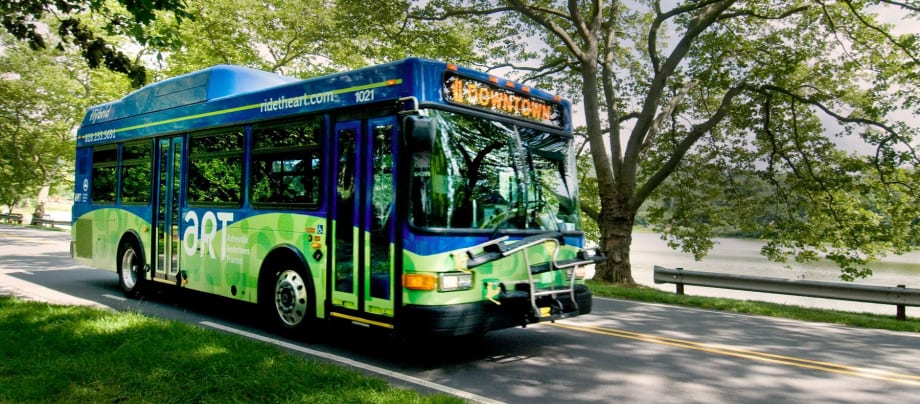
RATP Dev will directly supervise ART’s daily operations for the fixed-route bus services in Buncombe County, N.C.
2 min to read
RATP Dev will directly supervise ART’s daily operations for the fixed-route bus services in Buncombe County, N.C.
RATP Dev was awarded a contract to manage Asheville Redefines Transit (ART), the transit services for the city of Asheville, N.C. The City of Asheville selected RATP Dev through a national competitive process that awarded the contract based on best-value procurement.
Contract services are set to begin Oct. 1, 2017 and will cover an initial period of four years with two additional two-year renewal options. RATP Dev has appointed Bernadette Townsend to serve as ART’s new GM.
Under the terms of the contract, RATP Dev will directly supervise ART’s daily operations for the fixed-route bus services in Buncombe County. Presently, ART has 22 biodiesel buses in service, seven of which are hybrid, and currently run 18 routes throughout the area, servicing more than 1.4 million riders annually.
ART is RATP Dev’s third contract in North Carolina, the others being the Charlotte Area Transit in the Queen City’s metropolitan area and Buncombe County’s Mountain Mobility.
Located in western North Carolina’s Blue Ridge Mountains, Asheville is vibrant and historic city with a thriving arts scene and easy access to North Carolina’s natural splendor. With a population of approximately 425,000 residents in the metropolitan area, and home to the University of of North Carolina at Asheville, the city has growing public transit needs and is seeking to preserve the beauty of their stretch of the Blue Ridge Mountains with their on-going sustainable transit initiatives.
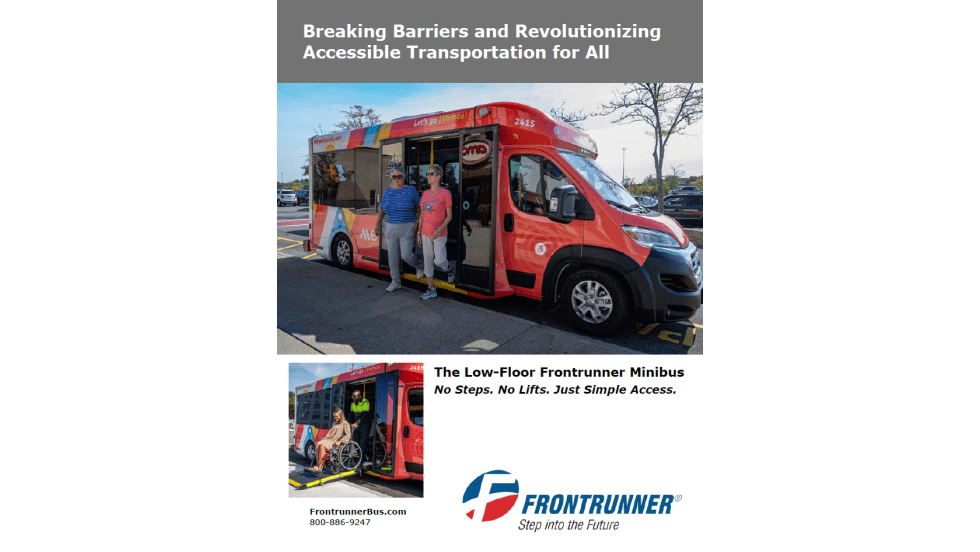
Accessible transit isn’t a feature—it’s a responsibility. This whitepaper explores how the Low-Floor Frontrunner is redefining mobility with a breakthrough design that removes barriers, empowers riders, and delivers measurable operational advantages for agencies. Discover why this next generation minibus is setting a new standard for inclusive transportation.
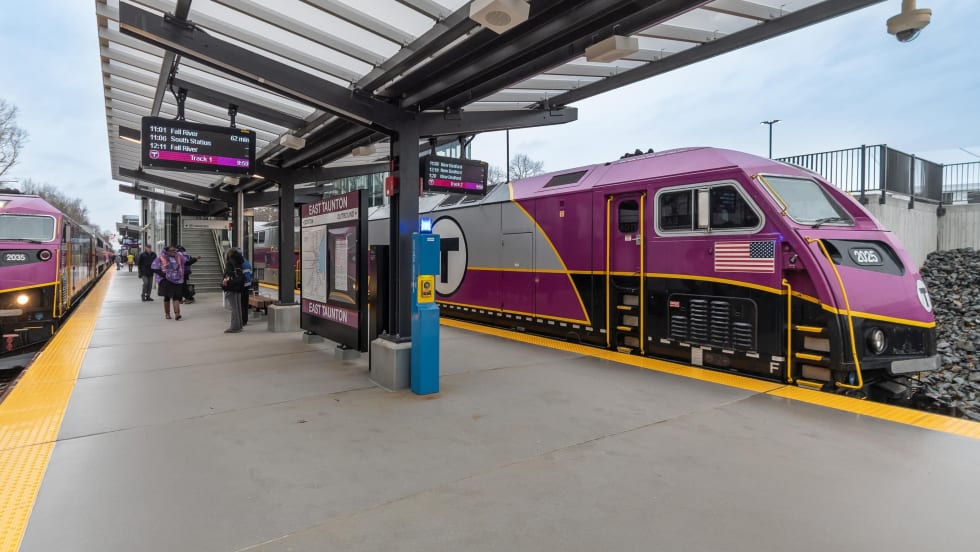
With major events and increased travel expected across the state this summer, the Administration is focused on making sure people have a reliable, affordable alternative to driving so we can reduce congestion, support daily commuters, and keep Massachusetts moving.
As the American Bus Association marks its 100th year, a new ABA Foundation report highlights the Marketplace’s role as a key revenue engine for the bus and group travel industry.
As motorcoaches navigate increasingly congested urban corridors filled with pedestrians, cyclists, scooters, and distracted drivers, safety leaders across the industry are confronting a growing challenge: visibility.
In part 1 of a two-part conversation, AC Transit’s director of maintenance joins co-hosts Alex Roman and Mark Hollenbeck to discuss his journey from the U.S. Marines to public transit and the role mentorship plays in developing the next generation of industry leaders.
In reaching its decision, the board considered the District’s mounting long-term structural deficits, with current projections forecasting annual operating deficits of about $50 million beginning in FY 2027-28 and continuing in the years ahead.
The $143 million spending plan represents a 2.4% reduction from last year’s budget. Increasing expenses, along with depleted federal COVID-19 funds, continue to impact the overall budget, CDTA officials said.