



Washington state report recommends VMT to fund highway system
Plan would replace gas tax to pay for infrastructure, which could set precedent as new federal authorization debate is set to begin.

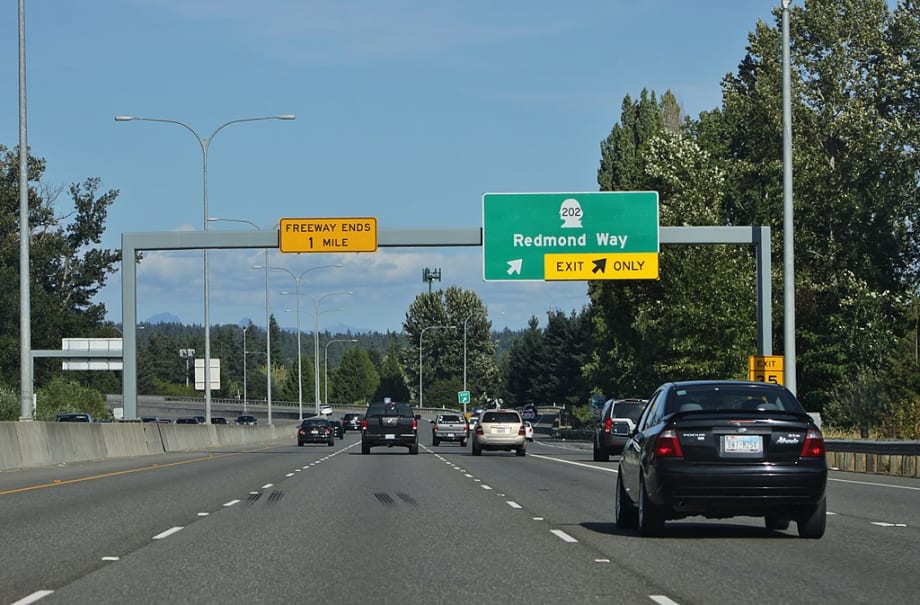
The Washington State Transportation Commission recommends the state begin its initial move away from fuel taxes to avoid long-term issues with financing the increasing and evolving needs of our modern highway system.
The Washington State Transportation Commission recommends the state begin its initial move away from fuel taxes to avoid long-term issues with financing the increasing and evolving needs of our modern highway system.
A new report by the state of Washington highlights the necessity and benefits of moving away from fuel taxes and transitioning to a Vehicle Miles Traveled (VMT) system to fund the state’s highway system.
The Washington State Transportation Commission, after an extensive investigation, analysis, and pilot phase, recommends the state begin its initial move away from fuel taxes to avoid long-term issues with financing the increasing and evolving needs of our modern highway system.
According to the report on a potential transition to a VMT, or Road Usage Charge (RUC), system, “With the gas tax already declining, adoption of cleaner and alternative fuel vehicles accelerating, and RUC systems and technologies ready for implementation, the state must act now to avoid a predictable transportation funding crisis later…. RUC policy, public acceptance, and system capabilities are mature enough to implement a RUC system that will serve as a foundation for a larger-scale, new highway funding system in the future.”
Among the report’s key findings:
Beginning the transition to a VMT system now will help avoid a predictable, preventable revenue crisis associated with continuing to rely on the gas tax. A transition can also ensure that drivers do not pay both a gas tax and a VMT.
Continued reliance on the gas tax will continue to shift the burden of paying for the road system onto an increasingly smaller number who drive older vehicles with low MPG and may not be able to afford newer, more fuel-efficient vehicles, and rural drivers, who on average drive less fuel-efficient cars compared to urban drivers and already pay a larger share of gas taxes due to driving greater distances.
Rural drivers, generally speaking, would likely pay less under a VMT system while urban drivers would pay more than under current fuel rates.
Using the rates tested in the pilot, hybrid drivers, for example, would likely pay more under a VMT system, while drivers of older, less fuel-efficient pickup trucks would likely pay a third less than they pay under the current fuel tax rate.
Under the pilot program, 71% of respondents supported implementation of a VMT as a replacement to the gas tax. 68% preferred VMT over the gas tax or preferred it equally.
There is now a pathway toward replacing the gas tax that is fiscally sustainable and fair.
It is possible to transition to a VMT system that protects privacy, preserves equity, and can be implemented at a reasonable cost.
The report noted a transition can begin while some key issues continue to be addressed, such as issues of privacy, simplicity for users, equity, and collection costs. Several other states are also involved in analyzing and piloting VMT systems with the assistance of federal transportation grants authorized in the FAST Act.
To view the full report, click here.
More Management

METRO Opens Submissions for 2026 Motorcoach Awards
Nominations are now being accepted for METRO Magazine’s Operator of the Year and Innovative Operator of the Year awards.
Read More →
New York MTA Advances Final Contract for Second Avenue Subway Expansion
Contract Four is the largest in the Second Avenue Subway Phase 2 project and includes construction of station infrastructure, tracks, and signals for the subway expansion, MTA officials said. Work on Contract Four will begin in 2027.
Read More →
Transit Agencies Highlight Safety Gains at National Summit
Leaders from 15 major transit systems shared crime-reduction results and safety initiatives while discussing the role of continued federal support.
Read More →

NITA Names New Leadership, Expands Reduced-Fare Program at First Board Meeting
The new regional transit authority appointed its first board chair and interim executive director while extending reduced fares across CTA, Metra, and Pace for eligible riders.
Read More →
Beyond the Checklist: A Structured Approach to Transit Maintenance
Reliability-Centered Maintenance helps transit agencies move beyond routine checklists to focus limited resources on the assets and failures that have the greatest impact on safety, reliability, and service.
Read More →
APTA 2026 Nominating Committee Selects Leadership Slate, Names Chair and Vice Chair Nominees
Leadership changes will help shape the association’s priorities and its representation of the transportation industry during the 2026–2027 term.
Read More →
DART Launches Major Security, Fare Enforcement Initiative
The 90-day demonstration will deploy coordinated security teams at five light rail stations while testing controlled access and gathering data to guide future investments.
Read More →
Advancing Fare Collection Through Technology and Innovation
Learn about delivering 1300 gates at 91 stations while managing fare evasion. Explore the large scale deployment, solution customization and real-world results that affect the region. Prepare for deployment in your region now.
Read More →
Game Day in Motion: Moving Millions During the 2026 World Cup
Between packed transit stations and team motorcoaches, see how agencies and operators across North America tackled the transportation demands of the 2026 FIFA World Cup.
Read More →
Surface Transportation Extension Averts Shutdown, Leaves Transit Funding Gap
The stopgap keeps federal transportation programs moving, but missing advance funding could complicate the transit and rail projects agencies are planning next.
Read More →