



Automated and Connected Vehicle Tech Offers Promise for Transit Agencies
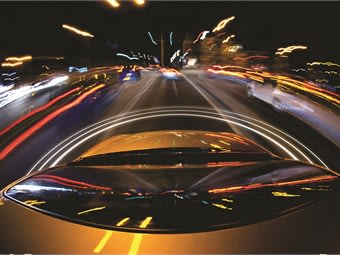
Automated and connected vehicle technology has the potential to change all aspects of mobility and disrupt both public and private transportation as we know it. As Google, Uber, the automobile industry, and other organizations continue to make rapid technological advances in connected and automated vehicle technology, it is vital that public transit agencies consider these changes in their strategic planning.

Photos: WSP
Photos: WSP
Automated and connected vehicle technology has the potential to change all aspects of mobility and disrupt both public and private transportation as we know it. As Google, Uber, the automobile industry, and other organizations continue to make rapid technological advances in connected and automated vehicle technology, it is vital that public transit agencies consider these changes in their strategic planning. Transit agencies will need to review potential changes to their services, labor needs and fee structure to stay competitive in the new transportation environment. Automated and connected technologies have the potential to transform how public transit agencies provide their services and the impact they can have on society.
Automated and Connected Vehicle Technology
Automated vehicles (sometimes referred to as driverless vehicles), are capable of sensing their environment and navigating roads without human input. They rely on technologies like GPS, LIDAR, and radar to read their surroundings and make intelligent decisions about the car’s direction and speed. Google, Uber, most automakers, and many other companies are predicting that they will have automated vehicles publicly available in the 2018-2020 timeframe. Most of the driverless technology development in the U.S. has been focused on passenger vehicles; however, Local Motors, Navya, 2GetThere and EasyMile are a few examples of companies providing driverless shuttles, which could have potential for transit agencies in paratransit or feeder service applications. As the technology is applied to larger vehicles, driverless high-capacity fixed guideway service or driverless bus rapid transit service could be possible.
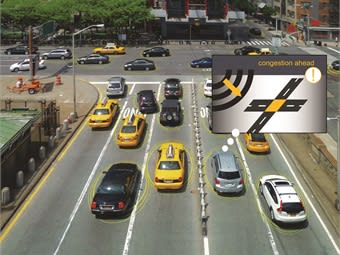
Connected vehicle technology is being developed concurrently with automated technology. Connected vehicle applications provide connectivity among vehicles (which prevents collisions), between vehicles and infrastructure (which promotes safety and mobility) and among vehicles, infrastructure and wireless devices (which provides continuous real-time connectivity to all system users). Because the benefits of connected vehicle technologies cannot be maximized without broad fleet penetration and an interoperable system across all manufacturers, regulatory action will likely play a large role.
Potential Future Scenarios
Fast forward 50 years from today, and consider two potential scenarios with automated and connected vehicle technology and its impact on public transit. These scenarios are deliberately extreme to present cogent visions for the future, but the reality will likely be a combination of the two scenarios.
Scenario 1: Nightmare!
Most people continue to own private vehicles (which are now driverless) and, in addition to taking mostly single-occupancy vehicle trips, send their vehicles on errands. People live farther from where they work and generally commute to work alone in their private vehicle. Vehicle miles traveled and, consequently, congestion skyrockets, as riders choose private transportation, significantly undermining public transit agencies, which revert to a mission of providing transportation only for the poor, elderly and mobility challenged.
Scenario 2: Utopia!
People forego owning a personal vehicle due to the richness of transportation options to support their mobility needs. Public transportation is seamlessly integrated with private transportation options (and priced accordingly). Government ensures transportation options are widespread, accessible to all and financially sustainable. People have the option of taking a single-occupancy vehicle trip; however, the cost is significantly higher than the shared-ride options and thus discourages that behavior.
In both cases, there are significant safety improvements due to the proliferation of automated and connected vehicle technologies. The utopian scenario promises reduced congestion, reduced greenhouse gas emissions, increased mobility options for the overall population and equitable transportation coverage. There is significant risk, however, that the nightmare scenario becomes reality, since it is most similar to how people use their vehicles today. Without some level of societal change, industry initiatives, and/or government intervention, people will likely continue to own their vehicles, commute to work alone and leave their car unused 95% of the time. But there are things that transit agencies can do to encourage the utopian scenario.
Technologies Create Opportunities
Transit agencies stand to benefit greatly from automated and connected technologies since they have the potential to create new mobility solutions with significant cost-efficiencies. The following provides a few examples of how transit agencies can leverage driverless technology:
First/Last Mile – Automated shuttles could provide a cost-effective way to carry passengers to and from mass transit stations. These shuttles could be dynamically routed to provide on-demand services within a few-mile range of transit stations. This would encourage more transit use by providing a reliable, convenient service offering. I could also reduce existing costs for providing comparable fixed-route service (with a driver) and reduce the parking needed at transit stations.
Circulator – Driverless shuttles could provide a mobility option for people traveling within a closed campus (e.g., university, hospital, or office park). This could reduce the roadway and parking requirements within that space and reduce the costs associated with transporting people on the campus.
Fixed Route Vehicle Replacement – Transit agencies might consider replacing their existing vehicle fleet with driverless vehicles of varying sizes (appropriate to their service area). Any service operated within a fixed guideway (e.g., bus rapid transit) may provide a good starting point. This has the potential to reduce labor costs, introduce dynamic routing (maybe during non-commute hours) and provide safer service.
Platooned BRT – One limitation to current BRT service is the ability for BRT to provide capacity beyond single vehicles. With connected vehicle technologies, vehicles could be tightly platooned (similar to connected light railcars), thereby increasing the carrying capacity of BRT, reducing their fuel consumption and environmental impacts.
Paratransit – Transit agencies are required to provide point-to-point services to people who have limited mobility. While some passengers will require another human to assist them in getting in and out of the vehicle, many of these paratransit passengers could travel in a dynamically routed driverless vehicle, which would be significantly less expensive than existing paratransit services.
It should be noted that any of these services could be provided by the public or private sector. In some cases, the transit agency may want to continue being the operator, but in other cases, government might consider partnering with the private sector and potentially subsidizing rides (e.g., paratransit). For public transit agencies considering operating driverless services, transit agencies will need to consider the implications for labor unions, maintenance facilities, maintenance workers, and the safety and security of passengers. Whether the services are offered by the public or private sector, it will be vitally important for transit agencies to collect the data associated with these services since they can inform future planning activities.
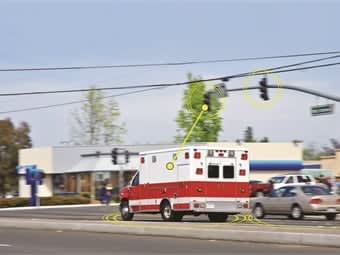
Further, transit provides a unique opportunity to help catalyze connected vehicle technologies, and ultimately, reap the safety benefits of its proliferation. In particular, considering the use of connected vehicle radio technologies to interface with traffic signal controllers for transit signal priority (TSP) can provide priority today at a comparable cost to traditional TSP systems, while setting a foundation for benefits from other possible applications and increasing numbers of connected vehicles in the future.
Need to Act Now
Connected and automated technologies present great opportunity for transit agencies. They can leverage driverless technology to maximize the cost-effectiveness of their service while ensuring equitable, fairly priced mobility options for everyone. Transit agencies will need to evaluate the full mobility eco-system (and how it has evolved in recent years with many private companies getting involved) to determine the appropriate provision of transit services.
This is a defining moment for transit agencies. They can leverage the opportunities associated with connected and automated vehicle technologies and realize immediate safety and mobility benefits, or risk the nightmare scenario described earlier. Clearly, there are challenges to introducing driverless technology, including possible resistance from transit agency staff and labor unions, the need for workforce skills development to keep pace with rapid technological change, federally mandated vehicle replacement cycles, and sometimes, inflexible policies and plans. Transit agencies will need to start addressing these barriers today because the technologies are advancing quickly.
Lauren Isaac is Manager of Sustainable Transportation for WSP | Parsons Brinckerhoff and the author of the publication, Driving Towards Driverless: A Guide for Government Agencies (www.wsp-pb.com).
More New Mobility

From Hardware to Digital Partner: Luminator Charts Its Next Chapter
CEO Magnus Friberg discusses Luminator’s shift toward becoming a digital partner, the growing importance of software and interoperability, and how AI can help agencies improve operations and passenger experience.
Read More →
Biz Briefs: Alstom Lands Canadian Contract, LYT to Supply California TSP, and More
In METRO's latest installment, we take a look at recent news from Complete Coach Works, Beep, FlixBus, and more partnerships making headlines across the transportation sector.
Read More →
CharterUP’s Armir Harris on Technology, AI, and the Future of Group Mobility
In a recent episode of METROspectives, CharterUP Founder/CEO Armir Harris discussed the company’s evolution from an online charter bus marketplace into a technology platform supporting public- and private-sector mobility and much more.
Read More →
Jacksonville’s NAVI Project Charts a New Course for Autonomous Public Transportation
Through its NAVI program, JTA is showing how autonomous vehicles, intelligent infrastructure, and coordinated operations can work together to deliver everyday public transportation.
Read More →
Biz Briefs: Luminator Marks Milestone and More
From manufacturers and suppliers to transit agencies and motorcoach operators, these updates offer a snapshot of the projects, partnerships and business moves driving the industry forward.
Read More →
New Tricks for Old Bureaucracies: Joshua Schank on Making Transit Innovation Stick
Former LA Metro Chief Innovation Officer Joshua Schank discusses why good ideas aren't enough, how transit agencies can overcome resistance to change, and why today's challenges demand more innovation.
Read More →
How DART's GoPass Is Redefining Regional Mobility
Serving 14 transit agencies, GoPass simplifies multimodal travel by allowing riders to plan, pay for, and manage an entire trip through one app.
Read More →
Biz Briefs: OCTA Taps Clean Energy for Hydrogen Station, Stadler to Supply Via Rail Vehicles, and More
From manufacturers and suppliers to transit agencies and motorcoach operators, these updates offer a snapshot of the projects, partnerships and business moves driving the industry forward.
Read More →CharterUP Expands Into New Mobility and Autonomous Transportation
Vice President of New Mobility Stephen Joos discusses how CharterUP is leveraging its nationwide transportation network, technology platform, and autonomous vehicle partnerships to expand into workforce mobility, campus shuttles, and transit solutions.
Read More →
METRO Magazine Announces 2026 Innovative Solutions Awards Winners
Projects Recognized for Advancing Mobility Through Technology, Accessibility, Workforce Innovation, and Operational Excellence
Read More →