



Alexander Dennis to build facility in Ontario, Canada
The move follows a deal with Metrolinx to supply over 250 new, low-height double-deck buses over the next five years. The agreement also includes an option for an additional 150 vehicles should they be required.


Alexander Dennis Limited (ADL), Britain’s biggest bus and coach manufacturer, confirmed today that it is to establish a new manufacturing facility in Ontario, Canada.
The move follows a deal with Metrolinx — the Government of Ontario’s transportation authority for Greater Toronto and Hamilton Area — to supply over 250 new, low-height double-deck buses over the next five years. The agreement also includes an option for an additional 150 vehicles should they be required.
ADL already has almost 125 double decks operating in the Greater Toronto and Hamilton Area where they have proved hugely popular with passengers, drivers and operators, according to the company. The new, ultra-low buses will be able to access four major terminals that cannot be served by double decks at present due to height restrictions, thereby opening up virtually all of the transport authority’s routes to potential double deck services.
Colin Robertson, Chief Executive of ADL, commented: “This initiative is the result of a seven-year business relationship with Metrolinx that has gone from strength-to-strength. It involves a multi-year, exclusive agreement for the supply of double deck buses and marks a milestone for ADL. It also reinforces the reputation and performance credentials of our Enviro500 high capacity, three-axle double deck range, which is now proving to be a winner in continents around the world.
“We look forward to becoming a fully-fledged contributor to the local economy, creating jobs and extending our supplier network," Robertson says. "The first part of that process will be the introduction of an ADL chassis assembly facility in the Greater Toronto and Hamilton Area. This will create up to 30 jobs and construction will begin in the middle of next year with the first of the new 250 low-height double decks being delivered in early 2016.”
ADL has tripled its turnover to £500m in recent years with 50% of its earning now coming from export markets. Behind its success lies a string of business wins, build partnerships, alliances and joint ventures that have seen it strengthen and extend its global footprint in Hong Kong, China, Singapore, Malaysia and North America where ADL fleets now operate in cities such as Toronto, New York, Washington D.C., Las Vegas, San Francisco, Seattle, Vancouver and Ottawa.
More Bus
Finding the ‘Happy Medium’: Optimizing Maintenance Without Sacrificing Reliability
The key to maintenance optimization isn’t doing less work—it’s doing the right work at the right time on the right assets.
Read More →
LA Metro, City of West Hollywood, and Partners Advance Smarter Bus Lane Enforcement
The award-winning partnership combines AI-powered detection with human oversight to improve bus reliability, accessibility, and enforcement efficiency.
Read More →
PSTA Modernizes Workforce Management with Digital Bidding System
The award-winning Workforce Transit Modernization project replaced paper bidding with a transparent digital platform, cutting administrative effort while improving access for operators.
Read More →
Washington's Community Transit Sets Six-Year Roadmap for Growth, Expansion
Approved TDP targets more bus service, new mobility options, Swift BRT expansion, and a potential Everett Transit annexation.
Read More →
DART Customer Satisfaction Reaches Six-Year High
Overall satisfaction rose to 74.9%, while the agency’s Net Promoter Score reached a record 33.7.
Read More →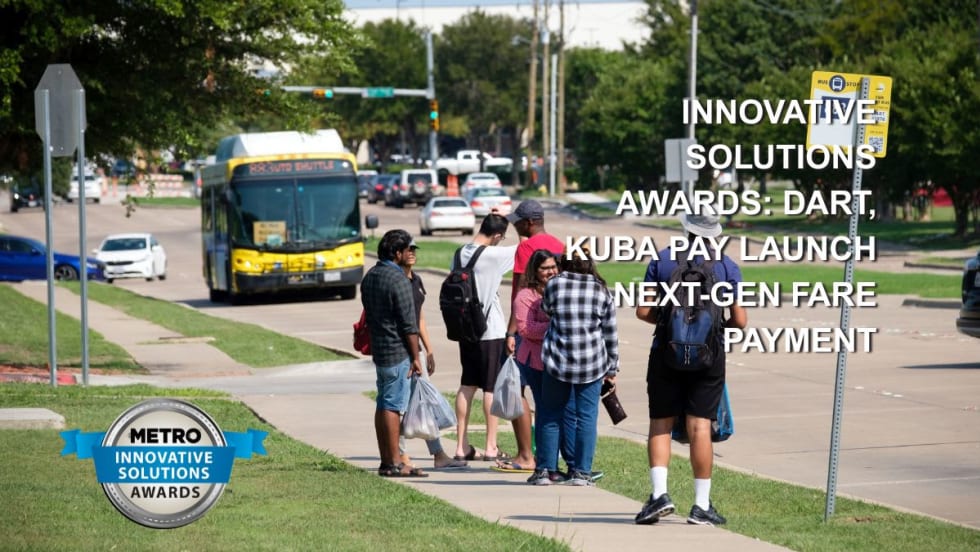
How DART's GoPass Is Redefining Regional Mobility
Serving 14 transit agencies, GoPass simplifies multimodal travel by allowing riders to plan, pay for, and manage an entire trip through one app.
Read More →
Biz Briefs: OCTA Taps Clean Energy for Hydrogen Station, Stadler to Supply Via Rail Vehicles, and More
From manufacturers and suppliers to transit agencies and motorcoach operators, these updates offer a snapshot of the projects, partnerships and business moves driving the industry forward.
Read More →
METRO Magazine Announces 2026 Innovative Solutions Awards Winners
Projects Recognized for Advancing Mobility Through Technology, Accessibility, Workforce Innovation, and Operational Excellence
Read More →
Biz Briefs: STV teams with Amtrak, Motorcoach Operators Boost Fleet and Land Contracts, and More
From manufacturers and suppliers to transit agencies and motorcoach operators, these updates offer a snapshot of the projects, partnerships and business moves driving the industry forward.
Read More →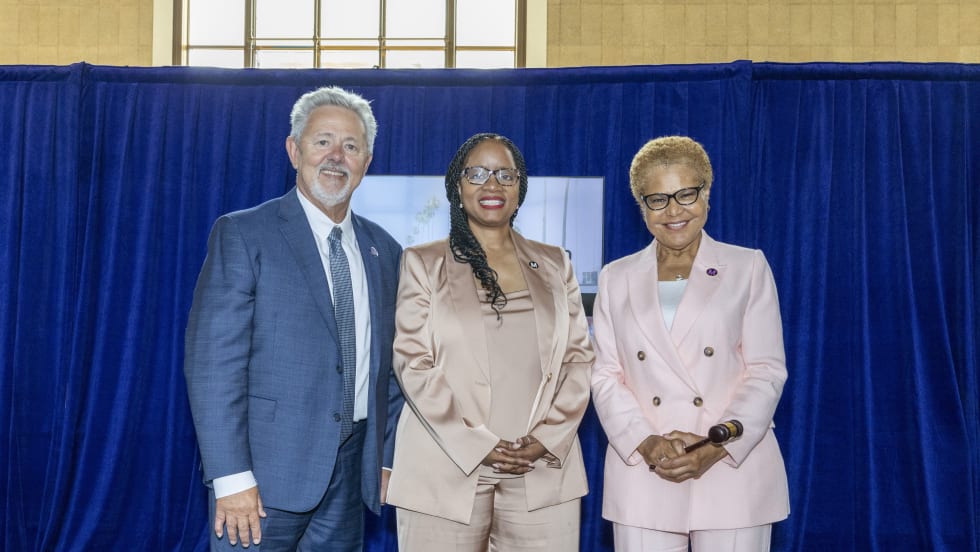
LA Metro Marks Banner Year, Sets Ambitious Goals for New Fiscal Year
Incoming LA Metro Board Chair and Los Angeles Mayor Karen Bass joined outgoing Board Chair Fernando Dutra and LA Metro CEO Stephanie Wiggins to review accomplishments from fiscal year 2026, which included the opening of new rail extensions, advancement of major transit projects, expanded safety programs, and new rider amenities.
Read More →