



Arrowhead Transit, Routing Company Team for 100-Plus Vehicle Deployment
TRC is powering Arrowhead Transit’s scheduled and dial-a-ride programs, which include county-specific services across all 10 counties Arrowhead Transit serves.

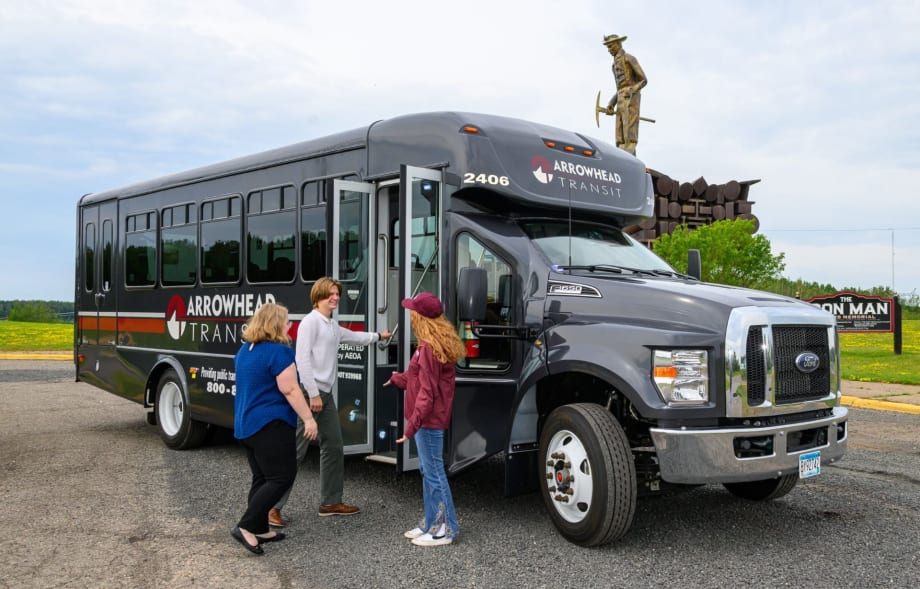
The TRC's Pingo platform, comprising the Drive Pingo and Ride Pingo apps, as well as the Pingo Dashboard operations tool, has facilitated nearly four million trips to date, enabling agencies to deliver efficient, flexible, and scalable transit services.
Photo: Arrowhead Transit
The Routing Company (TRC) is working to provide “transformative transit service” in partnership with Arrowhead Transit, the primary transportation system in the Arrowhead Region of Minnesota, spanning 10 counties of Minnesota: Aitkin, Itasca, Koochiching, St. Louis, Lake, Cook, Carlton, Pine, Chisago, and Isanti.
TRC is powering Arrowhead Transit’s scheduled and dial-a-ride programs, which include county-specific services across all 10 counties Arrowhead Transit serves. All services are planned to be fully launched and operational by late 2025/early 2026.
The TRC, Arrowhead Transit Service
Through this partnership, TRC’s Pingo platform powers a service that bridges mobility gaps, particularly in rural and underserved communities, offering real-time ride booking and optimized routing to enhance rider convenience and efficiency. Most importantly, the Pingo platform will accommodate deviated fixed routes, commuter routes for employers, and inter-county transfers, offering a purpose-built experience for riders, operators, and administrators, according to company officials.
“Together, we’re bringing real-time accessibility to the people of Greater Minnesota — so whether someone is heading to work, a medical appointment, or the grocery store, they can count on a seamless, dependable ride across our 10-county region,” said Brandon Nurmi, director of Arrowhead Transit. “By combining Arrowhead Transit’s deep community roots with TRC’s global innovation, we’re setting a new standard for how rural systems can collaborate to deliver modern, on-demand transportation that truly meets people where they are.”
Partnering at a Pivotal Time
The partnership arrives at a pivotal time, as transit agencies increasingly turn to on-demand solutions to address transit gaps and expand service coverage in rural areas, said TRC.
According to TRC’s State of On-Demand Transit Report, the adoption of on-demand models is accelerating across North America, with agencies seeking innovative ways to expand their networks and enhance accessibility.
Looking forward, TRC envisions all-in-one transit becoming a cornerstone of modern mobility solutions.
“This partnership is just another example of how one platform can deliver comprehensive transit solutions under one platform," said James Cox, CEO at TRC. “We’re continually committed to working with transit agencies to make multi-modal transit a proven and essential component of public transportation networks across the U.S.”
The Pingo platform, comprising the Drive Pingo and Ride Pingo apps, as well as the Pingo Dashboard operations tool, has facilitated nearly four million trips to date, enabling agencies to deliver efficient, flexible, and scalable transit services.
More New Mobility

From Hardware to Digital Partner: Luminator Charts Its Next Chapter
CEO Magnus Friberg discusses Luminator’s shift toward becoming a digital partner, the growing importance of software and interoperability, and how AI can help agencies improve operations and passenger experience.
Read More →
Biz Briefs: Alstom Lands Canadian Contract, LYT to Supply California TSP, and More
In METRO's latest installment, we take a look at recent news from Complete Coach Works, Beep, FlixBus, and more partnerships making headlines across the transportation sector.
Read More →
CharterUP’s Armir Harris on Technology, AI, and the Future of Group Mobility
In a recent episode of METROspectives, CharterUP Founder/CEO Armir Harris discussed the company’s evolution from an online charter bus marketplace into a technology platform supporting public- and private-sector mobility and much more.
Read More →
Jacksonville’s NAVI Project Charts a New Course for Autonomous Public Transportation
Through its NAVI program, JTA is showing how autonomous vehicles, intelligent infrastructure, and coordinated operations can work together to deliver everyday public transportation.
Read More →
Biz Briefs: Luminator Marks Milestone and More
From manufacturers and suppliers to transit agencies and motorcoach operators, these updates offer a snapshot of the projects, partnerships and business moves driving the industry forward.
Read More →
New Tricks for Old Bureaucracies: Joshua Schank on Making Transit Innovation Stick
Former LA Metro Chief Innovation Officer Joshua Schank discusses why good ideas aren't enough, how transit agencies can overcome resistance to change, and why today's challenges demand more innovation.
Read More →
How DART's GoPass Is Redefining Regional Mobility
Serving 14 transit agencies, GoPass simplifies multimodal travel by allowing riders to plan, pay for, and manage an entire trip through one app.
Read More →
Biz Briefs: OCTA Taps Clean Energy for Hydrogen Station, Stadler to Supply Via Rail Vehicles, and More
From manufacturers and suppliers to transit agencies and motorcoach operators, these updates offer a snapshot of the projects, partnerships and business moves driving the industry forward.
Read More →CharterUP Expands Into New Mobility and Autonomous Transportation
Vice President of New Mobility Stephen Joos discusses how CharterUP is leveraging its nationwide transportation network, technology platform, and autonomous vehicle partnerships to expand into workforce mobility, campus shuttles, and transit solutions.
Read More →
METRO Magazine Announces 2026 Innovative Solutions Awards Winners
Projects Recognized for Advancing Mobility Through Technology, Accessibility, Workforce Innovation, and Operational Excellence
Read More →