



Ask the Expert: Cherie Leporatti, Travel Trainer (WMATA)
Metro provides group orientations, station tours, trips on training buses, and one-to-one training to over 6,000 transit riders each year. In this interview Cherie Leporttia shares information about her background and Metro’s travel training program.

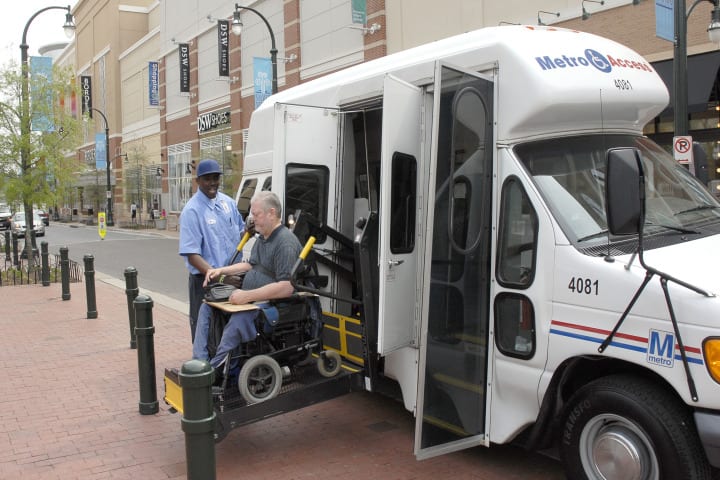
Photos: WMATA-Larry Levine

Photo: WMATA-Larry Levine
(This article was originally published by Easter Seals Project ACTION Viewpoints Blog.)
Cherie Leporttia is a travel trainer with the Washington Metropolitan Area Transit Authority (Metro) in Washington D.C. Metro provides group orientations, station tours, trips on training buses, and one-to-one training to over 6,000 transit riders each year. In this interview Cherie Leporttia shares information about her background and Metro’s travel training program.
RELATED:Ask the Expert: Judi Bonilla, Travel Trainer (We Get Around - Sand Diego)
1. Tell us about your travel training program.
The Washington Metropolitan Area Transit Authority (Metro) established its travel training program in 2008 and hired three employees that are fully dedicated to travel training. One staff member is a Certified Orientation and Mobility Instructor. All three staff came to the job with extensive education and experience in the humanities field, along with knowledge of the transit system as it pertains to programs serving people with disabilities. In 2010, a pilot program was established utilizing funds received from a grant to hire an additional six full-time travel trainers. These travel trainers were and continue to be hired as contractors. Metro's in-house travel trainers work across all jurisdictions conducting outreach, providing workshops for professionals who work within our target populations, and working directly with customers participating in travel training. The contract travel trainers are assigned to work in specific jurisdictional areas. Our team also has ASL and Spanish interpretation capabilities.
We provide group orientations to approximately 6,000 people each year. We provide a detailed overview of our program, a trip on a training bus to a prearranged destination, a tour of a Metro Station and a return to the trip origin. In-house travel trainers are fluent with our programs and services and are careful to adapt each presentation to meet the needs and interests of each audience. We also provide one-to-one training as part of our travel training program. We work with approximately 500 people each year in our one-to-one program. We measure success by calculating the number of trips taken on MetroAccess prior to travel training and comparing it with the number of trips taken on MetroAccess and fixed route following travel training.
2. What got you interested in this line of work?
I became interested in this line of work years ago and possibly before travel training became a notable field. As a young girl in the 1970s, I helped my mom in volunteering with one of the first therapeutic riding programs in the country. I helped out with training the ponies and introducing them to mobility devices, unusual noises and desensitizing them so that they would be safe for riders with disabilities. After graduating from college, I continued my passion of working with adults with disabilities through mostly part-time work as I raised my children. In the late 1990s, I went to work full time as a rehabilitation counselor in Fairfax County, Virginia. As my career progressed within my chosen field, I grew more and more interested in transportation. In my line of work, so much focus was spent on job training and coaching at the job site but so many issues and problems surrounded my consumers' transportation needs. Many of my consumers lost their jobs because there was no reliable transportation or they could not afford the cost of paratransit. In 2007 I relocated within the Fairfax County Government serving as its ADA Coordinator before joining WMATA’s Travel Training program.

3. Why do you believe travel training is so important?
I believe that travel training is important because it helps people realize their potential to participate in the community, increases their independence and confidence, increases their employment options, saves money and ultimately improves paratransit performance as customers exercise their options, which can reduce dependence on paratransit.
For many, working with a travel trainer may be the first time they are without a parent, teacher, or a known person within their circle of support. This is often an excellent opportunity for a professional travel trainer to conduct an unbiased assessment on the individual's ability to adhere to safety standards within the community, follow verbal or physical cues in a public setting, abide by social norms, and travel from A to B via public transportation through their community with notable familiar landmarks. Consumers who can travel independently will naturally gain a sense of independence and increased confidence. This may look very different from person to person, but the effect is the same. One person may be able to travel via bus from their home to the neighborhood public library while another may have mastered a one hour trip from their home to their worksite that involves multiple transfers. Both customers will have increased their independence and both may feel the same sense of confidence within themselves. People who have the skills to travel on public transportation will naturally increase their job opportunities. Job seekers will no longer be bound by a relative’s ability to drive them to the local mall or traffic which may impede the MetroAccess van. If they can use fixed-route service they will increase their on-time arrivals to and from work, decrease their transportation costs since our fixed-route system is free or reduced for people with disabilities and older adults, and they can flex their schedules as they wish since fixed-route transportation has generous fixed hours.
Each time one of our travel training students chooses to ride fixed-route instead of paratransit, they are decreasing demand for that already taxed system. MetroAccess is a shared ride paratransit system. Prior to the establishment of our travel training program, customers had little choice but now as we work with each person to carefully address their concerns, teach them safety measures and real skills that they are able to confidently choose to ride fixed route. Decreased demand on paratransit allows us to focus more on those travelers who have no other choice for their trips. I feel like I need to mention here that people who participate in travel training will always have the choice to use fixed-route or paratransit for each trip that they are taking. One goal for travel training is to teach our customers about their choices.
4. How do you address caregiver and family concerns when working with students or young adults with disabilities?
Metro is very generous when it comes to Personal Care Givers (PCAs). In fact, anyone over the age of 5 can serve as a PCA on our system. When scheduling the first session, our travel trainers always invite the customer’s PCA to participate. We share with them the individualized plan that we have created, a schedule with the bus routes, locations, and times. In addition, we exchange telephone numbers and agree to contact or have our customer call them at specific points along our route. In most cases the PCA must be on board and supportive of our efforts before our customer can be successful.
We also provide PCAs with ways that they can be supportive in our training. We may encourage them to practice the route with us and then on their own so they can support what we are teaching. Sometimes we will encourage them to follow behind us in their personal car so they can get a feel for the route and what the bus route looks like. We might encourage them to meet us at our destination. We might ask them to post the bus route in the home and review the times schedule with their child/consumer. Each situation is unique but the goal to keep everyone safe, well informed and comfortable is the same.
More Paratransit
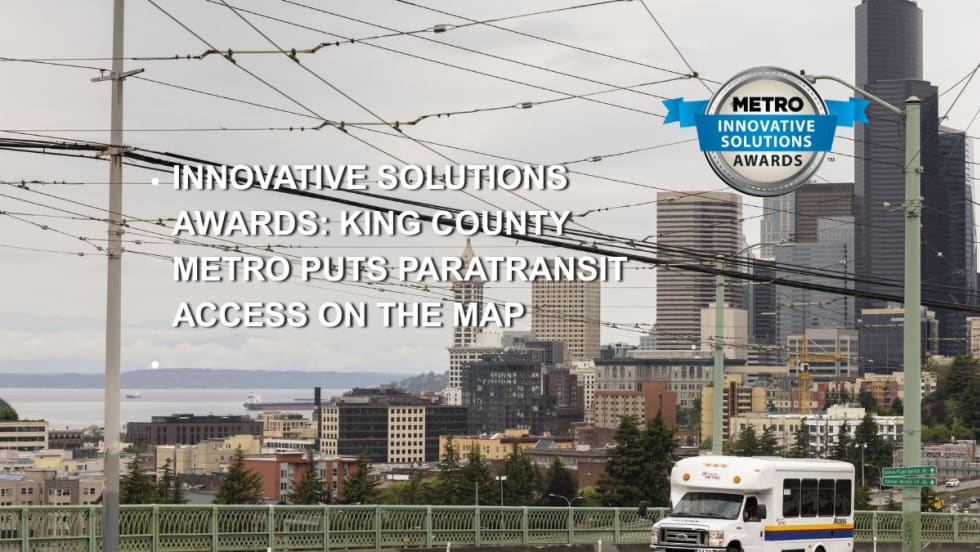
King County Metro Makes ADA Paratransit Easier to Navigate
METRO's Innovative Solutions Award winner replaces complex service-area descriptions with an accessible, interactive map that puts paratransit information directly in customers’ hands.
Read More →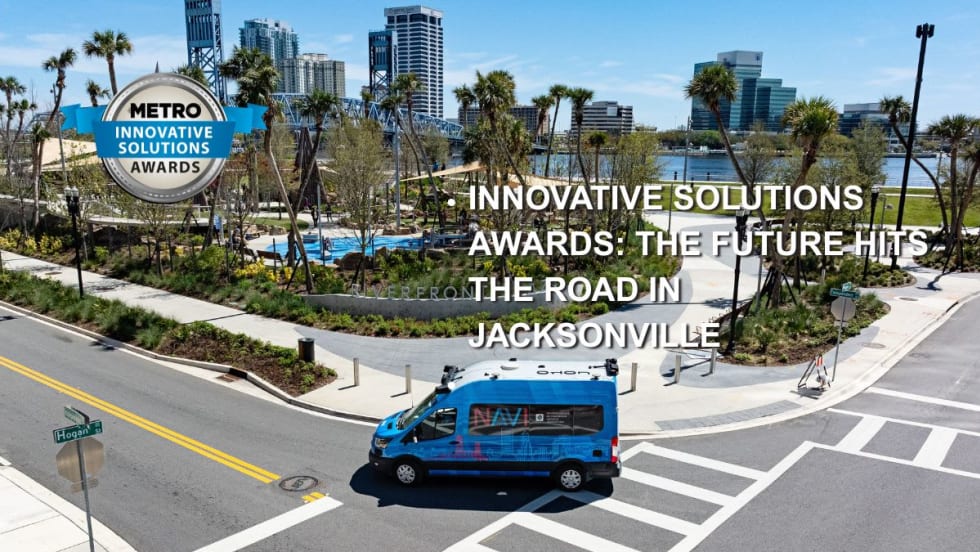
Jacksonville’s NAVI Project Charts a New Course for Autonomous Public Transportation
Through its NAVI program, JTA is showing how autonomous vehicles, intelligent infrastructure, and coordinated operations can work together to deliver everyday public transportation.
Read More →
Driving Smarter Paratransit
John Hanlon shares how AlphaRoute is leveraging AI-powered technology to help paratransit providers optimize operations, support frontline staff, and enhance the rider experience.
Read More →
METRO Magazine Announces 2026 Innovative Solutions Awards Winners
Projects Recognized for Advancing Mobility Through Technology, Accessibility, Workforce Innovation, and Operational Excellence
Read More →
Biz Briefs: STV teams with Amtrak, Motorcoach Operators Boost Fleet and Land Contracts, and More
From manufacturers and suppliers to transit agencies and motorcoach operators, these updates offer a snapshot of the projects, partnerships and business moves driving the industry forward.
Read More →
Biz Briefs: Masabi Teams with St. Louis Metro and More
In METRO's latest installment, we take a look at recent news from Transdev, Hitachi, and more partnerships making headlines across the transportation sector.
Read More →
New York MTA Leverages Zoning Program to Advance Station Accessibility
Accessibility enhancements at Nevins St Station will be financed through a development agreement tied to the MTA's Zoning for Accessibility initiative.
Read More →
Reinventing Fleet Maintenance with Real-time Visibility and AI
Transit leaders need to know what needs fixing, where to look, who is responsible, when work is completed, and what it costs without having to chase information across disconnected systems.
Read More →
SamTrans Sets Priorities for Potential Connect Bay Area Revenue
The board-approved framework allocates future funding to maintaining service, rider improvements, equity initiatives, and infrastructure repairs.
Read More →
Chicago's NITA Act Moves Into Next Phase as Service Improvements Begin
Rider-focused improvements will begin rolling out across the system immediately as CTA, Metra, and Pace increase service this summer in the six-county region.
Read More →