




Clear the Way: How Bus Lane Automation Can Improve City Transit
Automated Bus Lane and Bus Stop Enforcement Coming to Santa Monica
Learn how Santa Monica's new ABLE program uses onboard cameras to catch vehicles blocking transit lanes and stops.
August 26, 2025
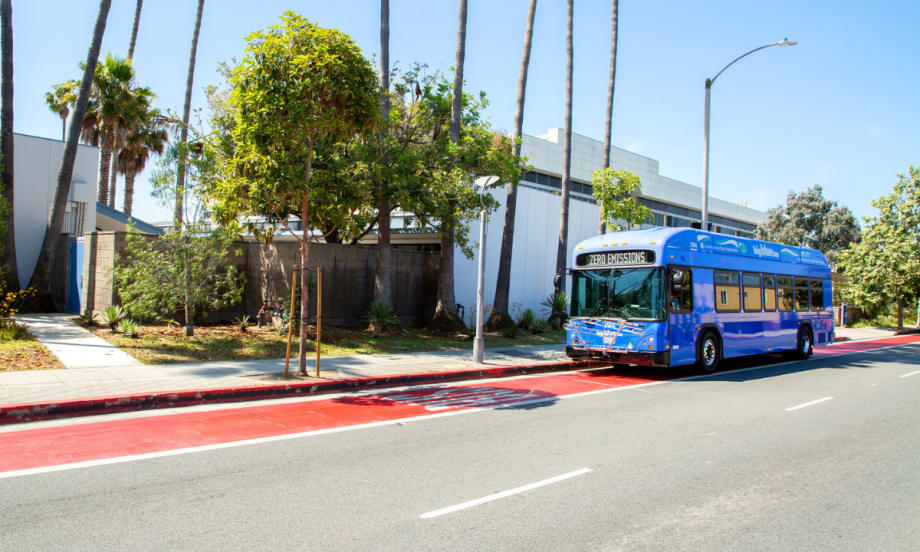
A Big Blue Bus equipped with ABLE cameras rolls through Santa Monica, where automated enforcement begins Sept. 1 to keep bus lanes and stops clear for riders.
Photo: Big Blue Bus
2 min to read
Beginning on Sept. 1, the Santa Monica Department of Transportation, in coordination with the local police department, will start automated enforcement of vehicles parked illegally in both bus lanes and bus stops in Santa Monica, marking the official launch of its Automated Bus Lane and Bus Stop Enforcement, or ABLE, program.
Under the program, two front-facing cameras mounted inside Big Blue Bus's fleet, including a license plate recognition camera, will automatically detect and record illegally parked vehicles. Registered owners will receive a $293 citation for violations.
According to an agency release, the formal launch of the program follows a 60-day warning period that began July 1, 2025, in which violators were mailed both a warning notice and information about the ABLE program. During the warning period, ABLE detected 352 instances of illegal parking in bus lanes and 777 instances at bus stops.
"The number of violations detected by ABLE during the warning period is eye-catching, yet not surprising," Department of Transportation Director Anuj Gupta said. "It underscores the urgent need for programs like ABLE that help enforce existing laws designed to keep our communities moving safely and reliably. Clear bus lanes and stops will help us deliver more efficient service for thousands of Big Blue Bus riders every day."
Keeping Transit Accessible for All
A single vehicle obstructing a bus lane or bus stop can delay up to 60 riders, create accessibility challenges for those boarding and exiting, and cause safety risks for other pedestrians and motorists.
These impacts disproportionately affect individuals who rely on public transportation, particularly seniors, students, people with disabilities, and those with limited access to private vehicles.
By reducing the illegal use of bus lanes and stops, ABLE supports Big Blue Bus's commitment to an efficient, equitable, and sustainable system while advancing Santa Monica's strategic priority of clean streets and safe neighborhoods by investing in tools that support a high-quality multimodal transportation network.
More Bus

New York MTA Plans Largest Bus Fleet Upgrade in More Than a Decade
The agency is seeking manufacturers for 650 new CNG buses to replace aging vehicles, improve reliability, and advance its broader fleet modernization strategy.
Read More →
Building a Flexible Path to Transit Electrification
John Hroncich discusses BAE Systems’ modular and scalable approach, lessons learned from decades of real-world operations, and how agencies can identify electrification strategies that fit their fleets.
Read More →
Bus Tech Talk: Keeping Transit Technicians Ahead of the Technology Curve
LA Metro’s Obed Mejia discusses technician training, evolving maintenance technology, fleet replacement, and strategies for getting the most out of today’s transit fleets.
Read More →
Biz Briefs: RIPTA Unveils New Frontrunners, Clevland RTA Adds New Siemens, and More
In METRO's latest installment, we take a look at recent news from Siemens, Prevost, Dodge, and more partnerships making headlines across the transportation sector.
Read More →
People Movement: Holly Arnold Joins Transdev and More
In this edition, we also cover recent appointments and announcements at Pace, CamTran, MCI, and more, showcasing the individuals helping to shape the future of transportation.
Read More →
The High Cost of Transit Buses: Industry Leaders Look to Procurement Reform
Transit leaders and policymakers examine how standardized bus designs, streamlined procurement, and predictable funding could help agencies stretch budgets and deliver better service.
Read More →
The Business Voice Behind Public Transportation
As chair of APTA’s Business Members Board of Governors, Ray Melleady explains how more than 850 business members are partnering with transit agencies to advance funding, innovation, and industry-wide collaboration.
Read More →
From Surviving to Thriving: Building Stronger Transportation Organizations
Bus Business Consultants founder Brian Dickson shares lessons on leadership, organizational health, and creating options for long-term success in a changing transportation industry.
Read More →
Finding the ‘Happy Medium’: Optimizing Maintenance Without Sacrificing Reliability
The key to maintenance optimization isn’t doing less work—it’s doing the right work at the right time on the right assets.
Read More →
LA Metro, City of West Hollywood, and Partners Advance Smarter Bus Lane Enforcement
The award-winning partnership combines AI-powered detection with human oversight to improve bus reliability, accessibility, and enforcement efficiency.
Read More →