



Autonomous vehicles will clog cities unless lawmakers step up: Study
City and state governments can intervene to encourage higher sharing of AVs and avoid a significant move away from mass transit systems.

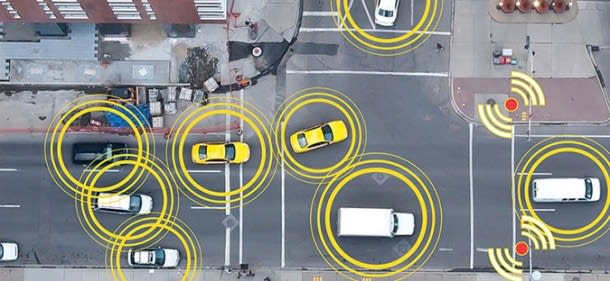
Autonomous vehicles (AVs) will increase, not decrease, traffic in already overcrowded downtown areas. Image: Texas A&M Transportation Institute
Autonomous vehicles (AVs) will increase, not decrease, traffic in already overcrowded downtown areas. Image: Texas A&M Transportation Institute
Autonomous vehicles (AVs) will increase, not decrease, traffic in already overcrowded downtown areas. That is one of the main findings of a joint World Economic Forum and Boston Consulting Group (BCG) study with the City of Boston, released today.
While AVs will reduce the numbers of cars and overall travel times across cities as a whole, the effect is not evenly distributed, with concentrated downtown areas potentially seeing a deterioration in traffic flow. City and state governments can intervene to encourage higher sharing of AVs and avoid a significant move away from mass transit systems, which remain essential for urban mobility.
“Cities can’t follow a ‘wait and see’ approach towards autonomous vehicles,” said John Moavenzadeh, member of the Executive Committee of the World Economic Forum and co-author of the study. “Cities need to actively explore policies and incentives, such as dynamic pricing, dedicated lanes and redesign of the kerb to ensure that autonomous vehicles will achieve the full value for society that they promise. If such choices are not made, cities risk losing more than they will gain from autonomous vehicles.”
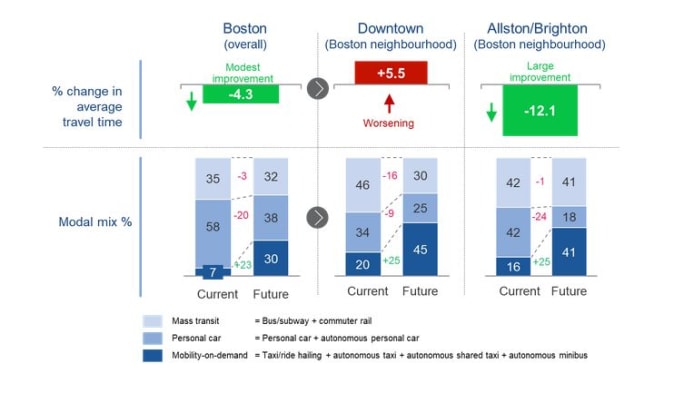
A sophisticated traffic simulation model for the City of Boston showed that both the number of vehicles on the road and travel times would change markedly. While neighbourhoods outside the downtown core, such as Allston, would see a reduction in traffic and decreased travel time, travellers downtown would face increased traffic and travel time. The study also indicated that a shift to autonomous mobility would reduce by 48% the number of parking spaces required in Boston, which unlocks tremendous opportunities to rethink streets and overall urban design.
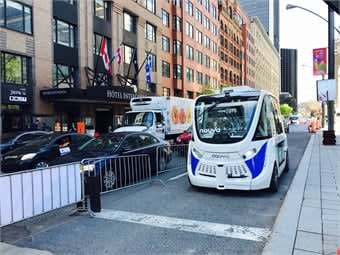
While autonomous vehicles will reduce the numbers of cars and overall travel times across cities as a whole, the effect is not evenly distributed, according to a new World Economic Forum study. Photo: METRO Magazine/J.Starcic
The team conducted a large-scale conjoint analysis asking thousands of residents in the Boston area what types of autonomous and non-autonomous vehicles they were likely to drive in certain situations (e.g., travelling to work when raining, etc.). The analysis predicts a clear shift to mobility-on-demand (both AVs like robo-shuttles and non-AVs like today’s taxi and ride-share services), which will account for 30% of all trips in the greater Boston area (up from 7% today) and 40% of trips within the city limits in the future. The results of this consumer study were used as the input assumptions for a traffic simulation model.
“Autonomous mobility on demand provides a very convenient door-to-door service with a guaranteed seat and convenient mobile booking – all this at very competitive prices,” said Nikolaus Lang, Senior Partner at BCG and co-author of the study. “For trips shorter than four miles, it is likely that travellers would opt for low-capacity autonomous taxis or shuttles rather than taking high-capacity mass transit options like buses or trains.” This, in turn, would increase the number of cars on the road and average travel time by 5.5% in Boston’s downtown neighbourhood.
Policy-makers must expect the impact of AVs to vary not only city by city but also neighbourhood by neighbourhood, the study concluded. Policies and incentives will be needed to foster the technology’s innovation while ensuring that its benefits far outweigh its challenges. Potential measures to improve citywide travel time include:
Introduction of occupancy-based pricing schemes to discourage riding alone — this could improve travel time by 15%
Conversion of what was once on-street parking to dedicated pick-up or drop-off areas, surface mass transit or driving lanes — this could lead to a decrease in travel time by 10%
Similarly, designation of dedicated lanes for shared autonomous vehicles — this could decrease travel time by 8%
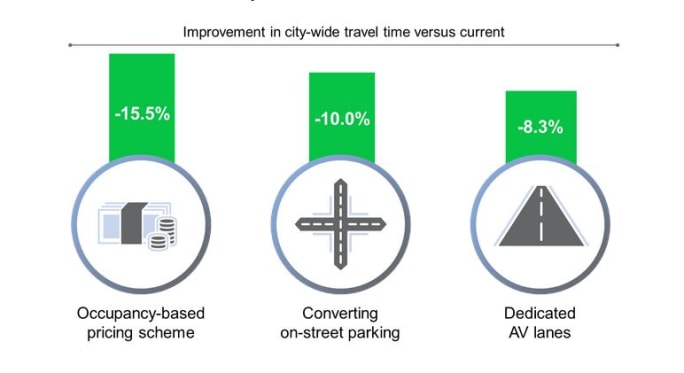
The report, Reshaping Urban Mobility with Autonomous Vehicles: Lessons from the City of Boston, details the findings from collaboration with BCG in partnership with the City of Boston and the project’s community of working group members.
More New Mobility
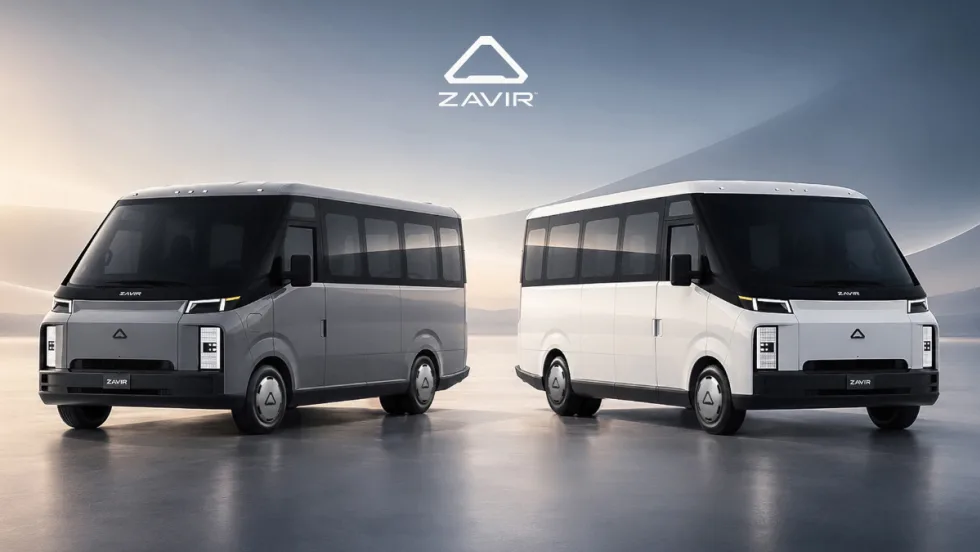
ENC Unveils ZAVIR Medium-Duty Electric Shuttle at APTA EXPO
The new ZAVIR brand targets shuttle and paratransit operations with battery-electric and range-extended electric vehicle options.
Read More →
Public Transit Conference Returning to GFX in 2027, Call for Papers Now Open
The Call for Papers is now open, allowing transit agency professionals and industry experts to help shape the PTC educational program by submitting session ideas for consideration.
Read More →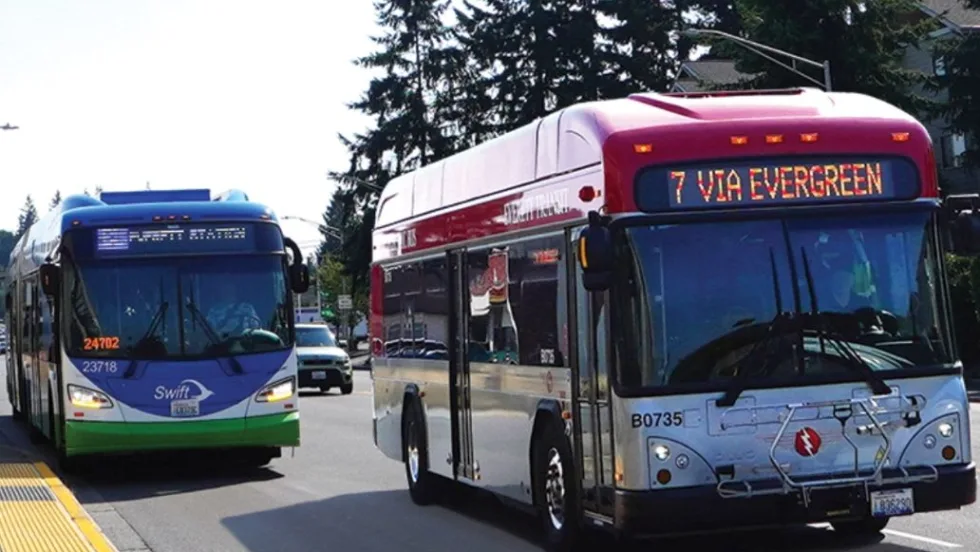
Everett Transit, Community Transit Outline Consolidation Agreement
The proposed agreement calls for a 50% increase in bus service in Everett, a new microtransit zone, continued paratransit service, and the transfer of Everett Transit operations to Community Transit.
Read More →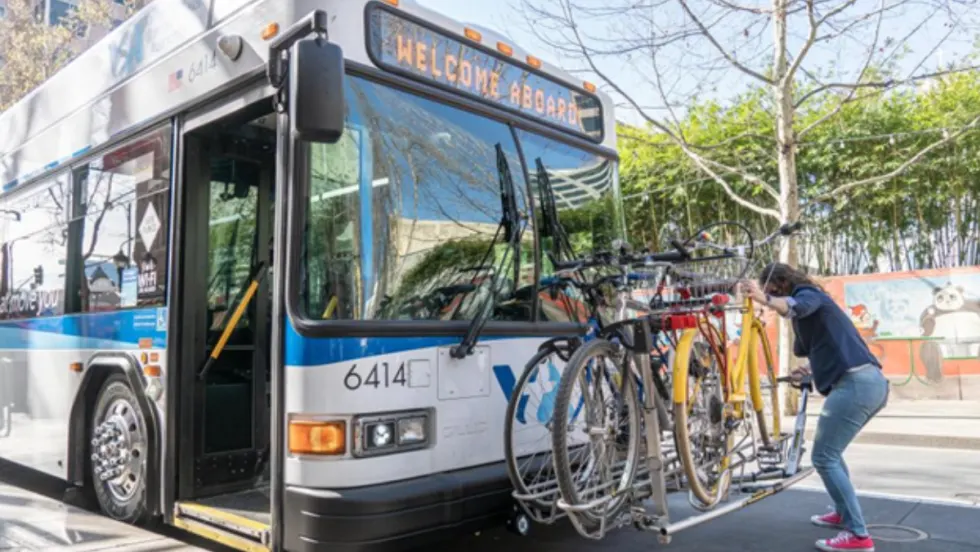
What Multimodal Data Can Tell Transit Agencies About Rider Demand
See how bike-on-bus data is giving transit agencies new insight into rider demand, capacity constraints, and gaps in first- and last-mile connections.
Read More →
From Hardware to Digital Partner: Luminator Charts Its Next Chapter
CEO Magnus Friberg discusses Luminator’s shift toward becoming a digital partner, the growing importance of software and interoperability, and how AI can help agencies improve operations and passenger experience.
Read More →
Biz Briefs: Alstom Lands Canadian Contract, LYT to Supply California TSP, and More
In METRO's latest installment, we take a look at recent news from Complete Coach Works, Beep, FlixBus, and more partnerships making headlines across the transportation sector.
Read More →
CharterUP’s Armir Harris on Technology, AI, and the Future of Group Mobility
In a recent episode of METROspectives, CharterUP Founder/CEO Armir Harris discussed the company’s evolution from an online charter bus marketplace into a technology platform supporting public- and private-sector mobility and much more.
Read More →
Jacksonville’s NAVI Project Charts a New Course for Autonomous Public Transportation
Through its NAVI program, JTA is showing how autonomous vehicles, intelligent infrastructure, and coordinated operations can work together to deliver everyday public transportation.
Read More →
Biz Briefs: Luminator Marks Milestone and More
From manufacturers and suppliers to transit agencies and motorcoach operators, these updates offer a snapshot of the projects, partnerships and business moves driving the industry forward.
Read More →
New Tricks for Old Bureaucracies: Joshua Schank on Making Transit Innovation Stick
Former LA Metro Chief Innovation Officer Joshua Schank discusses why good ideas aren't enough, how transit agencies can overcome resistance to change, and why today's challenges demand more innovation.
Read More →