



Biz Briefs: Alstom to Supply R211 Components and More
Biz Briefs covers the latest supplier news in the motorcoach and public transit industries.

In METRO's latest installment, we take a look at the latest news from suppliers including Alstom, Masabi, Umo, and more.
Photo: METRO
Biz Briefscovers the latest supplier news in the motorcoach and public transit industries.
In METRO's latest installment, we take a look at the latest news from suppliers including Alstom, Masabi, Umo, and more.
Alstom to supply Propulsion Components for MTA’s R211 Railcars
Alstom has exercised the second option with Kawasaki Rail Car Inc. to supply propulsion components for 435 additional new generation subway cars, known as the R211 series, for the Metropolitan Transportation Authority’s (MTA) New York City Transit (NYCT).
The R211 cars are being introduced as a part of NYCT’s efforts to modernize and improve reliability and service for NYCT’s customers.
The propulsion system for the R211 trains will be manufactured at Alstom’s facility in Hornell, New York. The Hornell facility’s component plant produces AC traction motors, traction cases, and high-speed circuit breakers (HSCB). It includes a combined test/power laboratory, ensuring that all components are rigorously tested and validated on-site. This integrated approach enhances quality control and streamlines the production process.
Wisconsin Agency Adds Umo Fare Payment
Appleton, Wisconsin’s Valley Transit will be officially launching its new payment system, WisGo, powered by Umo, in August.
The new system allows riders to pay their fares using either a mobile app or a reloadable card. Additionally, Valley Transit is introducing fare capping, ensuring riders don’t pay more than a daily or monthly limit while using WisGo.
According to Umo, with WisGo, riders will have multiple ways to take advantage of fare capping and streamline their payments: the Umo Mobility app or a reloadable WisGo card, both of which can be loaded with money using credit and debit cards, Apple Pay, and Google Pay. Riders can scan their mobile app or tap their WisGo card when boarding, and the bus fare will be automatically deducted. Cash is still accepted across all routes, but riders will not receive the benefits of fare capping.
The WisGo system tracks each trip a rider makes and ensures that once the daily or monthly fare cap is reached, all additional rides and transfers for the remainder of that day or month are free. After hitting the cap, no further charges are applied.
TSI Provides GILLIG Buses to Nations Bus Sales
Transit Sales International (TSI) announced the sale of eight 35-foot Gillig Low Floor transit buses to Nations Bus Sales, a nationwide dealer and distributor, which is purchasing the buses on behalf of one of its customers that has recently been awarded a university transportation project.
The eight Gillig buses will undergo preparation by TSI’s sister company, Complete Coach Works, to ensure they are operational and ready for service. This includes mechanical and external reconditioning to meet the standards of Nations Bus Sales and their client.
Once completed, the buses will be delivered for deployment in support of the university transportation project.
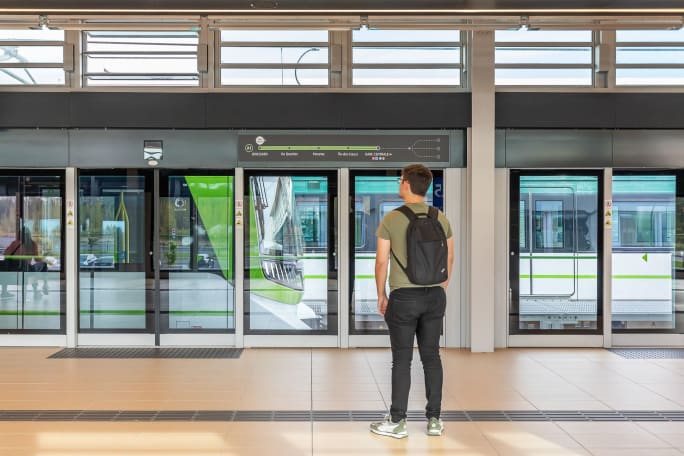
Already adopted by over 200 agencies worldwide, Masabi’s solution simplifies the user experience, reduces operational costs, and facilitates integration with other mobility services.
Photo: Masabi
Montreal’s ARTM Taps Masabi for New Fare Payment System
Montreal’s Autorité régionale de transport métropolitain (ARTM) awarded a contract to Masabi for the development and implementation of a new fare collection solution as part of the Concerto project, a significant transformation initiative aimed at modernizing the public transit customer experience in the Montreal metropolitan region.
Masabi offers a Software-as-a-Service cloud-native platform, called Justride, which enables transit agencies to quickly deploy modern, flexible, and scalable fare collection systems. This platform supports a variety of payment methods, including contactless bank cards, smartphones, smart cards, and mobile tickets.
Already adopted by over 200 agencies worldwide, Masabi’s solution simplifies the user experience, reduces operational costs, and facilitates integration with other mobility services. To support the delivery of a modern, integrated fare system for Greater Montreal, Masabi is working with global engineering consultancy WSP.
Concerto represents a complete and gradual overhaul of the entire fare collection system in the metropolitan region, with several deliverables already available or in deployment.
Siemens Mobility’s Hacon Launches HAFAS NextGen App for ‘Smarter Travel’
Siemens Mobility subsidiary Hacon has introduced HAFAS NextGen, the latest generation of its proven mobility platform. The user-centered app streamlines trip planning, ticket booking, and real-time travel assistance — all within a single interface.
NextGen’s innovative Live Navigation guides users throughout their journey, offering reminders to depart, change vehicles, or disembark, while suggesting alternate routes when disruptions occur.
Transit agencies benefit from continuous development, flexible branding, and modular product suites tailored to needs ranging from travel info to full Mobility as a Service. The platform is also fully accessible, meeting WCAG 2.2 AA standards.
More Technology

From Hardware to Digital Partner: Luminator Charts Its Next Chapter
CEO Magnus Friberg discusses Luminator’s shift toward becoming a digital partner, the growing importance of software and interoperability, and how AI can help agencies improve operations and passenger experience.
Read More →
Beyond the Checklist: A Structured Approach to Transit Maintenance
Reliability-Centered Maintenance helps transit agencies move beyond routine checklists to focus limited resources on the assets and failures that have the greatest impact on safety, reliability, and service.
Read More →
NJ TRANSIT Advances Bus Technology Upgrades Across Statewide Fleet
More than 1,500 buses now feature upgraded technology designed to improve arrival predictions and provide free Wi-Fi, with deployment expected to reach nearly 2,000 buses by the end of 2026.
Read More →

Building a Flexible Path to Transit Electrification
John Hroncich discusses BAE Systems’ modular and scalable approach, lessons learned from decades of real-world operations, and how agencies can identify electrification strategies that fit their fleets.
Read More →
Biz Briefs: Alstom Lands Canadian Contract, LYT to Supply California TSP, and More
In METRO's latest installment, we take a look at recent news from Complete Coach Works, Beep, FlixBus, and more partnerships making headlines across the transportation sector.
Read More →
From Legacy Silos to Conversational Intelligence
What if transit leaders could ask any operational question and get a trusted answer in seconds? Conversational AI is transforming how agencies use their data.
Read More →
USDOT Announces Rail Vehicle Replacement Grants, Chattanooga AV Shuttle Funding
More than $191 million in federal funding will help three transit agencies replace aging rail vehicles and support a new autonomous shuttle service in Chattanooga.
Read More →
Bus Tech Talk: Keeping Transit Technicians Ahead of the Technology Curve
LA Metro’s Obed Mejia discusses technician training, evolving maintenance technology, fleet replacement, and strategies for getting the most out of today’s transit fleets.
Read More →
Biz Briefs: RIPTA Unveils New Frontrunners, Clevland RTA Adds New Siemens, and More
In METRO's latest installment, we take a look at recent news from Siemens, Prevost, Dodge, and more partnerships making headlines across the transportation sector.
Read More →
Why Simulating Pedestrian Movement Has Become Essential for Modern Rail Stations
Pedestrian microsimulation is helping rail planners identify bottlenecks, test station designs, and prepare complex transit hubs for growing passenger volumes.
Read More →