



Bombardier introduces very high-speed train
The first train unit will now begin homologation test runs on the rail line between Genoa and Savona, which is also connected to the Bombardier Vado Ligure site. Regular passenger service is expected for early 2015.

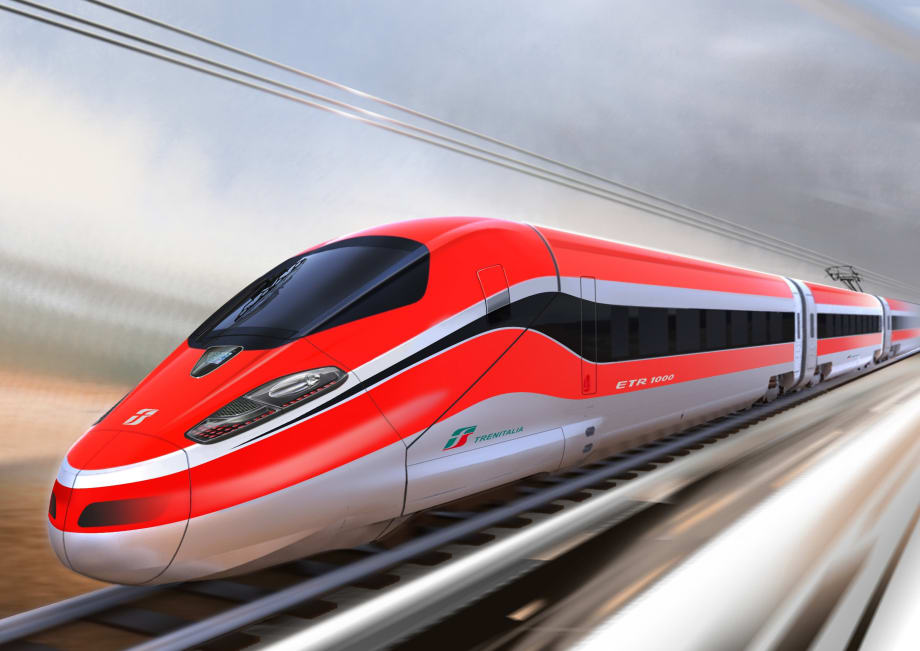
The V300Zefiro is the fastest train in Europe and is capable of reaching commercial speeds of up to 223 miles per hour.
The V300Zefiro is the fastest train in Europe and is capable of reaching commercial speeds of up to 223 miles per hour.
Built by Bombardier Transportation and its consortium partner AnsaldoBreda of Italy, the Frecciarossa 1000 is the newest member of the Bombardier Zefiro family of high-speed trains and is known as the V300Zefiro model. This first train unit will now begin homologation test runs on the rail line between Genoa and Savona, which is also connected to the Bombardier Vado Ligure site. Regular passenger service is expected for early 2015.
The V300Zefiro is the fastest train in Europe and is capable of reaching commercial speeds of up to 223 miles per hour. During test runs the train will reach speeds in excess of 248 mph. Its advanced high acceleration enables the train to deliver excellent travel times, even on winding routes. It is fully interoperable and will provide cross-border services, taking passengers to other European countries without the need to change trains. It could also be adapted for use on networks in many other countries.
The train is an eight-car Electrical Multiple Unit (EMU) that can run in single operation and multiple operation of two units. It will have a total capacity of 485 across four classes, two additional tip-up seats for passengers with reduced mobility and a bistro.
RELATED: "SunRail Service to Transform Florida's Commuter Culture."
More Rail
Amtrak, CN Reach Agreements to Strengthen Passenger Rail Service, Safety
The agreement resolves a more than decade-long proceeding before the Surface Transportation Board concerning the terms and conditions for Amtrak services, such as the City of New Orleans, Illini/Saluki, and Wolverine.
Read More →
New York MTA Advances Final Contract for Second Avenue Subway Expansion
Contract Four is the largest in the Second Avenue Subway Phase 2 project and includes construction of station infrastructure, tracks, and signals for the subway expansion, MTA officials said. Work on Contract Four will begin in 2027.
Read More →
San Diego MTS Breaks Monthly Trolley Ridership Record
Agency officials said July’s ridership indicates MTS’s continued recovery from the pandemic.
Read More →
Report Examines NJ TRANSIT Reliability, Funding Challenges
The Garden State Initiative analysis examines the roles of Amtrak infrastructure, fleet management, and agency operations while recommending a more performance-based approach to improving reliability.
Read More →
Stadler, CapMetro Sign Long-Term Rail Fleet Support Agreement
Beginning in 2027, Stadler will provide on-site technical expertise, spare parts support, training, and obsolescence management to help extend the reliability and longevity of CapMetro’s GTW fleet.
Read More →
Biz Briefs: Alstom Lands Canadian Contract, LYT to Supply California TSP, and More
In METRO's latest installment, we take a look at recent news from Complete Coach Works, Beep, FlixBus, and more partnerships making headlines across the transportation sector.
Read More →
CATS Gold Line Marks 5 Years of Service, 2.8M Passenger Trips
With a six-mile expansion planned, the Charlotte streetcar is positioned to connect more neighborhoods and major transit hubs across the region.
Read More →
Why Simulating Pedestrian Movement Has Become Essential for Modern Rail Stations
Pedestrian microsimulation is helping rail planners identify bottlenecks, test station designs, and prepare complex transit hubs for growing passenger volumes.
Read More →
Amtrak Begins Major Construction at New York’s Sunnyside Yard
The new maintenance facility will support Amtrak’s Airo trainsets while improving maintenance efficiency and turnaround times in New York.
Read More →
Chicago Leaders Unveil Plans for O’Hare Airport Express Train
The privately developed project would offer a 15-minute trip between downtown and O’Hare’s Terminal 2, with trains operating every 15 minutes on a dedicated track. The service would use battery-electric trains and three existing freight rail rights-of-way.
Read More →