



Boston’s MBTA Begins Search for Alewife Complex Joint Development Partner
The Alewife Complex includes a Red Line station, a 2,733-space parking garage, and additional Commuter Rail facilities.


As the public owner, the MBTA is looking for design, permitting, construction, financial, operations, and maintenance expertise to complement the MBTA’s capabilities. Collaboration, creativity, accountability, and transparency will be hallmarks of the partnership.
Photo: MTBA
The Massachusetts Bay Transportation Authority (MBTA) hosted a joint development forum to explore the transformation of the Alewife Complex, one of Cambridge’s most vital transportation hubs, into a premier public transit and mixed-use development.
The event drew 175 attendees in person and over 75 virtually who were interested in the project. The Alewife Complex includes a Red Line station, a 2,733-space parking garage, and additional Commuter Rail facilities.
“Mixed-use transit-oriented development opportunities like Alewife can really spur economic development in local communities, introduce more affordable housing, and assist the Commonwealth in its climate change goals,” said MBTA GM/CEO Phillip Eng. “The MBTA is committed to partnering with the communities we serve to develop safe, walkable, interconnected public spaces focused around our stations.”
The MBTA’s Joint Development Plan
The MBTA will employ a two-phase approach to selecting its JD partner:
Pre-Development Agreement: The MBTA will issue requests for proposals seeking developer qualifications by late summer 2024. Proposals will be due in Fall 2024. JD partner selection is anticipated to commence during winter 2024; this phase will enable collaborative planning, design, and goal alignment.
Long-term Lease: Upon the satisfaction of the pre-conditions to development set forth in the pre-development agreement, it is the intention of the MBTA to proceed directly to a long-term lease with its JD partner.
What the MBTA is Looking for
As the public owner, the MBTA is looking for design, permitting, construction, financial, operations, and maintenance expertise to complement the MBTA’s capabilities. Collaboration, creativity, accountability, and transparency will be hallmarks of the partnership.
The development of the Alewife Complex will be closely coordinated with City of Cambridge representatives.
The success of this project to date is in large part due to the support of the City of Cambridge, and the collaborative efforts of local residents, including those in Alewife Neighbors Inc. and the neighboring communities of Arlington and Belmont.
“The Red Line is the backbone of public transit in Cambridge, and the transformation of Alewife station is critical to our transportation infrastructure. We have a tremendous opportunity to advance the City’s goals and benefit our community. I look forward to partnering with the MBTA to engage the Cambridge community on this critical project,” said Cambridge City Manager Yi-An Huang.
The Alewife Complex Project
The Alewife Complex joint development initiative represents a bold and transformative approach to urban and transit development, promising to create a more connected, sustainable, and economically vibrant Cambridge.
The redevelopment will address several key priorities:
Infrastructure Modernization: Overhauling aging systems, incorporating state-of-the-art technology to improve service reliability and rider experience, including upgrading signaling systems, improving platform accessibility and real-time information displays.
Multimodal Integration: Connecting various transportation modes, including subway, bus, commuter rail, and last-mile solutions such as bike-sharing and electric vehicle charging stations.
Climate Resilience: Incorporating advanced flood mitigation strategies and green infrastructure to protect against climate change impacts.
Transit-Oriented Development (TOD): Creating a vibrant community hub, with potential for housing, retail, and office spaces directly integrated with the transit facility.
Sustainability: Prioritizing energy efficiency, utilizing renewable energy sources and implementing water conservation measures to minimize the station's environmental footprint.
The benefits for the local community will be significant, as the redevelopment will enhance public spaces and integrate new amenities designed to improve the quality of life for residents.
Economically, the Alewife Complex redevelopment is expected to act as a major driver of growth in Cambridge. By introducing a dynamic mixed-use space, the MBTA anticipates the project will attract new businesses, generate employment opportunities, and stimulate investment.
More Rail

ENC Lands MATA Contract and More in Biz Briefs
In this edition of Biz Briefs, we spotlight the latest developments shaping the future of mobility.
Read More →
Strada360’s Steve Lassey on Turning Transit Data Into Better Decisions
From breaking down data silos to preparing for AI, Strada360 CEO Steve Lassey discusses how transit agencies can use technology to improve operations, customer information, and long-term decision-making.
Read More →
SEPTA Details Accelerate Vision for Transit System
The plan outlines investments in trolley modernization, new Metro and Regional Rail vehicles, accessible stations, and more frequent bus and rail service.
Read More →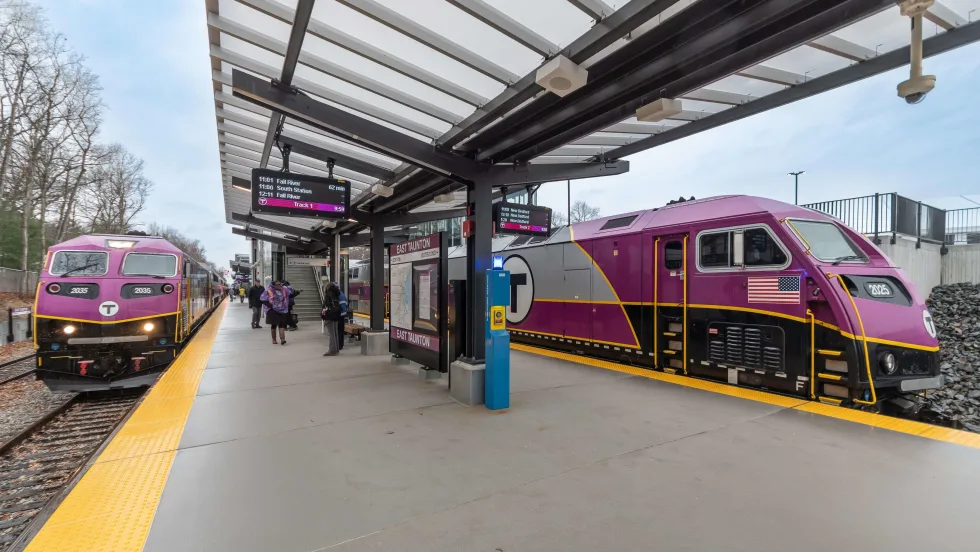
FTA Ends Direct Oversight of MBTA Safety Actions
The federal agency closed its remaining special directive to the Massachusetts Department of Public Utilities following a safety review that began in 2022.
Read More →
Amtrak, CN Reach Agreements to Strengthen Passenger Rail Service, Safety
The agreement resolves a more than decade-long proceeding before the Surface Transportation Board concerning the terms and conditions for Amtrak services, such as the City of New Orleans, Illini/Saluki, and Wolverine.
Read More →
New York MTA Advances Final Contract for Second Avenue Subway Expansion
Contract Four is the largest in the Second Avenue Subway Phase 2 project and includes construction of station infrastructure, tracks, and signals for the subway expansion, MTA officials said. Work on Contract Four will begin in 2027.
Read More →
San Diego MTS Breaks Monthly Trolley Ridership Record
Agency officials said July’s ridership indicates MTS’s continued recovery from the pandemic.
Read More →
Report Examines NJ TRANSIT Reliability, Funding Challenges
The Garden State Initiative analysis examines the roles of Amtrak infrastructure, fleet management, and agency operations while recommending a more performance-based approach to improving reliability.
Read More →
Stadler, CapMetro Sign Long-Term Rail Fleet Support Agreement
Beginning in 2027, Stadler will provide on-site technical expertise, spare parts support, training, and obsolescence management to help extend the reliability and longevity of CapMetro’s GTW fleet.
Read More →
Biz Briefs: Alstom Lands Canadian Contract, LYT to Supply California TSP, and More
In METRO's latest installment, we take a look at recent news from Complete Coach Works, Beep, FlixBus, and more partnerships making headlines across the transportation sector.
Read More →