



BYD to supply Dutch all-electric buses
The 35 buses will enter service in July of 2014 and replace an ageing fleet of conventionally powered buses.

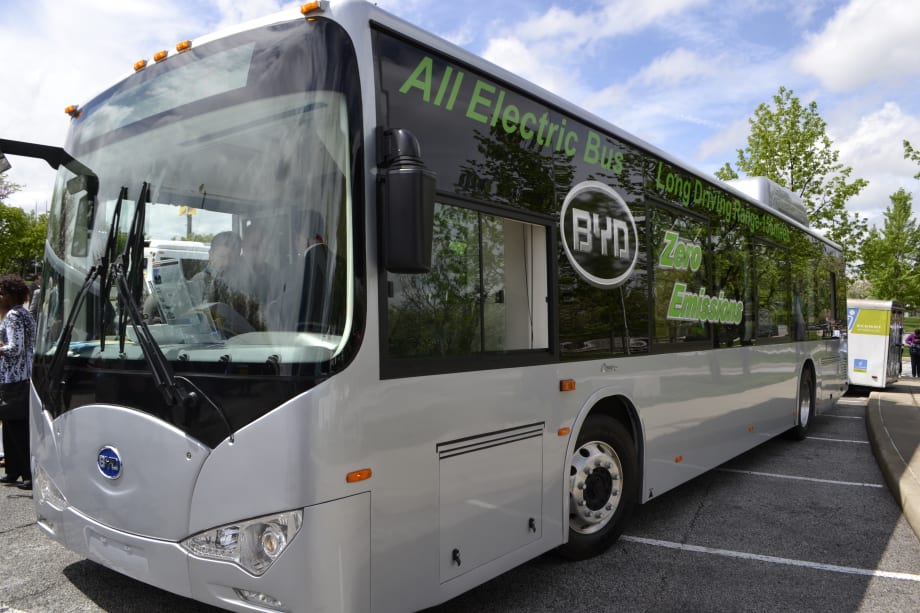
BYD Co. Ltd. was selected to supply Europe’s largest, zero emissions, all-electric bus fleet to transfer passengers between airport terminals and aircraft at the Amsterdam Schiphol Airport.
The 35 BYD buses will enter service in July of 2014 and replace an ageing fleet of conventionally powered buses.
The SUBSS Project (Sustainable Bus System of Schiphol) aims to provide a new generation of emissions-free, plane-side, transfer-vehicles to enhance the airport’s image with both the customers and the airline brands. These high-technology buses will reduce maintenance and management costs and improve the overall airport air quality by reducing the emissions of green-house gases.
The open-public tender was under intense competitive pressure from four other very established suppliers, so this is seen as a major triumph for BYD in the airport-transport industry and it comes at a time when all European airports are under increasing pressures to cut pollutants and reduce green-house gas emissions.
BYD’s pure-electric bus employs many advanced technologies developed in-house by BYD’s 15,000 engineers including: the advanced environmentally-friendly, Iron-Phosphate batteries, in-wheel hub motors and regenerative braking.
More Technology
Almaviva Looks to Open Architecture to Advance Transit Technology
Eric Reese discusses how interoperability, open architecture, and modular design can help transit agencies control costs, reduce vendor lock-in, and upgrade technology without starting over.
Read More →
Driving Smarter Paratransit
John Hanlon shares how AlphaRoute is leveraging AI-powered technology to help paratransit providers optimize operations, support frontline staff, and enhance the rider experience.
Read More →
From Hardware to Digital Partner: Luminator Charts Its Next Chapter
CEO Magnus Friberg discusses Luminator’s shift toward becoming a digital partner, the growing importance of software and interoperability, and how AI can help agencies improve operations and passenger experience.
Read More →

Beyond the Checklist: A Structured Approach to Transit Maintenance
Reliability-Centered Maintenance helps transit agencies move beyond routine checklists to focus limited resources on the assets and failures that have the greatest impact on safety, reliability, and service.
Read More →
NJ TRANSIT Advances Bus Technology Upgrades Across Statewide Fleet
More than 1,500 buses now feature upgraded technology designed to improve arrival predictions and provide free Wi-Fi, with deployment expected to reach nearly 2,000 buses by the end of 2026.
Read More →
Building a Flexible Path to Transit Electrification
John Hroncich discusses BAE Systems’ modular and scalable approach, lessons learned from decades of real-world operations, and how agencies can identify electrification strategies that fit their fleets.
Read More →
Biz Briefs: Alstom Lands Canadian Contract, LYT to Supply California TSP, and More
In METRO's latest installment, we take a look at recent news from Complete Coach Works, Beep, FlixBus, and more partnerships making headlines across the transportation sector.
Read More →
From Legacy Silos to Conversational Intelligence
What if transit leaders could ask any operational question and get a trusted answer in seconds? Conversational AI is transforming how agencies use their data.
Read More →
USDOT Announces Rail Vehicle Replacement Grants, Chattanooga AV Shuttle Funding
More than $191 million in federal funding will help three transit agencies replace aging rail vehicles and support a new autonomous shuttle service in Chattanooga.
Read More →
Bus Tech Talk: Keeping Transit Technicians Ahead of the Technology Curve
LA Metro’s Obed Mejia discusses technician training, evolving maintenance technology, fleet replacement, and strategies for getting the most out of today’s transit fleets.
Read More →