




Related: Apollo Video, C-Tran paves the way for higher quality onboard transit video
C-Tran BRT project gets $38.5M federal boost
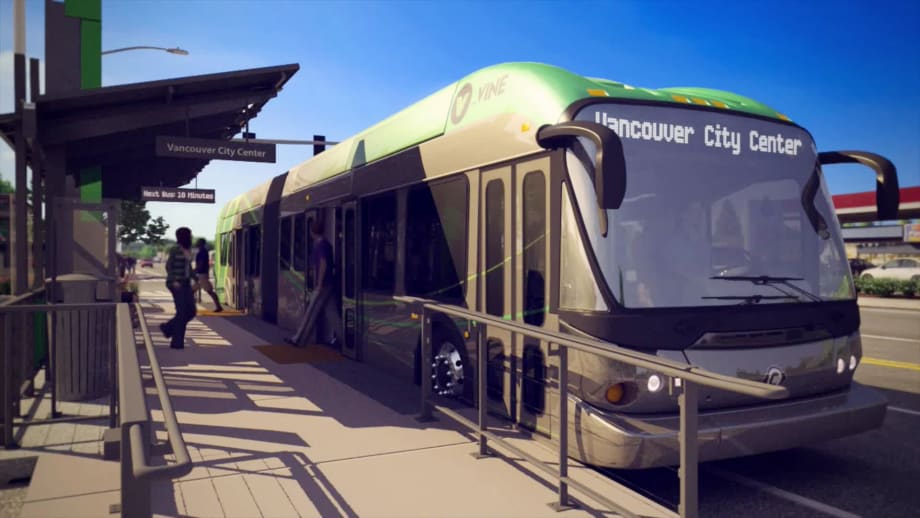
The Vine system will use 10 new, 60-foot buses, which will nearly double the passenger capacity of current bus routes. In addition, the buses will be served by new stations designed to make boarding quicker and easier, especially for the elderly and those with disabilities.
September 11, 2015
C-Tran
2 min to read

C-Tran
The Federal Transit Administration (FTA) announced $38.5 million in federal funding toward a new bus rapid transit (BRT) system for the Vancouver, Wash.-based C-Tran. The new BRT system, called the Vine, will offer faster, more convenient service for thousands of transit riders on the heavily-traveled 4th Plain Boulevard and Fort Vancouver Way corridors.
“Bus rapid transit is a proven and effective way to relieve congestion, improve service, and stimulate economic growth, especially in fast-growing communities like Clark County,” said U.S. Transportation Secretary Anthony Foxx. “Through common-sense solutions like the Rapid Growth Area Transit Program, included in our GROW AMERICA proposal, reliable, long-term funding would be provided for BRT and other essential transportation projects around the country.”
The Vine system will use 10 new, 60-foot buses, which will nearly double the passenger capacity of current bus routes. In addition, the buses will be served by new stations designed to make boarding quicker and easier, especially for the elderly and those with disabilities. Along with faster and simpler boarding, other enhancements such as signal priority technology will result in significant time savings on the Vine’s route compared to current bus service.
“We are proud to support the Vine, which will bring efficient, affordable rapid transit to Clark County,” said FTA Acting Administrator Therese McMillan. “This project will encourage growth and development in downtown Vancouver, as well as transform the way people get to major employment and education centers like Clark College and the Veterans’ Administration Hospital.”
With the opening of the Vine, bus ridership in the corridor is expected to increase to 5,800 average weekday trips. The rapid bus will run every 10 minutes during rush hour and every 15 minutes during off-peak times. Downtown Vine stations will also connect to a cross-river shuttle, linking to Portland, Ore.’s MAX light rail system.
The U.S. Department of Transportation is contributing approximately $42.5 million in federal funding for the project, including $10.7 million in Small Starts funding, $27.8 million in Bus and Bus Facilities funding, and $4,000,000 in Congestion Mitigation and Air Quality funding. The total cost of the project is $53,120,000, the remainder of which is covered by the State of Washington, C-Tran and the City of Vancouver.
More Bus

Finding the ‘Happy Medium’: Optimizing Maintenance Without Sacrificing Reliability
The key to maintenance optimization isn’t doing less work—it’s doing the right work at the right time on the right assets.
Read More →
LA Metro, City of West Hollywood, and Partners Advance Smarter Bus Lane Enforcement
The award-winning partnership combines AI-powered detection with human oversight to improve bus reliability, accessibility, and enforcement efficiency.
Read More →
PSTA Modernizes Workforce Management with Digital Bidding System
The award-winning Workforce Transit Modernization project replaced paper bidding with a transparent digital platform, cutting administrative effort while improving access for operators.
Read More →
Washington's Community Transit Sets Six-Year Roadmap for Growth, Expansion
Approved TDP targets more bus service, new mobility options, Swift BRT expansion, and a potential Everett Transit annexation.
Read More →
DART Customer Satisfaction Reaches Six-Year High
Overall satisfaction rose to 74.9%, while the agency’s Net Promoter Score reached a record 33.7.
Read More →
How DART's GoPass Is Redefining Regional Mobility
Serving 14 transit agencies, GoPass simplifies multimodal travel by allowing riders to plan, pay for, and manage an entire trip through one app.
Read More →
Biz Briefs: OCTA Taps Clean Energy for Hydrogen Station, Stadler to Supply Via Rail Vehicles, and More
From manufacturers and suppliers to transit agencies and motorcoach operators, these updates offer a snapshot of the projects, partnerships and business moves driving the industry forward.
Read More →
METRO Magazine Announces 2026 Innovative Solutions Awards Winners
Projects Recognized for Advancing Mobility Through Technology, Accessibility, Workforce Innovation, and Operational Excellence
Read More →
Biz Briefs: STV teams with Amtrak, Motorcoach Operators Boost Fleet and Land Contracts, and More
From manufacturers and suppliers to transit agencies and motorcoach operators, these updates offer a snapshot of the projects, partnerships and business moves driving the industry forward.
Read More →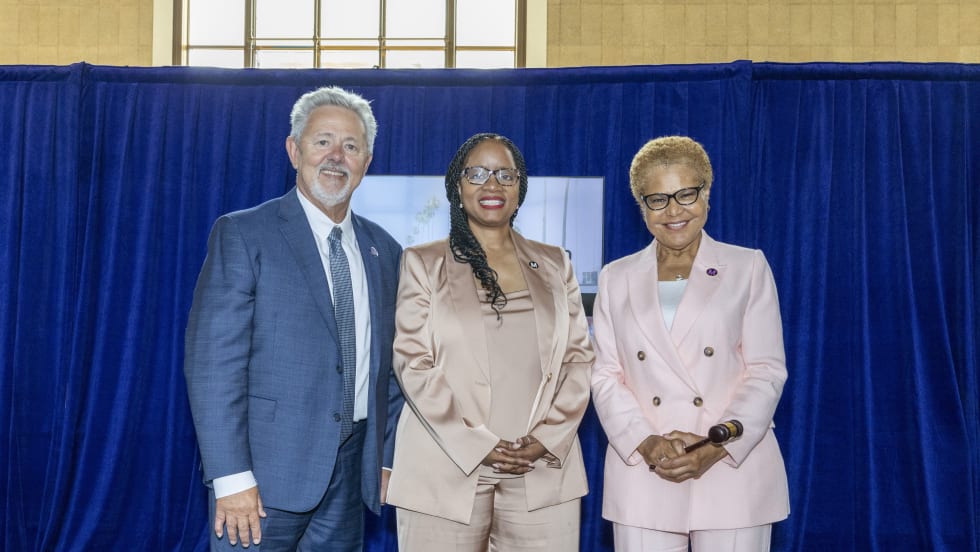
LA Metro Marks Banner Year, Sets Ambitious Goals for New Fiscal Year
Incoming LA Metro Board Chair and Los Angeles Mayor Karen Bass joined outgoing Board Chair Fernando Dutra and LA Metro CEO Stephanie Wiggins to review accomplishments from fiscal year 2026, which included the opening of new rail extensions, advancement of major transit projects, expanded safety programs, and new rider amenities.
Read More →