



California's AC Transit, Labor Union Reach New Agreement
In a decisive show of unity, Local 192 approved the CBA by an impressive 73% of members who cast ballots, according to AC Transit.

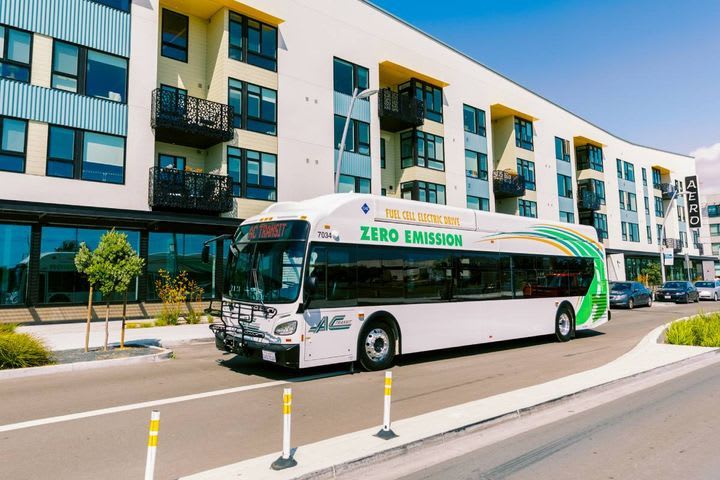
The newly ratified CBA marks a significant milestone in strengthening the foundation of AC Transit’s operations, as it reflects 1,869 ATU Local 192 frontline roles, including bus operators, BRT agents, clerks, dispatchers, janitors, maintenance clerks, mechanics, schedulers, service employees, and timekeepers.
Photos: AC Transit
Oakland, California’s Alameda-Contra Costa Transit District (AC Transit) and the Amalgamated Transit Union (ATU) Local 192 reached a landmark four-year collective bargaining agreement (CBA) covering all components of the labor contract — a breakthrough never seen in our 65-year history of transit service.
In a decisive show of unity, Local 192 approved the CBA by an impressive 73% of members who cast ballots, according to AC Transit.
“I want to extend my deepest gratitude to our Human Resources and Labor teams for more than six months of tireless dedication that helped secure this historic agreement. Their relentless effort and professionalism made a monumental difference. And it simply would not have been possible without the partnership, integrity, and unwavering commitment to fairness demonstrated by ATU Local 192. Together we’ve achieved something transformative, and I couldn’t be prouder," said GM/CEO Sal Llamas.
AC Transit’s New CBA
The newly ratified CBA marks a significant milestone in strengthening the foundation of AC Transit’s operations, as it reflects 1,869 ATU Local 192 frontline roles, including bus operators, BRT agents, clerks, dispatchers, janitors, maintenance clerks, mechanics, schedulers, service employees, and timekeepers.
The essential team members form the backbone of the workforce needed to ensure the smooth and seamless operation of the newly launched Realign network.
Realign represents an ambitious update to the entire bus network, which impacts nearly 85% of AC Transit's bus lines. Realign aims to right-size the network to better align with current realities, including the ongoing hybrid and remote work models, shifting ridership patterns that reflect changing community needs and travel demands, and directly responds to ongoing fiscal challenges.
The new CBA is expansive in scope and introduces provisions designed to deliver lasting workplace protections including: fair-market pay that keeps frontline members competitive in the Bay Area while balancing wages with AC Transit's economic practicality; a compressed pay scale to energize the workforce and accelerate career progression; and strengthened safety and wellness measures — including improved relief times, expanded de-escalation protocols, and enhanced customer-service training — to better protect and support frontline staff.
“We’re incredibly proud that this CBA includes crucial provisions, like de-escalation and customer service training,” said ATU Local 192 President/Business Agent LaTrina Meredith. “This milestone sets the stage for future-forward progress. We will now have annual meetings to not only update safety curriculum but also introduce cutting-edge best practices that elevate our brothers and sisters, ensuring they stay strong, skilled, and ready to serve the community.”
The CBA, also unanimously ratified by AC Transit’s board, is effective immediately and will remain in force through June 30, 2029.
More Management

METRO Opens Submissions for 2026 Motorcoach Awards
Nominations are now being accepted for METRO Magazine’s Operator of the Year and Innovative Operator of the Year awards.
Read More →
New York MTA Advances Final Contract for Second Avenue Subway Expansion
Contract Four is the largest in the Second Avenue Subway Phase 2 project and includes construction of station infrastructure, tracks, and signals for the subway expansion, MTA officials said. Work on Contract Four will begin in 2027.
Read More →
Transit Agencies Highlight Safety Gains at National Summit
Leaders from 15 major transit systems shared crime-reduction results and safety initiatives while discussing the role of continued federal support.
Read More →

NITA Names New Leadership, Expands Reduced-Fare Program at First Board Meeting
The new regional transit authority appointed its first board chair and interim executive director while extending reduced fares across CTA, Metra, and Pace for eligible riders.
Read More →
Beyond the Checklist: A Structured Approach to Transit Maintenance
Reliability-Centered Maintenance helps transit agencies move beyond routine checklists to focus limited resources on the assets and failures that have the greatest impact on safety, reliability, and service.
Read More →
APTA 2026 Nominating Committee Selects Leadership Slate, Names Chair and Vice Chair Nominees
Leadership changes will help shape the association’s priorities and its representation of the transportation industry during the 2026–2027 term.
Read More →
DART Launches Major Security, Fare Enforcement Initiative
The 90-day demonstration will deploy coordinated security teams at five light rail stations while testing controlled access and gathering data to guide future investments.
Read More →
Advancing Fare Collection Through Technology and Innovation
Learn about delivering 1300 gates at 91 stations while managing fare evasion. Explore the large scale deployment, solution customization and real-world results that affect the region. Prepare for deployment in your region now.
Read More →
Game Day in Motion: Moving Millions During the 2026 World Cup
Between packed transit stations and team motorcoaches, see how agencies and operators across North America tackled the transportation demands of the 2026 FIFA World Cup.
Read More →
Surface Transportation Extension Averts Shutdown, Leaves Transit Funding Gap
The stopgap keeps federal transportation programs moving, but missing advance funding could complicate the transit and rail projects agencies are planning next.
Read More →