



Caltrain hosts groundbreaking for electrification project
The project will electrify the Caltrain corridor between San Francisco and San Jose and will equip the corridor with high-performance electric trains.

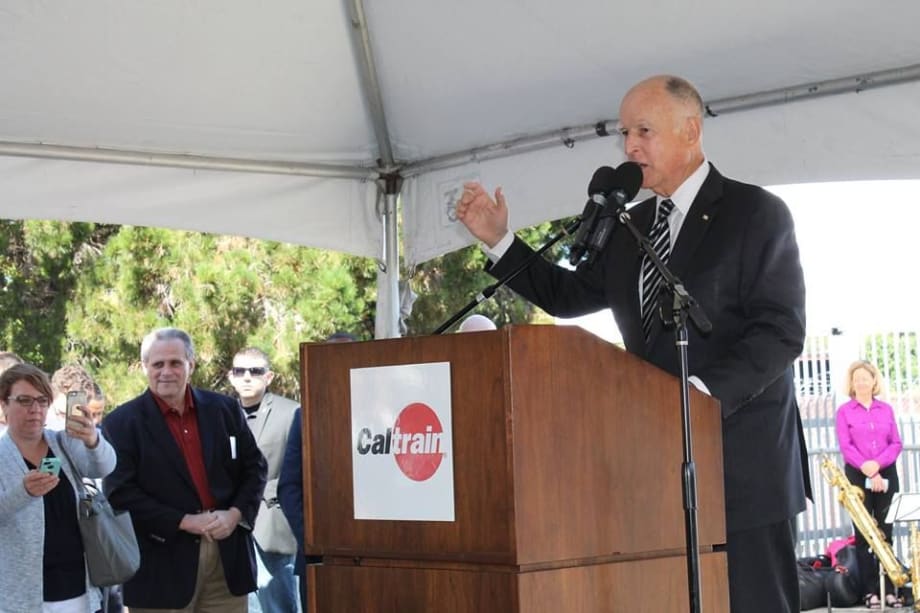
"A country is great when it can come together and build for the future. That's what we are doing right here on the Peninsula. It's about the future. It's about clean air, efficiency, speed and not sitting on the freeway for a couple of hours bumper-to-bumper." - Gov. Jerry Brown

Gov. Jerry Brown joined Congresswoman Nancy Pelosi and a number of state and local elected officials, business leaders, transportation advocates and environmentalists at the Millbrae Caltrain Station on July 21 to celebrate the official groundbreaking ceremony for the Caltrain Electrification Project.
The project will electrify the Caltrain corridor between San Francisco and San Jose and will equip the corridor with high-performance electric trains that will deliver faster, more frequent service to help the system accommodate rapidly increasing ridership demand.
Over the last 150 years, passenger rail service on the Caltrain Corridor has helped shape the evolution of Peninsula communities. The groundbreaking celebration marks a long-awaited milestone toward a future when a modernized Caltrain connects our communities with state-of-the-art transit service that reduces travel time, increases capacity; and helps relieve congestion on one of the nation’s most important transportation corridors, Highway 101.

The change will also reduce noise generated by Caltrain, improve local air quality, reduce greenhouse gas emissions and create thousands of jobs in the Bay Area and across the country.
Electrification is a long-awaited project that has been a goal for the system since 1999. In 2012, local, regional and state funding partners agreed to commit resources that were used to match a $647 million Federal Full Funding Grant Agreement that was issued by the Federal Transit Administration in April of this year.
Construction will take place throughout the Caltrain corridor installing the new infrastructure necessary to support an electrified system. The Electrification Project is expected to be completed in 2021.
More Rail
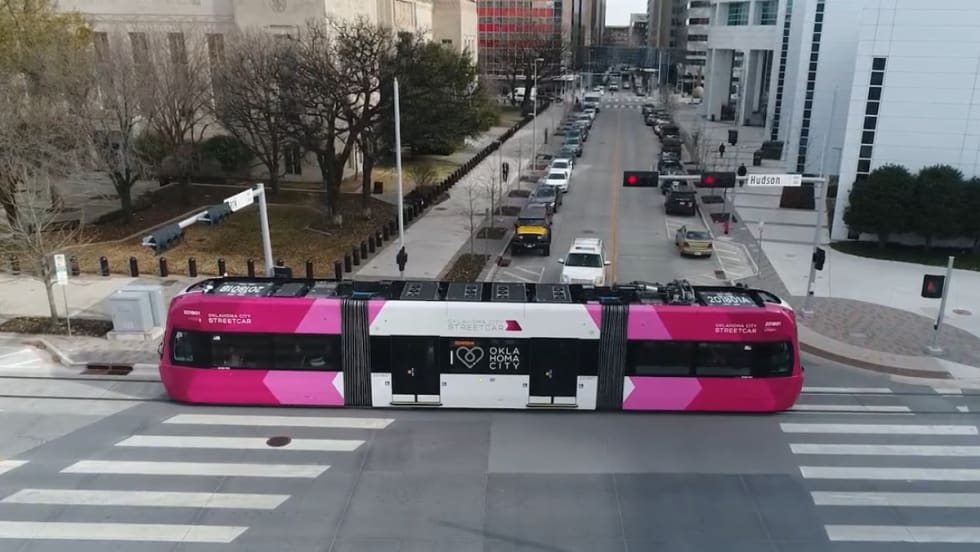
OKC Streetcar Makes Zero-Fare Service Permanent
Ridership increased an average of 71% compared with the same period a year earlier during the fare-free pilot.
Read More →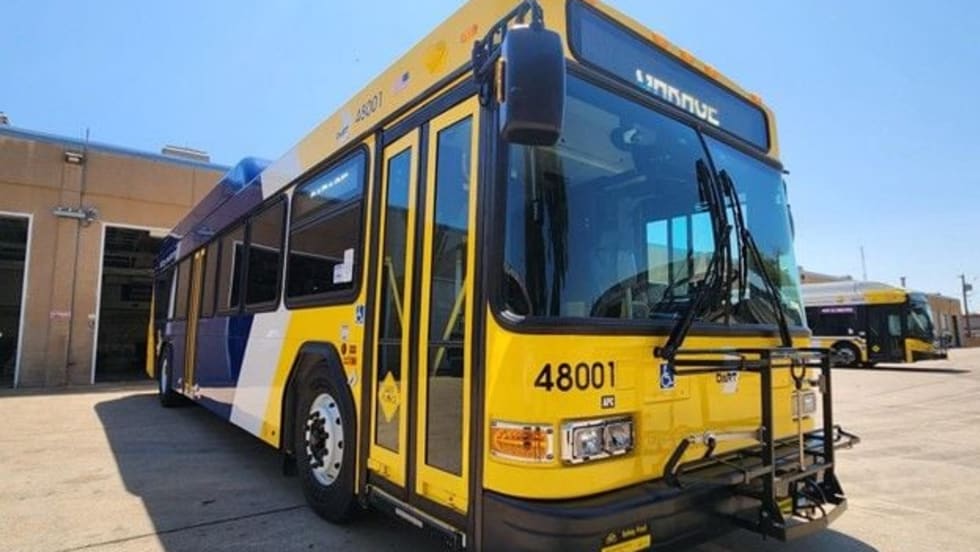
DART Customer Satisfaction Reaches Six-Year High
Overall satisfaction rose to 74.9%, while the agency’s Net Promoter Score reached a record 33.7.
Read More →
How DART's GoPass Is Redefining Regional Mobility
Serving 14 transit agencies, GoPass simplifies multimodal travel by allowing riders to plan, pay for, and manage an entire trip through one app.
Read More →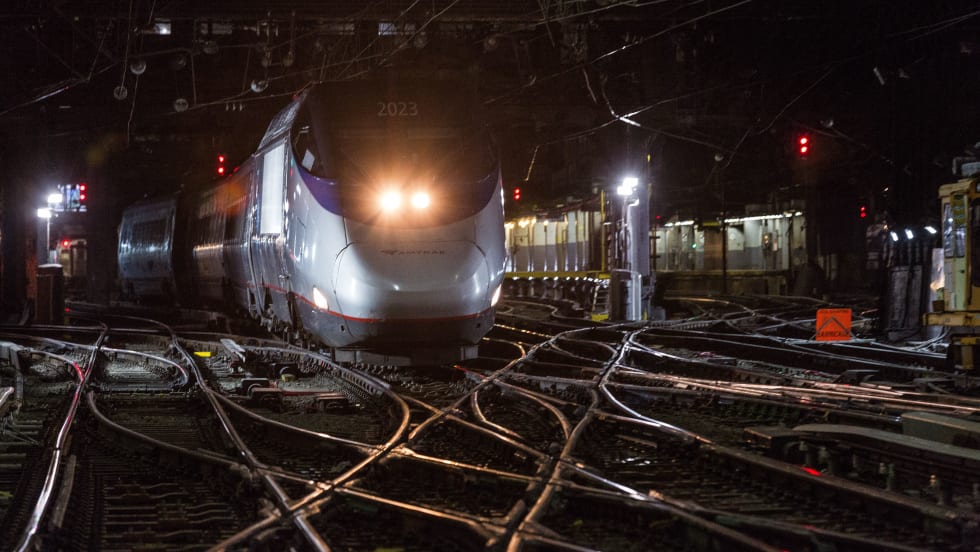
Amtrak Board Advances Plan to Restructure Organization, Seeks Public Input
The proposal, developed by Amtrak management and approved by the board for further consideration, is intended to modernize the organization's structure while improving accountability, operational efficiency, and customer service.
Read More →
Biz Briefs: STV teams with Amtrak, Motorcoach Operators Boost Fleet and Land Contracts, and More
From manufacturers and suppliers to transit agencies and motorcoach operators, these updates offer a snapshot of the projects, partnerships and business moves driving the industry forward.
Read More →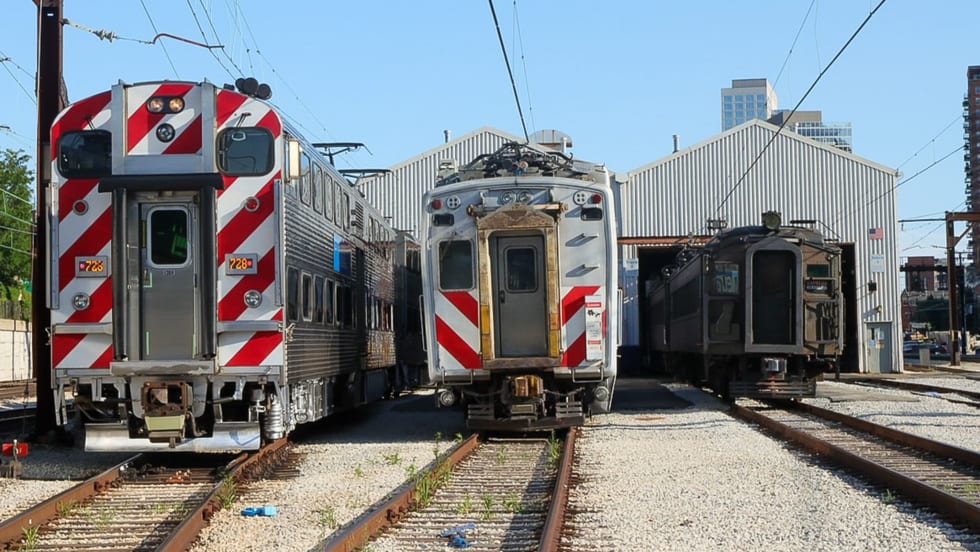
Metra Celebrates 100 Years of Electric Rail, Looks to the Future
The event was also a celebration of recent reforms to public transportation in the Chicago area, changes that could be as transformative in the future as the major civic achievement a century ago, said officials.
Read More →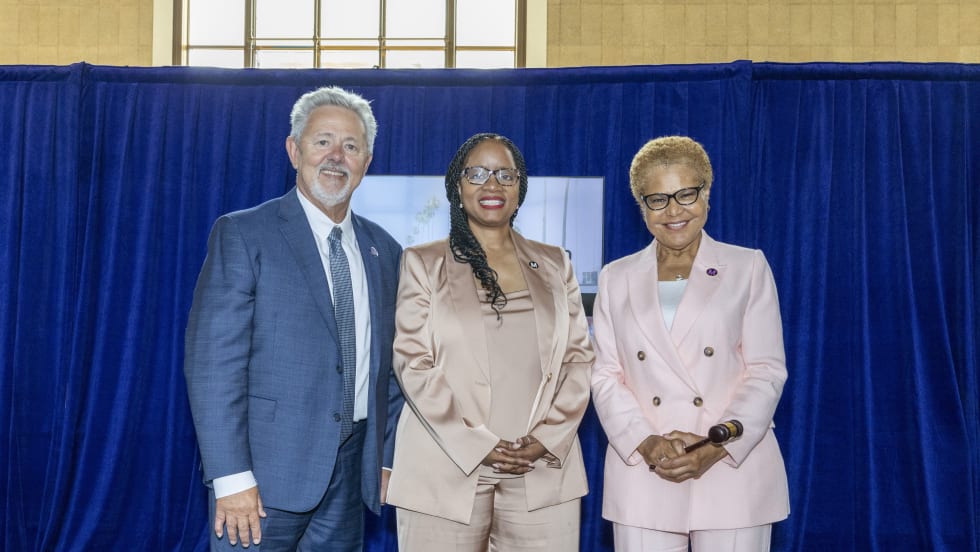
LA Metro Marks Banner Year, Sets Ambitious Goals for New Fiscal Year
Incoming LA Metro Board Chair and Los Angeles Mayor Karen Bass joined outgoing Board Chair Fernando Dutra and LA Metro CEO Stephanie Wiggins to review accomplishments from fiscal year 2026, which included the opening of new rail extensions, advancement of major transit projects, expanded safety programs, and new rider amenities.
Read More →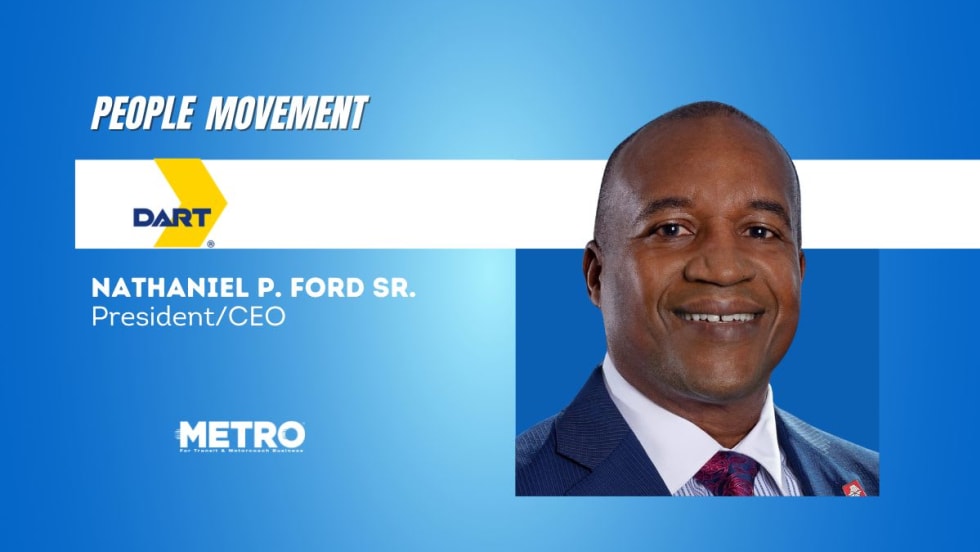
DART Taps Nathaniel P. Ford Sr. as Next President/CEO
Since 2012, Ford has served as the CEO of the Jacksonville Transportation Authority
Read More →
California High-Speed Rail Authority Signs MOU to Advance High Desert Corridor
The agreement deepens collaboration between the California High-Speed Rail Authority and the High Desert Corridor Joint Powers Agency, supporting design integration, cost savings, and faster delivery of a key Southern California rail link.
Read More →
Building the Next Generation of Transit Technology
In this edition of METROspectives, Luminator CEO Magnus Friberg discusses the company's transformation, the growing role of AI and software, and what's next for transit technology.
Read More →