




Read more: Transportation Secretary Urges Amtrak, WMATA Leaders to Improve Transportation Safety in D.C.
Caltrain Implements AI-Powered Crossings
Using AI, RailSentry provides alerts and data that help keep railroad crossings safe and reduce collisions by trains.
March 12, 2025
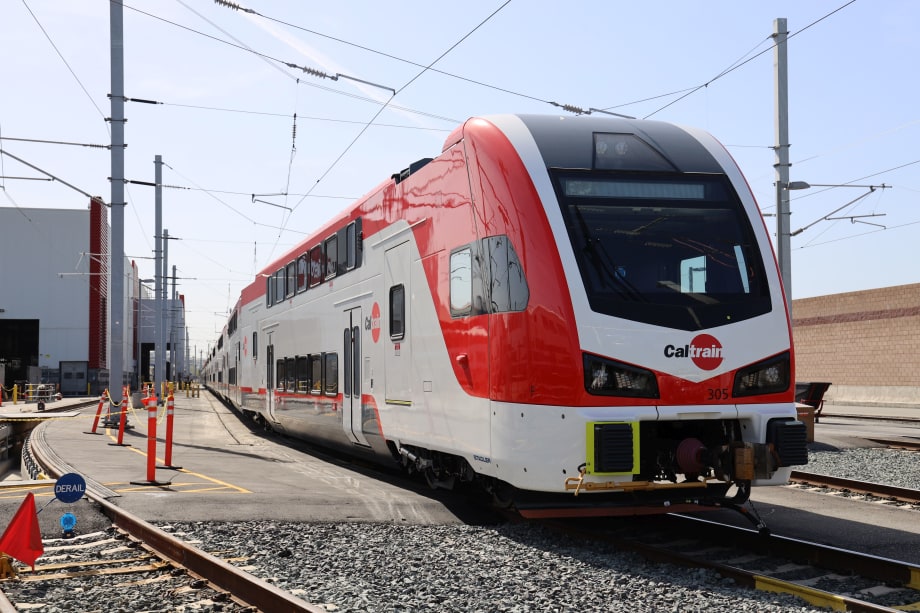
Caltrain is making crossings safer using data gathered by its new AI-powered monitoring system to identify other safety features that can be implemented.
Photo: Caltrain
2 min to read
Caltrain is implementing high-tech safety improvements at their crossings, with more safety installations coming this year.
The Churchill Avenue Crossing in Palo Alto is the next of Caltrain’s crossings to receive the new LiDAR and camera-based artificial intelligence (AI) solution, RailSentry. This technology, developed by Herzog, uses LiDAR and cameras to observe an area and alert railroad operations of lingering vehicles or other objects to mitigate collisions between trains and cars, people, or other objects.
Initial Success in Burlingame
The deployment of RailSentry follows the successful installation at the Broadway Crossing in Burlingame.
The AI-based learning software analyzes the information and alerts dispatchers and Transit Police to any detected potential hazard. The system’s data is also used to ensure that traffic control measures facilitate smooth traffic flow.
RailSentury has already made an impact, helping Caltrain demonstrate the effectiveness of installed safety improvements.
The company installed solar-powered markers at the Broadway Burlingame Crossing to clearly delineate road lines and prevent cars from turning too far onto the tracks in January. These markers are similar to existing markers at other pedestrian crossings and were installed after the replacement of railroad ties and upgraded concrete panels, which were geared toward providing a smoother crossing for drivers.
Prior to these enhancements at the Broadway Burlingame Crossing, one vehicle was removed from the tracks every three months. RailSentury’s technology revealed that three vehicles per week attempted to turn onto the tracks and ultimately left on their own.
Increased Safety at the Crossing
Since the installation of the markers, there have been zero attempts to turn onto the tracks. Caltrian receives regular alerts when vehicles rest on the tracks for longer than expected, providing them with warnings to alert trains if necessary properly.
Additional information provided by RailSentury has allowed for better signal pre-emption times and traffic control.
The crossings will receive additional safety enhancements throughout the course of the year, including updating paint striping, redoing pavement markings, moving signal stop bars, installing new signage, and placing flexible reflective delineator posts to reduce speeds and help drivers safely navigate the intersection.
Caltrain has also worked with technology providers to improve navigation instructions around tracks to prevent cars from getting stuck in the crossing.
“Safety is a core value at Caltrain that underlies everything we do,” said Michelle Bouchard, Caltrain Executive Director. “We are committed to delivering safety improvements that will make a difference for our riders and the people that cross our tracks every day.”
More Rail

New York MTA Advances Final Contract for Second Avenue Subway Expansion
Contract Four is the largest in the Second Avenue Subway Phase 2 project and includes construction of station infrastructure, tracks, and signals for the subway expansion, MTA officials said. Work on Contract Four will begin in 2027.
Read More →
San Diego MTS Breaks Monthly Trolley Ridership Record
Agency officials said July’s ridership indicates MTS’s continued recovery from the pandemic.
Read More →
Report Examines NJ TRANSIT Reliability, Funding Challenges
The Garden State Initiative analysis examines the roles of Amtrak infrastructure, fleet management, and agency operations while recommending a more performance-based approach to improving reliability.
Read More →
Stadler, CapMetro Sign Long-Term Rail Fleet Support Agreement
Beginning in 2027, Stadler will provide on-site technical expertise, spare parts support, training, and obsolescence management to help extend the reliability and longevity of CapMetro’s GTW fleet.
Read More →
Biz Briefs: Alstom Lands Canadian Contract, LYT to Supply California TSP, and More
In METRO's latest installment, we take a look at recent news from Complete Coach Works, Beep, FlixBus, and more partnerships making headlines across the transportation sector.
Read More →
CATS Gold Line Marks 5 Years of Service, 2.8M Passenger Trips
With a six-mile expansion planned, the Charlotte streetcar is positioned to connect more neighborhoods and major transit hubs across the region.
Read More →
Why Simulating Pedestrian Movement Has Become Essential for Modern Rail Stations
Pedestrian microsimulation is helping rail planners identify bottlenecks, test station designs, and prepare complex transit hubs for growing passenger volumes.
Read More →
Amtrak Begins Major Construction at New York’s Sunnyside Yard
The new maintenance facility will support Amtrak’s Airo trainsets while improving maintenance efficiency and turnaround times in New York.
Read More →
Chicago Leaders Unveil Plans for O’Hare Airport Express Train
The privately developed project would offer a 15-minute trip between downtown and O’Hare’s Terminal 2, with trains operating every 15 minutes on a dedicated track. The service would use battery-electric trains and three existing freight rail rights-of-way.
Read More →
OCTA Maps Out 30-Year Strategy to Protect Coastal Rail Corridor
The draft feasibility report identifies strategies to protect the coastal rail line for decades as the agency continues near-term stabilization and sand placement efforts.
Read More →