



Caltrain’s Electric Fleet More Efficient than Expected
The new electric trains are outperforming Caltrain’s original projections, which is welcome news for a public agency that holds sustainability as a core value.

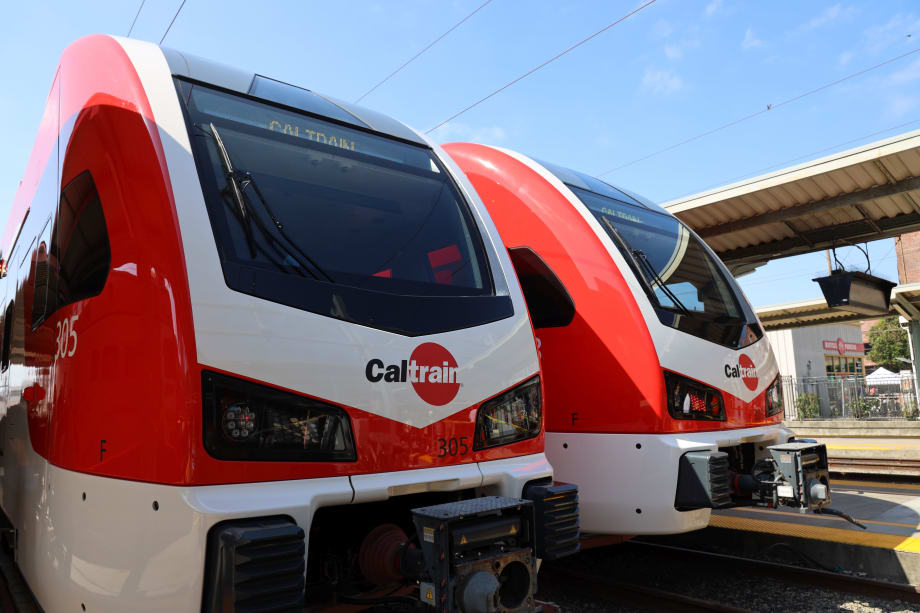
Caltrain’s fleet is designed to return that power to the Overhead Contact System, which feeds it to the nearest traction power facility.
Photo: Caltrain
Caltrain announced regenerative braking on its new trains is generating and sending back to the electric grid approximately 23% of the energy consumed by the system.
The new electric trains are outperforming Caltrain’s original projections, which is welcome news for a public agency that holds sustainability as a core value.
Caltrain’s Energy Savings
Originally estimated to cost approximately $19.5 million annually, Caltrain’s electricity use since the launch of electric service averages 207 MWh on weekdays and 175 MWh on weekends, revising cost estimates to $16.5 million.
With the agency expecting approximately $6 million annually in energy credits from the California Air Resources Board’s Low Carbon Fuel Standard Program, the first year of electric service will have lower fuel costs than the previous diesel service.
Currently, Caltrain is providing that power to the grid free of charge as there is no legal requirement for the agency to be reimbursed for the energy generated.
Regenerative Braking’s Benefits
Regenerative braking is a technology first introduced to electric trains in 1886. They work by driving an electric motor in reverse to recapture energy rather than losing it as heat during braking.
Caltrain’s fleet is designed to return that power to the Overhead Contact System (OCS), which feeds it to the nearest traction power facility. From there, it can be used to power other trains on the system or returned to the grid.
“Caltrain is running its service on 100% renewable energy and is returning nearly a quarter of that energy to the grid,” said Michelle Bouchard, Caltrain Executive Director. “The new electric fleet is delivering on its promise of state-of-the-art service, living up to our mission of providing sustainable transportation that enhances quality of life for everyone.”
More Rail

ENC Lands MATA Contract and More in Biz Briefs
In this edition of Biz Briefs, we spotlight the latest developments shaping the future of mobility.
Read More →
Strada360’s Steve Lassey on Turning Transit Data Into Better Decisions
From breaking down data silos to preparing for AI, Strada360 CEO Steve Lassey discusses how transit agencies can use technology to improve operations, customer information, and long-term decision-making.
Read More →
SEPTA Details Accelerate Vision for Transit System
The plan outlines investments in trolley modernization, new Metro and Regional Rail vehicles, accessible stations, and more frequent bus and rail service.
Read More →
FTA Ends Direct Oversight of MBTA Safety Actions
The federal agency closed its remaining special directive to the Massachusetts Department of Public Utilities following a safety review that began in 2022.
Read More →
Amtrak, CN Reach Agreements to Strengthen Passenger Rail Service, Safety
The agreement resolves a more than decade-long proceeding before the Surface Transportation Board concerning the terms and conditions for Amtrak services, such as the City of New Orleans, Illini/Saluki, and Wolverine.
Read More →
New York MTA Advances Final Contract for Second Avenue Subway Expansion
Contract Four is the largest in the Second Avenue Subway Phase 2 project and includes construction of station infrastructure, tracks, and signals for the subway expansion, MTA officials said. Work on Contract Four will begin in 2027.
Read More →
San Diego MTS Breaks Monthly Trolley Ridership Record
Agency officials said July’s ridership indicates MTS’s continued recovery from the pandemic.
Read More →
Report Examines NJ TRANSIT Reliability, Funding Challenges
The Garden State Initiative analysis examines the roles of Amtrak infrastructure, fleet management, and agency operations while recommending a more performance-based approach to improving reliability.
Read More →
Stadler, CapMetro Sign Long-Term Rail Fleet Support Agreement
Beginning in 2027, Stadler will provide on-site technical expertise, spare parts support, training, and obsolescence management to help extend the reliability and longevity of CapMetro’s GTW fleet.
Read More →
Biz Briefs: Alstom Lands Canadian Contract, LYT to Supply California TSP, and More
In METRO's latest installment, we take a look at recent news from Complete Coach Works, Beep, FlixBus, and more partnerships making headlines across the transportation sector.
Read More →