



CapMetro Announces Start of North Burnet/Uptown Station Project
Starting this month, construction crews will be on site to perform preliminary work, in preparation for the complete construction to begin in November 2025.

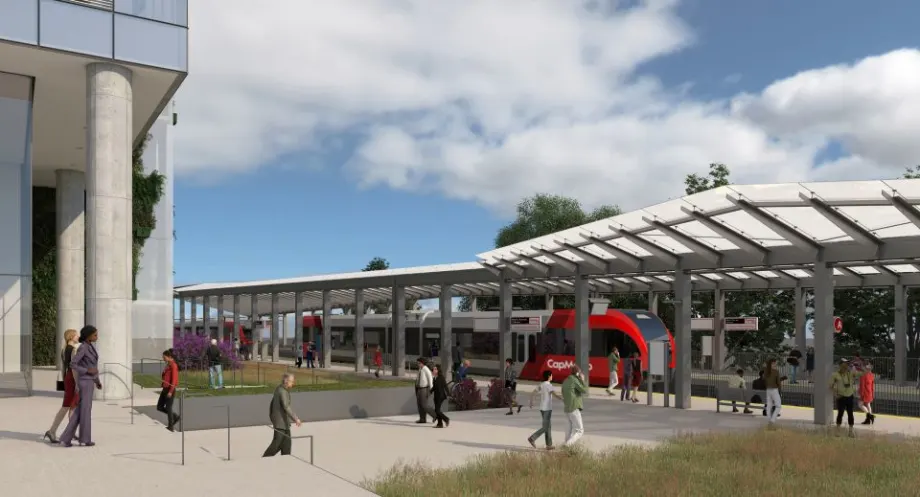
The North Burnet/Uptown Station — part of the Red Line corridor connecting Downtown Austin to Leander — contributes to Project Connect’s broader vision to expand and enhance the Red Line, improving commuter rail access and reliability across the region.
Photo: CapMetro
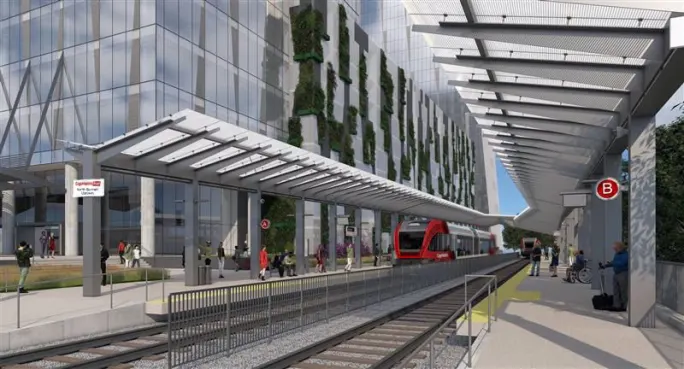
The North Burnet / Uptown Station reflects a potent combination of Brandywine Realty Trust’s private development expertise and CapMetro’s public transit leadership.
Photo: CapMetro
Austin, Texas’s CapMetro and Brandywine Realty Trust have begun site preparations for the new North Burnet/Uptown Station, formerly referred to as Broadmoor Station.
Starting this month, construction crews will be on site to perform preliminary work, in preparation for the complete construction to begin in November 2025.
Bringing Public Transit to Central Texas
The collaborative effort represents another significant investment in public transportation in Central Texas, bringing enhanced connectivity to the heart of one of North Austin’s fastest-growing communities. The station is projected to become the second busiest along CapMetro’s Red Line, strengthening the area’s role as a dynamic, transit-oriented, mixed-use district.
The North Burnet/Uptown Station — part of the Red Line corridor connecting Downtown Austin to Leander — contributes to Project Connect’s broader vision to expand and enhance the Red Line, improving commuter rail access and reliability across the region.
The new station will provide direct commuter rail access to one of the city's most transformative mixed-use developments. Located just steps from Solaris House, a modern residential community, and One Uptown, a Class-A office tower, the station will serve as a vibrant gateway for thousands of commuters, residents, and visitors.
“This marks a strong step forward in building a smarter, more connected future for Central Texas,” said Dottie Watkins, president and CEO of CapMetro. “The North Burnet/Uptown Station isn’t just about expanding transit — it’s about creating meaningful access to opportunity in one of our region’s fastest-growing corridors.”
About the North Burnet/Uptown Station
The newest Red Line Station is located within the 66-acre Uptown ATX development in the growing North Burnet corridor, just north of the existing Kramer Station.
Key features include:
Two double-length platforms to accommodate high-capacity service.
Over a half mile of double track to support operational reliability.
Pedestrian- and bike-friendly pathways to support multimodal access.
Connections to local bus routes for integrated transit options.
200 shared parking spaces for customers.
Various safety and security enhancements, including lighting and surveillance.
A Strategic Public-Private Partnership
The North Burnet / Uptown Station reflects a potent combination of Brandywine Realty Trust’s private development expertise and CapMetro’s public transit leadership.
Brandywine is contributing the land, coordinating the infrastructure, planning, and providing investment, while CapMetro is delivering the regional mobility framework and the operational infrastructure to ensure long-term transit accessibility.
Brandywine and CapMetro will coordinate all construction updates, service impacts, and launch details. In the meantime, the development of new commercial, residential, and civic spaces at Uptown continues.
More Rail
Trinity Metro Breaks Ground on $270M TEXRail Extension
The 2.1-mile extension will connect Fort Worth’s Medical District and Near Southside to downtown, surrounding communities, and Dallas-Fort Worth International Airport.
Read More →
Bringing Austin’s First Light Rail System to Life
Austin Transit Partnership CEO Greg Canally discusses the city's nearly 10-mile light rail project, its collaborative approach to project delivery, the importance of community engagement, and the milestones ahead as construction approaches in 2027.
Read More →
Metra Draft Plan Outlines Costs, Service Improvements for Regional Rail
The Systemwide Network Plan identifies infrastructure needs and potential investments to expand all-day, bidirectional rail service across the Chicago region.
Read More →
Amtrak Completes First Street Tunnel Upgrades, Restores Service
The nine-day construction project included replacing aging track infrastructure and modernizing switch systems near Washington Union Station.
Read More →
FRA Announces $2.3B for Passenger, Freight Rail Projects Nationwide
The CRISI Grant Program funding will support rail infrastructure improvements, safety upgrades, and projects aimed at improving freight and passenger rail service across 45 states and Washington, D.C.
Read More →
Caltrain’s Electrification Drives a New Era of Ridership Growth
The railroad’s shift to electric service has brought more frequent trains, stronger customer satisfaction, and increased ridership, earning it APTA’s Outstanding Public Transportation System award.
Read More →
FTA Advances $164M Broward County Commuter Rail Project
The proposed 10.5-mile commuter rail extension would connect Fort Lauderdale and Aventura, expanding passenger rail options in South Florida.
Read More →
New York MTA Launches Historic $1.9B Signal, Track Modernization Project
Funded in part by congestion pricing revenue, the project will replace nearly century-old signals along the A and C lines in Brooklyn and Queens.
Read More →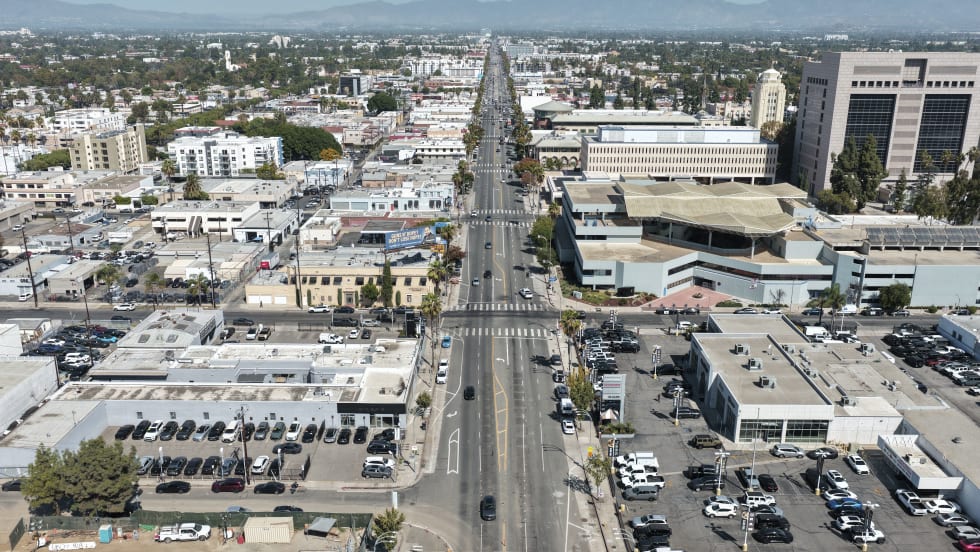
LA Metro Breaks Ground on East San Fernando Valley Light Rail Project
The 6.7-mile line will add 11 stations along Van Nuys Boulevard, expand access to jobs and regional transit connections, and support Metro’s broader efforts to improve mobility as rail ridership grows.
Read More →
CSA Group Releases Climate Resilience Standard for Transit, Passenger Rail
Developed with support from the Standards Council of Canada, CSA D700 guides assessing climate-related risks and planning adaptation measures for transit and passenger rail systems.
Read More →