



CATS Invests in Rider Experience with Safer, Smarter Transit Fleet
This multi-million-dollar investment reflects a strategic response to passenger demands for a modern, reliable, accessible public transportation system.

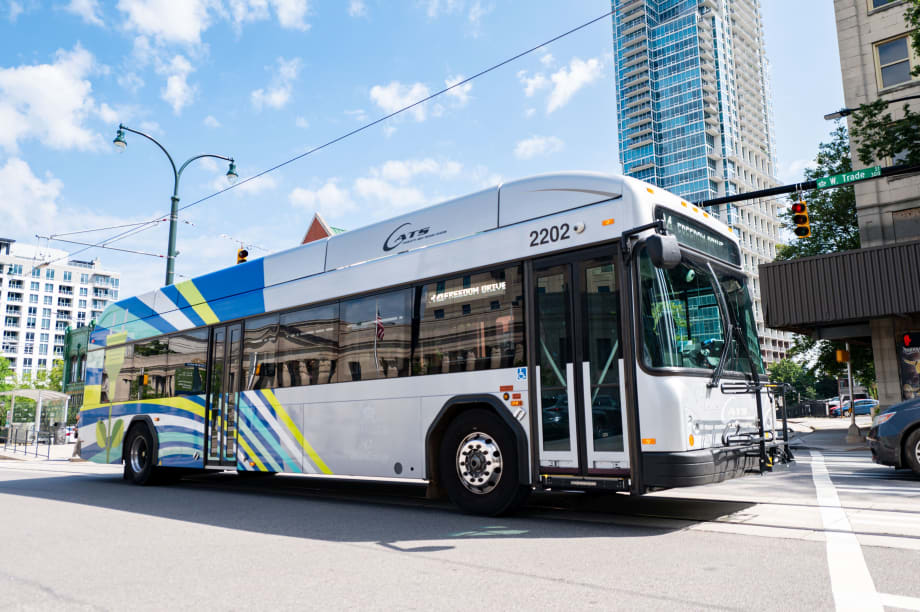
Among the standout features on the new buses are free onboard Wi-Fi, improved passenger comfort and accessibility, advanced wayfinding tools, and enhanced onboard security.
Photo: CATS
North Carolina’s Charlotte Area Transit System (CATS) has recently completed the acquisition and deployment of more than 100 new transit vehicles across its bus, microtransit, paratransit, and vanpool services.
This multi-million-dollar investment reflects a strategic response to passenger demands for a modern, reliable, accessible public transportation system.
Fleet Enhancements Across the Board
Over the past 18 months, CATS has added:
Sixty-nine new GILLIG local buses, including 15 battery-electric buses (BEBs) and 54 hybrid-electric buses.
Fifty-six paratransit vehicles support accessibility and equitable mobility.
Five over-the-road MCI coaches were designed for longer-distance express routes.
Twenty-four vanpool vehicles, introduced via a new partnership with Commute with Enterprise, are launching officially on July 1.
In addition, new microtransit cars have joined the fleet as part of CATS’ ongoing collaboration with MV Transportation, further expanding service flexibility and on-demand coverage.
“These vehicles are not only replacing aging units, but setting a new standard for the rider experience,” said Brent Cagle, Interim CEO of CATS. “We listened to what our riders wanted, and we’re delivering.”
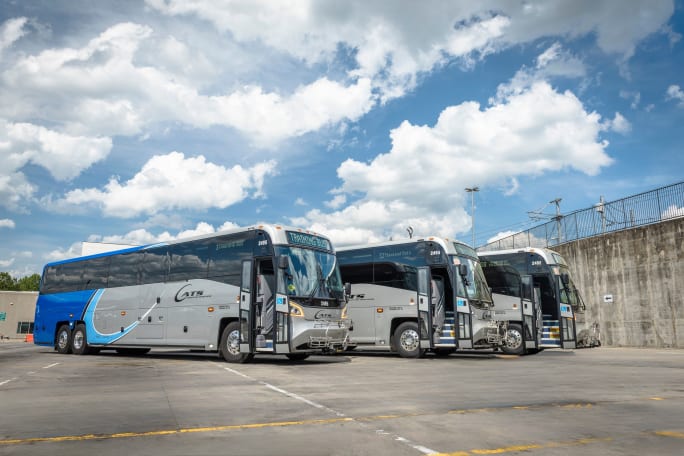
Riders are encouraged to utilize the CATS-Pass App for a streamlined trip-planning and ticketing experience across the upgraded system.
Photo: CATS
CATS’ Upgraded Fleet
Among the standout features on the new buses are free onboard Wi-Fi, improved passenger comfort and accessibility, advanced wayfinding tools, and enhanced onboard security.
As work commutes, healthcare appointments, and community outings resume post-pandemic, CATS sees this fleet upgrade as a critical step toward boosting ridership and rebuilding trust.
“This new fleet is a testament to our dedication to our customers,” Cagle added. “We want all residents and visitors in Mecklenburg County to feel confident choosing transit. Whether heading to work, school, or simply exploring the city, we invite you to hop onboard and experience the difference.”
Riders are encouraged to utilize the CATS-Pass App for a streamlined trip-planning and ticketing experience across the upgraded system.
More Technology

From Hardware to Digital Partner: Luminator Charts Its Next Chapter
CEO Magnus Friberg discusses Luminator’s shift toward becoming a digital partner, the growing importance of software and interoperability, and how AI can help agencies improve operations and passenger experience.
Read More →
Beyond the Checklist: A Structured Approach to Transit Maintenance
Reliability-Centered Maintenance helps transit agencies move beyond routine checklists to focus limited resources on the assets and failures that have the greatest impact on safety, reliability, and service.
Read More →
NJ TRANSIT Advances Bus Technology Upgrades Across Statewide Fleet
More than 1,500 buses now feature upgraded technology designed to improve arrival predictions and provide free Wi-Fi, with deployment expected to reach nearly 2,000 buses by the end of 2026.
Read More →

Building a Flexible Path to Transit Electrification
John Hroncich discusses BAE Systems’ modular and scalable approach, lessons learned from decades of real-world operations, and how agencies can identify electrification strategies that fit their fleets.
Read More →
Biz Briefs: Alstom Lands Canadian Contract, LYT to Supply California TSP, and More
In METRO's latest installment, we take a look at recent news from Complete Coach Works, Beep, FlixBus, and more partnerships making headlines across the transportation sector.
Read More →
From Legacy Silos to Conversational Intelligence
What if transit leaders could ask any operational question and get a trusted answer in seconds? Conversational AI is transforming how agencies use their data.
Read More →
USDOT Announces Rail Vehicle Replacement Grants, Chattanooga AV Shuttle Funding
More than $191 million in federal funding will help three transit agencies replace aging rail vehicles and support a new autonomous shuttle service in Chattanooga.
Read More →
Bus Tech Talk: Keeping Transit Technicians Ahead of the Technology Curve
LA Metro’s Obed Mejia discusses technician training, evolving maintenance technology, fleet replacement, and strategies for getting the most out of today’s transit fleets.
Read More →
Biz Briefs: RIPTA Unveils New Frontrunners, Clevland RTA Adds New Siemens, and More
In METRO's latest installment, we take a look at recent news from Siemens, Prevost, Dodge, and more partnerships making headlines across the transportation sector.
Read More →
Why Simulating Pedestrian Movement Has Become Essential for Modern Rail Stations
Pedestrian microsimulation is helping rail planners identify bottlenecks, test station designs, and prepare complex transit hubs for growing passenger volumes.
Read More →