



Chicago Agencies Detail Possible Service Cuts, Need for Action
The $770 million budget shortfall that agencies face beginning in 2026 threatens unprecedented cuts to CTA, Metra, and Pace services, the scale of which are now coming into clearer view.

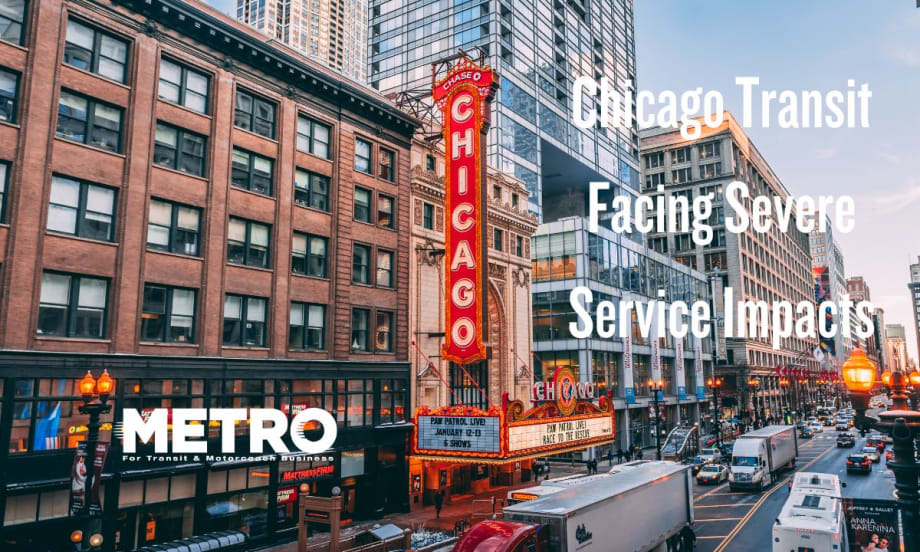
Chicago's agencies have reported the regional budget shortfall would require up to a 40% cut in service to balance budgets.
Photo: METRO
Chicago’s Regional Transportation Authority (RTA) issued an urgent warning: without a funding solution by the end of the Illinois General Assembly’s spring session, the Chicago region’s transit system will be decimated — leaving one in five workers in Chicago without the use of transit for their daily commute; ending all weekend bus service for Pace customers; eliminating early morning and late evening service for Metra; wiping out nearly 3,000 transit jobs; and dealing a devastating blow to the regional economy.
The $770 million budget shortfall that agencies face beginning in 2026 threatens unprecedented cuts to CTA, Metra, and Pace services, the scale of which are now coming into clearer view.
The agencies have reported the regional budget shortfall would require up to a 40% cut in service to balance budgets.
In response to a resolution passed by the RTA board in January, the Service Boards have now provided examples of the scale and scope of cuts that would be required to cut $770 million in spending if a funding solution is not achieved before the current legislative session ends in May.
Bracing for Cuts
Planning for cuts would begin immediately following the end of session if sustainable funding is not secured, with community meetings and public hearings held in the fall before initial cuts are included in the agency’s 2026 budgets.
The magnitude of these cuts is unprecedented and would require several rounds of schedule adjustments in 2026 and beyond.
The scenario put forth by RTA, CTA, Metra, and Pace makes clear that if the General Assembly fails to act, entire communities could lose transit service and therefore access to jobs, schools, medical care, and daily necessities. Businesses will struggle to retain workers. Traffic congestion will surge as hundreds of thousands of people are forced into cars. The economic engine of Illinois — the Chicago metropolitan area — will stall, according to RTA officials.
"This isn’t just a transit crisis — it’s a regional emergency," said RTA Executive Director Leanne Redden. "If the General Assembly does not act this spring, hundreds of thousands of Illinoisans will wake up in 2026 without a way to get to work, school, or medical appointments with continued uncertainty in future years about their transit services. This doomsday scenario can still be avoided as long as our state partners vote to fully fund transit operations before it’s too late."
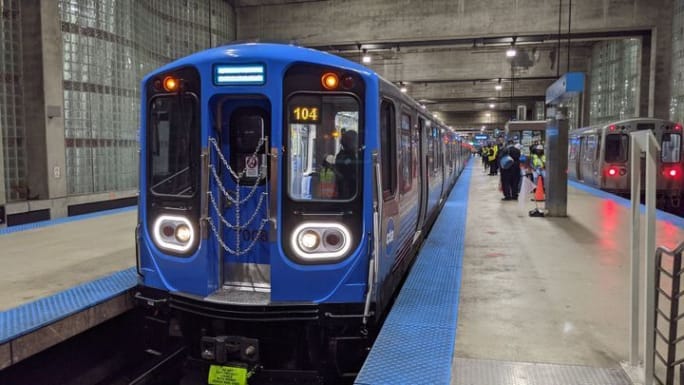
At least four of eight CTA rail lines will see service suspended on all or a portion of the line.
Photo: CTA
Reaching an Unprecedented Scale
CTA will be the first to go off the fiscal cliff without funding action this year. In response to the RTA resolution, CTA developed possible service scenarios to help illustrate the impact on riders and the region with a 40% percent service cut.
At least four of eight CTA rail lines will see service suspended on all or a portion of the line. CTA will close or drastically reduce service to over 50 rail stations. Service reductions would extend across the remaining rail network, with train frequencies cut by 10% to 25%.
CTA would also be required to significantly reduce its bus service. The agency estimates that as many as 74 of its 127 bus routes could be eliminated, leaving 500,000 CTA riders without a nearby bus stop. A once-reliable lifeline for the metropolitan area could be transformed into a far less frequent, overcrowded system where riders wait longer, squeeze into packed vehicles, or lose access altogether.
In fact, CTA would go from one of the largest transit systems in the country to having fewer bus routes than Madison, Wis., and Kansas City.
Cuts at this scale, regardless of which branches or bus routes, would mean the loss of direct transit service to healthcare, jobs, family, and friends, and schools for communities across the agency’s service area.
“Public transit is what helped shaped the City of Chicago and surrounding suburbs as we know it today — it is why and how millions of us call this region ‘home,’” said CTA Acting President Nora Leerhsen. “The results of a 40 percent service reduction are unconscionable, and no decisions about our service future will be made without community input. Whether you ride public transit or not, now more than ever we need your support. We’ve yet to see what public transit looks like when fully funded, and we want to make sure we can continue to provide safe, frequent, reliable and accessible services our region deserves.”
Cuts at Metra, Pace
For Metra to achieve a 40% reduction in service, early morning and late evening trains would be eliminated, weekday trains would run only once per hour, and weekend trains just once every two hours.
Busy rail lines like the BSNF that today runs 91 trains each weekday could see that number cut to less than half.
Across the region, commuters who have relied on frequent, reliable Metra services for decades will find themselves with few or no viable options. Metra, which shares several of its rail lines with freight railroads, warned that they would have limited flexibility to restore service even if a funding solution were to be found later, meaning cuts could take five years or more to undo.
Metra could also need to end service on the Metra Electric Blue Island Branch and drastically cut service on nearly all rail lines. Progress to increase frequency and shift the commuter railroad to a regional rail model would be reversed.
“No one wants to envision a scenario where such severe cuts are necessary,” said Metra Executive Director/CEO Jim Derwinski. “But we hope that by detailing the cost of inaction, our elected representatives will take action to make sure public transportation not only survives but thrives.”
Transit-dependent suburban riders using Pace would be among the hardest hit. All weekend bus service could be eliminated, stranding those who rely on transit for work, errands, and medical care.
Late-night service after 8 p.m. would disappear from 62 routes, and more frequent running routes could see headways increase to 30- to 60-minute waits between buses.
ADA paratransit service, which is federally mandated, would not be eliminated, but its service area would shrink by 66% on weekends, leaving millions of people with disabilities all over the region without reliable transportation.
Expansions of Pace Pulse and current work on the agency’s ReVision Bus Network plan would be put on hold.
"These cuts would have a devastating impact on our region and the people who need transit the most,” said Pace Executive Director Melinda Metzger. “All the progress we've made to adapt to new travel patterns, boost frequency, and expand access would be lost. The transformational improvements we have identified through our ReVision restructuring initiative will not be able to be implemented. The momentum we've built to create a more responsive and equitable transit system — one that supports economic growth and connects people to jobs and opportunity — would come to a halt, setting us back years."
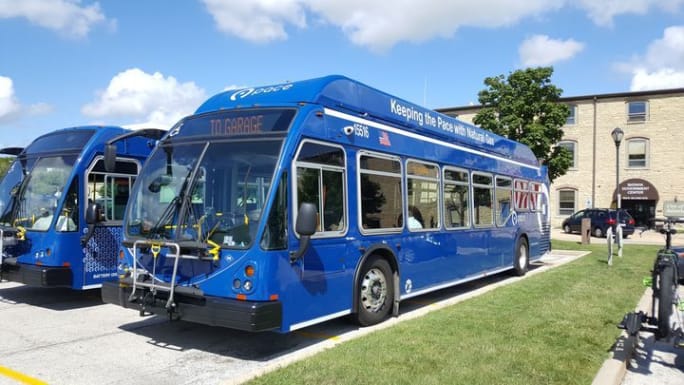
Transit-dependent suburban riders using Pace would be among the hardest hit. All weekend bus service could be eliminated, stranding those who rely on transit for work, errands, and medical care.
Photo: Pace
Jobs Lost, Billions in Economic Damage
The service cuts would come with massive job losses. Nearly 3,000 transit workers could be laid off, including frontline, support, management, and administrative staff.
The impact would ripple far beyond transit agencies. Vendors, contractors, and small businesses that either do business with the transit agencies or rely on transit-dependent customers and staff would feel the strain.
The economic losses across the six counties would be staggering. The region stands to lose $2.6 billion in GDP every year due to reduced mobility, increased congestion and job losses. Wages would drop by $1 billion annually.
The RTA projects system ridership could plummet by 90 million trips in the first year alone, reducing fare revenue and leading to even greater funding challenges in 2027 and beyond.
"None of us want a future where transit cuts mean a nurse can’t reach their patients or a warehouse worker in Joliet can’t afford to get to their job," said RTA Board Chairman Kirk Dillard. "Public transit is an economic necessity. If these cuts happen, Illinois’ entire economy will suffer."
A Chance to Avoid Cuts
Despite the severity of the situation, disaster is not inevitable. If the General Assembly acts before the end of its spring session to find a sustainable funding solution for public transit, these cuts can be prevented.
Rather than just filling the gap to return to a pre-pandemic status quo — one that had already been hurt by decades of underfunding — the RTA and advocates are calling for a $1.5 billion investment in additional annual operating funding to not just keep trains and buses running but improve the system for millions of people.
Additional funding, backed by an empowered RTA, could provide the accountability and coordination the system needs to provide seamless transit for all.
"This is a choice," Redden said. "We can choose to protect jobs, mobility, and economic growth, or we can let our transit system collapse. A future with more frequent, reliable, integrated, safe service is what many would prefer to see, but it is not possible without additional funding."
RTA officials said if the General Assembly fails to act, the agencies would be required by Title VI of the Civil Rights Act of 1964 to go through rigorous public engagement and analysis before making final decisions about any service cuts or major fare increases, which would include public hearings through the fall of this year, with actual cuts being implemented throughout 2026.
The information about service cut scenarios, along with more positive expansion scenarios from each transit agency and details about additional efficiencies, will be presented for further discussion at the next meeting of the RTA board later this month.
More Management

METRO Opens Submissions for 2026 Motorcoach Awards
Nominations are now being accepted for METRO Magazine’s Operator of the Year and Innovative Operator of the Year awards.
Read More →
New York MTA Advances Final Contract for Second Avenue Subway Expansion
Contract Four is the largest in the Second Avenue Subway Phase 2 project and includes construction of station infrastructure, tracks, and signals for the subway expansion, MTA officials said. Work on Contract Four will begin in 2027.
Read More →
Transit Agencies Highlight Safety Gains at National Summit
Leaders from 15 major transit systems shared crime-reduction results and safety initiatives while discussing the role of continued federal support.
Read More →

NITA Names New Leadership, Expands Reduced-Fare Program at First Board Meeting
The new regional transit authority appointed its first board chair and interim executive director while extending reduced fares across CTA, Metra, and Pace for eligible riders.
Read More →
Beyond the Checklist: A Structured Approach to Transit Maintenance
Reliability-Centered Maintenance helps transit agencies move beyond routine checklists to focus limited resources on the assets and failures that have the greatest impact on safety, reliability, and service.
Read More →
APTA 2026 Nominating Committee Selects Leadership Slate, Names Chair and Vice Chair Nominees
Leadership changes will help shape the association’s priorities and its representation of the transportation industry during the 2026–2027 term.
Read More →
DART Launches Major Security, Fare Enforcement Initiative
The 90-day demonstration will deploy coordinated security teams at five light rail stations while testing controlled access and gathering data to guide future investments.
Read More →
Advancing Fare Collection Through Technology and Innovation
Learn about delivering 1300 gates at 91 stations while managing fare evasion. Explore the large scale deployment, solution customization and real-world results that affect the region. Prepare for deployment in your region now.
Read More →
Game Day in Motion: Moving Millions During the 2026 World Cup
Between packed transit stations and team motorcoaches, see how agencies and operators across North America tackled the transportation demands of the 2026 FIFA World Cup.
Read More →
Surface Transportation Extension Averts Shutdown, Leaves Transit Funding Gap
The stopgap keeps federal transportation programs moving, but missing advance funding could complicate the transit and rail projects agencies are planning next.
Read More →