



Chicago Transit Approves $2B 2025 Budget
The budget aims to further elevate the transit experience by prioritizing investments that address what’s most important to our riders, including system security, accessibility, reliability, and safety.

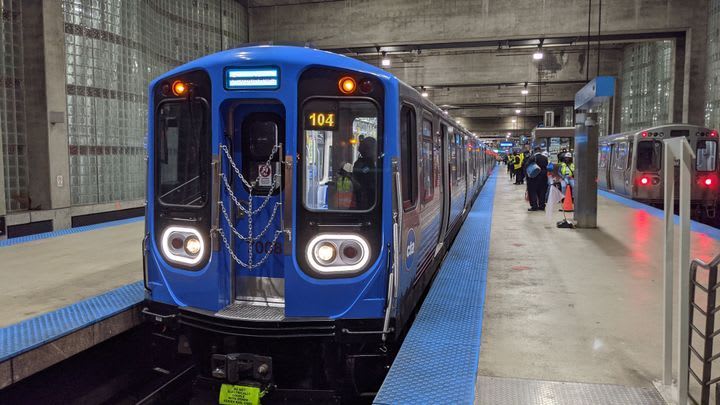
Key CTA budget initiatives include ongoing workforce recruitment and training to maintain elevated service levels, especially during peak hours, and implementing enhanced customer communication tools.
Photo: CTA
The Chicago Transit Board approved the Chicago Transit Authority’s (CTA) $2.16 billion operating budget for 2025, a strategic plan designed to maintain current fares, enhance bus and rail services beyond pre-pandemic levels, and support continued investments in infrastructure and technology.
The budget aims to further elevate the transit experience by prioritizing investments that address what’s most important to our riders, including system security, accessibility, reliability, and safety.
“We are setting a course for a transit system that surpasses our service delivery, ridership levels and quality from 2019,” said CTA President Dorval R. Carter Jr. “This budget reinforces our commitment to modernize the CTA, both in terms of service and infrastructure, while keeping our riders’ needs at the forefront. Our employees have been essential to CTA’s progress, and with this budget, we will continue to strengthen our workforce, improve accessibility, and expand services.”
CTA’s Budget Highlights
The approved budget reflects an 8.1% increase over 2024’s budget.
Key initiatives include ongoing workforce recruitment and training to maintain elevated service levels, especially during peak hours, and implementing enhanced customer communication tools. These enhancements aim to deliver a safer, more reliable, and seamless transit experience.
The CTA is also earmarking $3.3 million (or 5% of the Security budget), which will be used to solicit community input for the development of future pilots aimed at improving public safety.
Building on Current Change
A major achievement in 2024 included returning bus operator staffing to pre-pandemic levels, which improved service reliability with 98.1% of scheduled bus service delivered as of August.
Rail services have also seen marked improvements, with service levels now restored to pre-pandemic levels, and service reliability reaching 96%. CTA is on track to meet its goal of training 200 new rail operators by the end of the year.
Capital Improvement Program
CTA’s separate $6.96 billion Capital Improvement Program for 2025-2029 emphasizes critical projects to strengthen infrastructure, promote accessibility, and support new technology. Highlights include:
Red and Purple Modernization (RPM) Phase One: Expected completion of Lawrence, Argyle, Berwyn, and Bryn Mawr station reconstruction projects.
Red Line Extension (RLE): New track and station construction is expected to begin in late 2025 and be completed in 2030, to extend the Red Line to city’s southern limits, improving access for the Far South Side.
Accessibility: Six newly accessible stations planned for 2025, including Lawrence, Berwyn, Bryn Mawr, Argyle, Racine, and Austin, with $37 million allocated for elevator replacement.
Fleet Modernization: Continued production of the 7000-series railcars and overhauls of 5000-series trains, along with facility updates to accommodate electric buses.
Operations Control and Training Facility: Planned construction of a new 24/7 operations and training center in West Garfield Park, set to support over 10,000 employees.
More Management

METRO Opens Submissions for 2026 Motorcoach Awards
Nominations are now being accepted for METRO Magazine’s Operator of the Year and Innovative Operator of the Year awards.
Read More →
New York MTA Advances Final Contract for Second Avenue Subway Expansion
Contract Four is the largest in the Second Avenue Subway Phase 2 project and includes construction of station infrastructure, tracks, and signals for the subway expansion, MTA officials said. Work on Contract Four will begin in 2027.
Read More →
Transit Agencies Highlight Safety Gains at National Summit
Leaders from 15 major transit systems shared crime-reduction results and safety initiatives while discussing the role of continued federal support.
Read More →

NITA Names New Leadership, Expands Reduced-Fare Program at First Board Meeting
The new regional transit authority appointed its first board chair and interim executive director while extending reduced fares across CTA, Metra, and Pace for eligible riders.
Read More →
Beyond the Checklist: A Structured Approach to Transit Maintenance
Reliability-Centered Maintenance helps transit agencies move beyond routine checklists to focus limited resources on the assets and failures that have the greatest impact on safety, reliability, and service.
Read More →
APTA 2026 Nominating Committee Selects Leadership Slate, Names Chair and Vice Chair Nominees
Leadership changes will help shape the association’s priorities and its representation of the transportation industry during the 2026–2027 term.
Read More →
DART Launches Major Security, Fare Enforcement Initiative
The 90-day demonstration will deploy coordinated security teams at five light rail stations while testing controlled access and gathering data to guide future investments.
Read More →
Advancing Fare Collection Through Technology and Innovation
Learn about delivering 1300 gates at 91 stations while managing fare evasion. Explore the large scale deployment, solution customization and real-world results that affect the region. Prepare for deployment in your region now.
Read More →
Game Day in Motion: Moving Millions During the 2026 World Cup
Between packed transit stations and team motorcoaches, see how agencies and operators across North America tackled the transportation demands of the 2026 FIFA World Cup.
Read More →
Surface Transportation Extension Averts Shutdown, Leaves Transit Funding Gap
The stopgap keeps federal transportation programs moving, but missing advance funding could complicate the transit and rail projects agencies are planning next.
Read More →