



COTA Board Approves Low Income Fare Pilot Program
The program will add low-income customers to those who already are eligible for 50% discounted fixed-route fares through COTA’s new account-based fare management system.
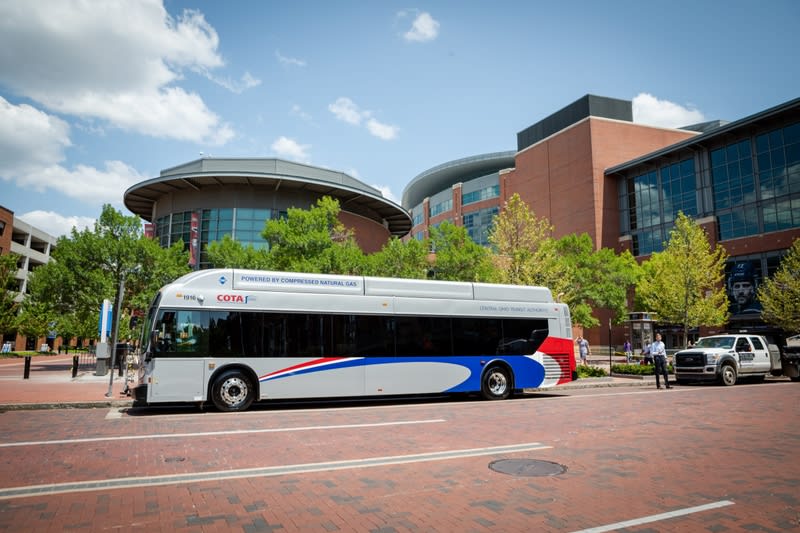
Eligible customers can apply for the discounted fares starting Tuesday, March 1 at COTA’s Customer Experience Center located at 33 North High Street in downtown Columbus.
Photo: COTA
The Central Ohio Transit Authority (COTA) Board of Trustees announced they have approved a six-month pilot program that extends eligibility for transit discounts to individuals who receive public income assistance.
Beginning March 1, the program will add low-income customers to those who already are eligible for 50% discounted fixed-route fares through COTA’s new account-based fare management system. Seniors, children, veterans and qualifying disabled customers currently are eligible for 50% discounted fares.
“This pilot program is a natural extension of COTA’s new equitable fare structure that seeks to ensure those who greatly rely on COTA mobility services have equal access,” said Joanna M. Pinkerton, COTA President/CEO. “Our new digital payment system provides the infrastructure to expand access to reduced fares and this is the latest step to better help our customers who need our services the most.”
COTA will accept proof of participation in one of the following countywide programs:
SNAP food assistance;
Publicly funded childcare;
Ohio Works First cash assistance;
Prevention, Retention and Contingency emergency assistance; Medicaid;
Temporary Assistance to Needy Families.
All customers that participate in any one of the above referenced county-wide programs and are enrolled in the COTA pilot program will need to use COTA’s account-based system for fare payment. This discount will not apply to cash-paying customers who are not using COTA’s account-based system.
Eligible customers can apply for the discounted fares starting Tuesday, March 1 at COTA’s Customer Experience Center located at 33 North High Street in downtown Columbus.
Customers will need to provide documentation showing proof of enrollment in one of the low-income assistance programs listed above. The documentation will need to include the customer’s name. Customer Experience Champions will be available to review documentation and verify eligibility for enrollment.
COTA will gather and analyze data during the six months of the pilot program before bringing recommendations to the Board of Trustees for a finalized low-income fare structure.
More Bus

New York MTA Plans Largest Bus Fleet Upgrade in More Than a Decade
The agency is seeking manufacturers for 650 new CNG buses to replace aging vehicles, improve reliability, and advance its broader fleet modernization strategy.
Read More →
Building a Flexible Path to Transit Electrification
John Hroncich discusses BAE Systems’ modular and scalable approach, lessons learned from decades of real-world operations, and how agencies can identify electrification strategies that fit their fleets.
Read More →
Bus Tech Talk: Keeping Transit Technicians Ahead of the Technology Curve
LA Metro’s Obed Mejia discusses technician training, evolving maintenance technology, fleet replacement, and strategies for getting the most out of today’s transit fleets.
Read More →
Biz Briefs: RIPTA Unveils New Frontrunners, Clevland RTA Adds New Siemens, and More
In METRO's latest installment, we take a look at recent news from Siemens, Prevost, Dodge, and more partnerships making headlines across the transportation sector.
Read More →
People Movement: Holly Arnold Joins Transdev and More
In this edition, we also cover recent appointments and announcements at Pace, CamTran, MCI, and more, showcasing the individuals helping to shape the future of transportation.
Read More →
The High Cost of Transit Buses: Industry Leaders Look to Procurement Reform
Transit leaders and policymakers examine how standardized bus designs, streamlined procurement, and predictable funding could help agencies stretch budgets and deliver better service.
Read More →
The Business Voice Behind Public Transportation
As chair of APTA’s Business Members Board of Governors, Ray Melleady explains how more than 850 business members are partnering with transit agencies to advance funding, innovation, and industry-wide collaboration.
Read More →
From Surviving to Thriving: Building Stronger Transportation Organizations
Bus Business Consultants founder Brian Dickson shares lessons on leadership, organizational health, and creating options for long-term success in a changing transportation industry.
Read More →
Finding the ‘Happy Medium’: Optimizing Maintenance Without Sacrificing Reliability
The key to maintenance optimization isn’t doing less work—it’s doing the right work at the right time on the right assets.
Read More →
LA Metro, City of West Hollywood, and Partners Advance Smarter Bus Lane Enforcement
The award-winning partnership combines AI-powered detection with human oversight to improve bus reliability, accessibility, and enforcement efficiency.
Read More →