



CTA: Ridership down from 2008, higher than 2007
Will implement service reductions next month as a result of lower than anticipated revenues due to the sluggish economy.

On Wednesday, the Chicago Transit Authority (CTA) announced that 2009 combined bus and rail ridership totaled 521.2 million rides, a decrease of one percent (5.1 million rides) over 2008 ridership. CTA projected 2009 ridership at 517.4 rides.
CTA ridership in 2009 did surpass 2007 figures, when the agency recorded 439.5 rides.
Rail ridership was 202.6 million for 2009, an increase of 2.2 percent or 4.4 million rides, compared to 2008. The largest ridership increases were recorded outside of the morning and evening rush periods. Bus ridership in 2009 wad 318.7 million, a 2.9 percent decrease from 2008, or 9.5 million fewer rides.
Over the past decade, CTA has seen overall ridership grow by 54.6 million rides - 11.7 percent. Rail ridership has lead the surge with a 21.7 percent increase (35 million rides) compared to 1999, and bus ridership increased by 6.6 percent (20 million rides) over the same period.
Additionally, the CTA is providing several avenues for customers to obtain information about the upcoming service changes beginning February 7. The service reductions are necessary as a result of lower than anticipated revenues due to the sluggish economy.
Two weeks ago, the CTA began posting customer alerts on buses, trains and at other CTA facilities. The alerts outlined the routes that will be affected by the service reductions next month.
Last week, information was posted on digital displays and other electronic signage at rail stations. Also, affected bus routes began to play announcements outlining specific changes in the hours of operation and a reminder if the route will run with less frequent service or if the route is being eliminated.
Detailed information also was posted on CTA's Website. Customers can access information regarding changes to service, including route-by-route changes.
Signs at all CTA bus stops notifying customers of the changes to service are scheduled to be in place by the end of the month.
More Bus

Finding the ‘Happy Medium’: Optimizing Maintenance Without Sacrificing Reliability
The key to maintenance optimization isn’t doing less work—it’s doing the right work at the right time on the right assets.
Read More →
LA Metro, City of West Hollywood, and Partners Advance Smarter Bus Lane Enforcement
The award-winning partnership combines AI-powered detection with human oversight to improve bus reliability, accessibility, and enforcement efficiency.
Read More →
PSTA Modernizes Workforce Management with Digital Bidding System
The award-winning Workforce Transit Modernization project replaced paper bidding with a transparent digital platform, cutting administrative effort while improving access for operators.
Read More →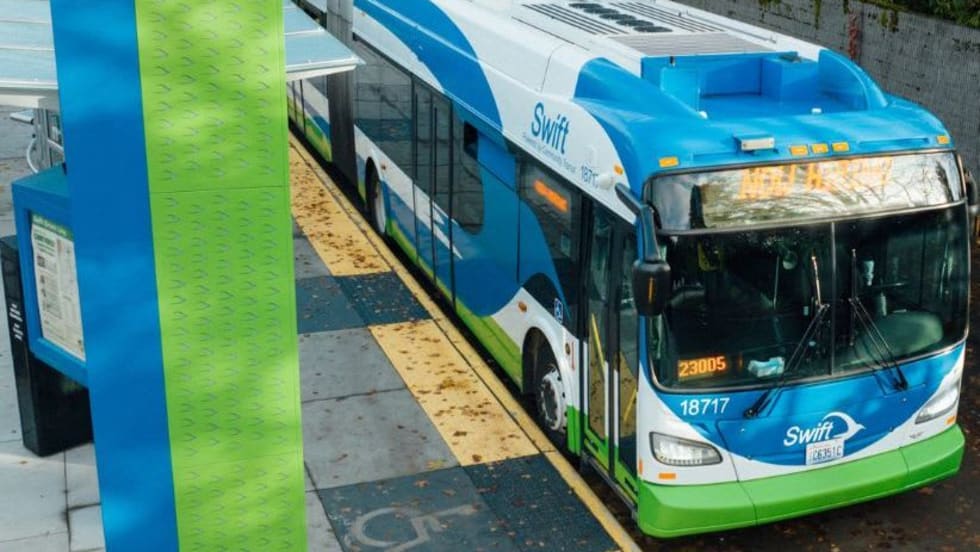
Washington's Community Transit Sets Six-Year Roadmap for Growth, Expansion
Approved TDP targets more bus service, new mobility options, Swift BRT expansion, and a potential Everett Transit annexation.
Read More →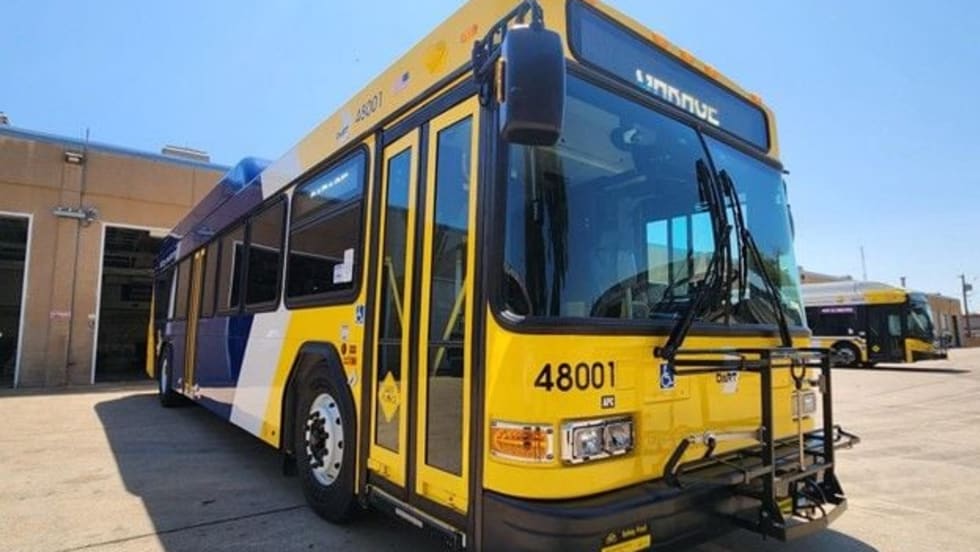
DART Customer Satisfaction Reaches Six-Year High
Overall satisfaction rose to 74.9%, while the agency’s Net Promoter Score reached a record 33.7.
Read More →
How DART's GoPass Is Redefining Regional Mobility
Serving 14 transit agencies, GoPass simplifies multimodal travel by allowing riders to plan, pay for, and manage an entire trip through one app.
Read More →
Biz Briefs: OCTA Taps Clean Energy for Hydrogen Station, Stadler to Supply Via Rail Vehicles, and More
From manufacturers and suppliers to transit agencies and motorcoach operators, these updates offer a snapshot of the projects, partnerships and business moves driving the industry forward.
Read More →
METRO Magazine Announces 2026 Innovative Solutions Awards Winners
Projects Recognized for Advancing Mobility Through Technology, Accessibility, Workforce Innovation, and Operational Excellence
Read More →
Biz Briefs: STV teams with Amtrak, Motorcoach Operators Boost Fleet and Land Contracts, and More
From manufacturers and suppliers to transit agencies and motorcoach operators, these updates offer a snapshot of the projects, partnerships and business moves driving the industry forward.
Read More →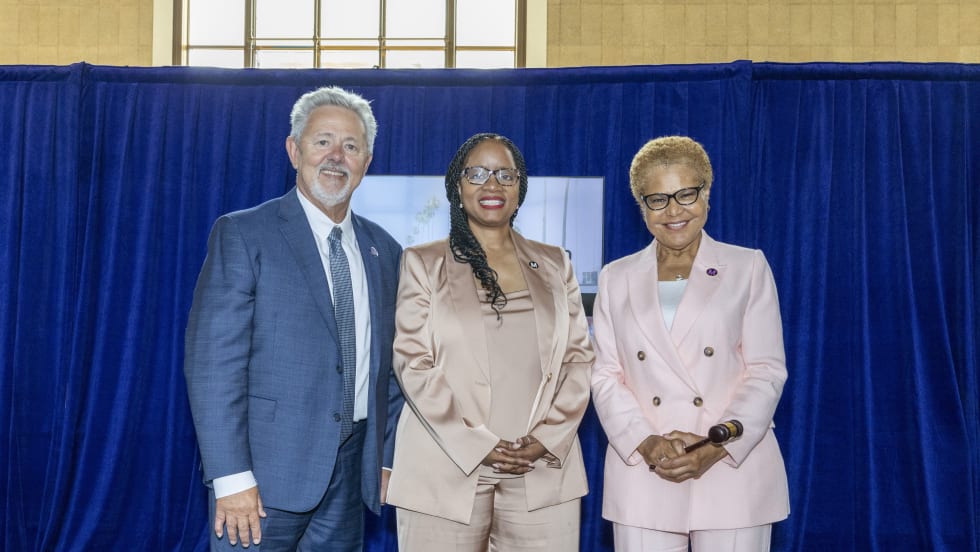
LA Metro Marks Banner Year, Sets Ambitious Goals for New Fiscal Year
Incoming LA Metro Board Chair and Los Angeles Mayor Karen Bass joined outgoing Board Chair Fernando Dutra and LA Metro CEO Stephanie Wiggins to review accomplishments from fiscal year 2026, which included the opening of new rail extensions, advancement of major transit projects, expanded safety programs, and new rider amenities.
Read More →