



D.C. Metro approves $2M to enhance security
Will initiate and award competitive contracts on a range of items including portable radiological detectors for Transit Police officers and a mobile, incident command vehicle.

The Washington Metropolitan Area Transit Authority (Metro) board of directors has approved nearly $2 million in capital spending to invest in new tools and technology to better secure the Metro system.
With the funding, Metro will initiate and award competitive contracts on a range of items including portable radiological detectors for Metro Transit Police officers and a mobile, incident command vehicle.
Among the security upgrades that Metro plans to purchase are 438 portable radiological detectors, which will enable the department to issue a pager-sized detector to every Metro Transit Police officer. The equipment will enable transit police officers, who often are the first to respond to suspicious activity at a Metro facility, to quickly learn about and respond to released or hidden radioactive agents inside Metrorail stations, tunnels, trains or Metrobuses. The detectors cost $744,600.
Currently, only a limited number of officers carry the handheld detectors. Once the procurement is fulfilled, the Metro Transit Police Department (MTPD) will be the first transit policing agency in the country to equip every officer with a personal radiological detector.
Metro also plans to acquire a mobile command/incident management vehicle for use by first responders on the scene of an emergency, major service disruption or high-security event. The 35- to 40-foot vehicle will provide a central place for Metro officials to gather and share information, and a location for the Metro Transit Police to more efficiently manage on-scene coordination with other responding agencies, such as local and federal police agencies, fire departments and emergency medical service providers.
Metro also is seeking technical support to move its 24-hour police dispatch center to the Carmen Turner Facility in Landover, Md., from Metro’s downtown headquarters in Washington, D.C. An experienced public safety firm will be awarded a contract of up to $585,000 to minimize risk as the MTPD works to become fully operational at the new facility while maintaining system security.
An additional $165,581will be used to replace 271 bullet-resistant vests that are reaching the end of their lifecycle.
More Bus

Finding the ‘Happy Medium’: Optimizing Maintenance Without Sacrificing Reliability
The key to maintenance optimization isn’t doing less work—it’s doing the right work at the right time on the right assets.
Read More →
LA Metro, City of West Hollywood, and Partners Advance Smarter Bus Lane Enforcement
The award-winning partnership combines AI-powered detection with human oversight to improve bus reliability, accessibility, and enforcement efficiency.
Read More →
PSTA Modernizes Workforce Management with Digital Bidding System
The award-winning Workforce Transit Modernization project replaced paper bidding with a transparent digital platform, cutting administrative effort while improving access for operators.
Read More →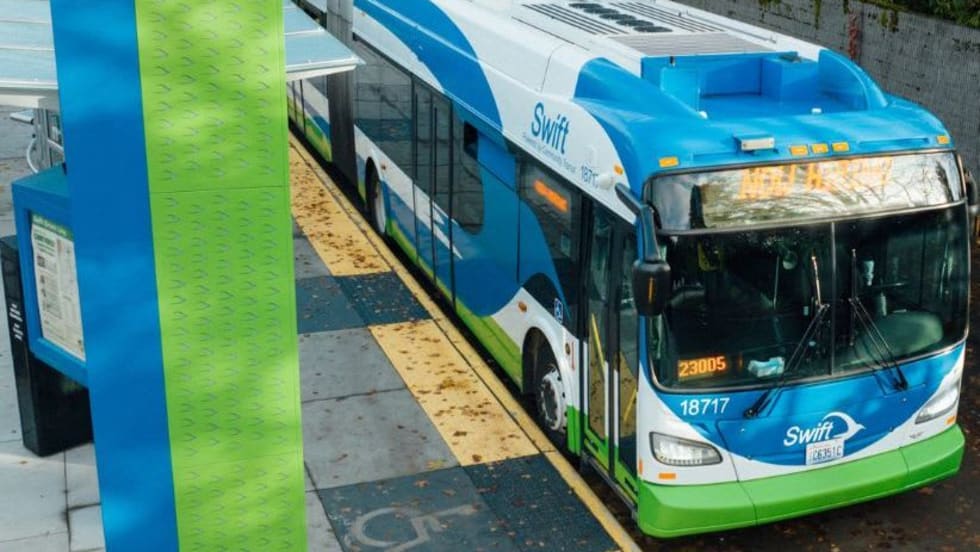
Washington's Community Transit Sets Six-Year Roadmap for Growth, Expansion
Approved TDP targets more bus service, new mobility options, Swift BRT expansion, and a potential Everett Transit annexation.
Read More →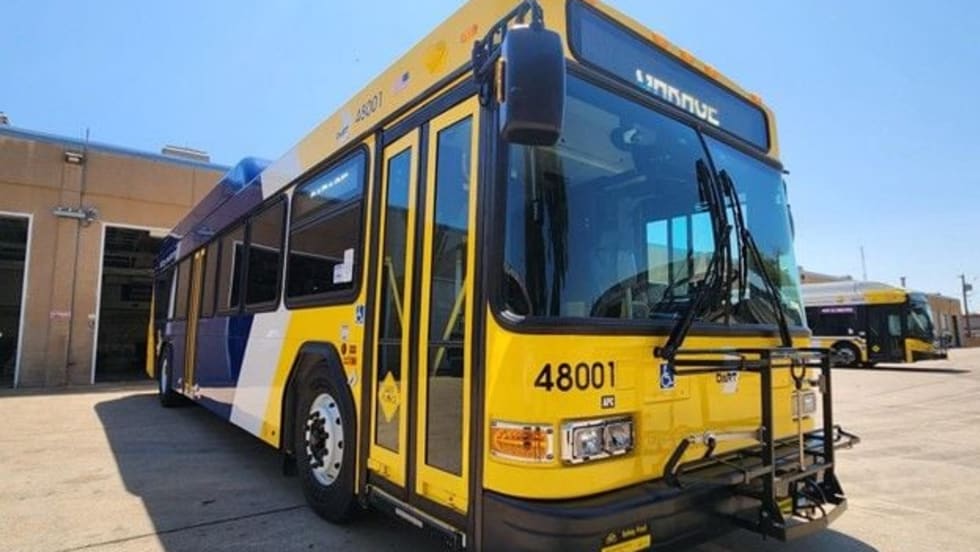
DART Customer Satisfaction Reaches Six-Year High
Overall satisfaction rose to 74.9%, while the agency’s Net Promoter Score reached a record 33.7.
Read More →
How DART's GoPass Is Redefining Regional Mobility
Serving 14 transit agencies, GoPass simplifies multimodal travel by allowing riders to plan, pay for, and manage an entire trip through one app.
Read More →
Biz Briefs: OCTA Taps Clean Energy for Hydrogen Station, Stadler to Supply Via Rail Vehicles, and More
From manufacturers and suppliers to transit agencies and motorcoach operators, these updates offer a snapshot of the projects, partnerships and business moves driving the industry forward.
Read More →
METRO Magazine Announces 2026 Innovative Solutions Awards Winners
Projects Recognized for Advancing Mobility Through Technology, Accessibility, Workforce Innovation, and Operational Excellence
Read More →
Biz Briefs: STV teams with Amtrak, Motorcoach Operators Boost Fleet and Land Contracts, and More
From manufacturers and suppliers to transit agencies and motorcoach operators, these updates offer a snapshot of the projects, partnerships and business moves driving the industry forward.
Read More →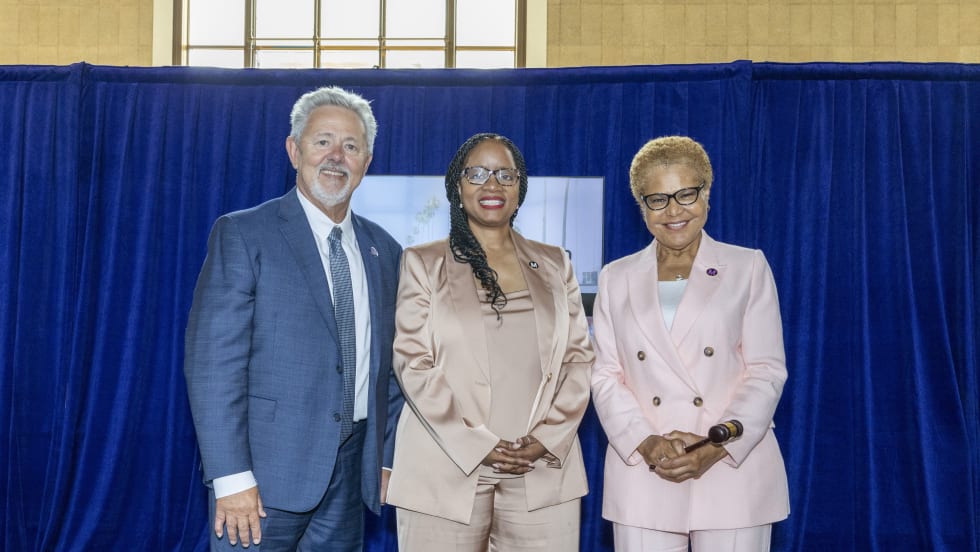
LA Metro Marks Banner Year, Sets Ambitious Goals for New Fiscal Year
Incoming LA Metro Board Chair and Los Angeles Mayor Karen Bass joined outgoing Board Chair Fernando Dutra and LA Metro CEO Stephanie Wiggins to review accomplishments from fiscal year 2026, which included the opening of new rail extensions, advancement of major transit projects, expanded safety programs, and new rider amenities.
Read More →