




Read More: WMATA Begins Rollout of New Faregates
Data Shows WMATA’s New Faregates Reducing Fare Evasion
Metro said it will continue to monitor the performance of the new faregates as more rollouts are completed.
August 23, 2023
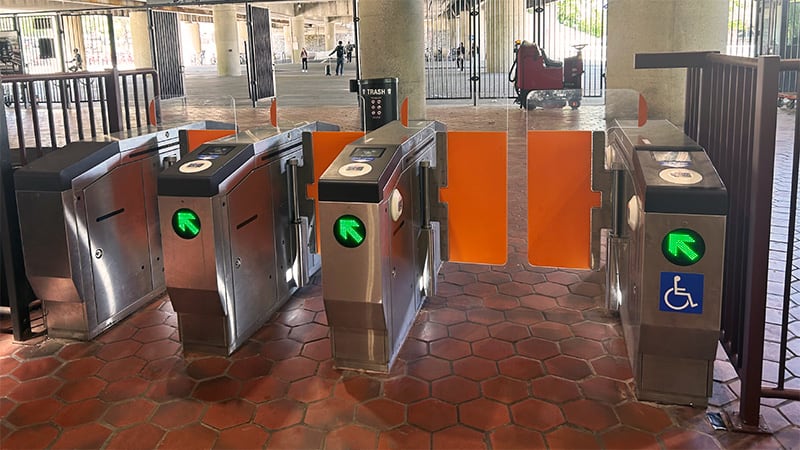
New faregate installation was completed at Congress Heights.
Photo: WMATA
2 min to read
The Washington Metropolitan Area Transit Authority (Metro) released preliminary data showing that new, higher faregates are reducing fare evasion by more than 70% at the first stations where they have been installed, including Fort Totten, Pentagon City, Bethesda, Vienna, Mt. Vernon Square, and Addison Road.
Metro is now publishing both paid and unpaid ridership data on its online ridership portal to provide transparency on the effectiveness of fare evasion reduction strategies and a more complete picture of total ridership to the public.
"After testing multiple prototypes and getting feedback from customers, the new faregate design is having its intended effect – reducing fare evasion,” said Metro GM/CEO Randy Clarke. “It is critical for Metro to collect as much fare revenue as possible and keep the system safe so we have a transit system worthy of this great region.”
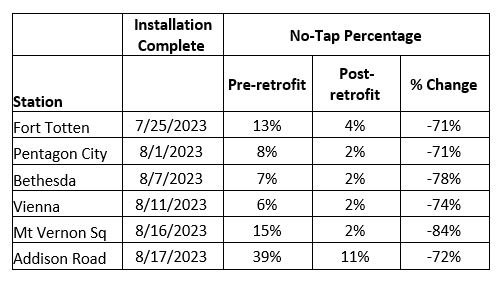
Metro is now publishing both paid and unpaid ridership data on its online ridership portal to provide transparency on the effectiveness of fare evasion reduction strategies.
Photo: WMATA
New Metro Faregates Coming Soon
New faregate installation was completed at Congress Heights, and installation at Federal Center SW, Wheaton, and Court House is expected to be completed by early September, followed by the rest of the Metrorail system.
Metro said it will continue to monitor the performance of the new faregates as the rollout is completed.
The new faregate design includes an L-shape door panel that extends over the faregate to minimize gaps between the openings. The increase in barrier height from the original 28 to 48-inch prototype to 55 inches will also make it more difficult to jump over faregates.
The swing doors are made of polycarbonate which is 200 times stronger than glass, lighter weight, and more durable.
As stations are retrofitted with the new barriers, Metro is also raising the height of the fencing and emergency gates.
More Security and Safety

Transit Agencies Highlight Safety Gains at National Summit
Leaders from 15 major transit systems shared crime-reduction results and safety initiatives while discussing the role of continued federal support.
Read More →
DART Launches Major Security, Fare Enforcement Initiative
The 90-day demonstration will deploy coordinated security teams at five light rail stations while testing controlled access and gathering data to guide future investments.
Read More →
RTD Launches NextRide App to Consolidate Trip Planning, Fares, Security Reporting
The app expands on RTD’s existing NextRide web application and allows customers to view real-time vehicle locations and service alerts, purchase and store digital fares, and access customer support.
Read More →

TAPTCO Updates OSHA Compliance Training for Transit Maintenance Operations
The revamped program addresses 26 OSHA standards for maintenance facilities, with TAPTCO pointing to training, documentation, and everyday shop hazards as continuing challenges for transit operations.
Read More →
Sponsored•August 18, 2026
How VaporVision Adds Value to Transit Door Systems
Wabtec engineers explain how the system improves doorway detection, strengthens diagnostics and gives transit agencies and OEMs greater operating flexibility.
Read More →
FRA Announces $5.3B in Rail Investments, Including $2B for Amtrak
Funding will support grade-crossing improvements, infrastructure upgrades, and new Amtrak equipment in 23 states.
Read More →
Chicago, Maryland Expand Non-Law-Enforcement Safety, Rider Support
The CTA and MTA are launching new programs aimed at de-escalation, crisis response, rider assistance, and greater transparency.
Read More →
LA Metro, City of West Hollywood, and Partners Advance Smarter Bus Lane Enforcement
The award-winning partnership combines AI-powered detection with human oversight to improve bus reliability, accessibility, and enforcement efficiency.
Read More →
LA Metro Reports 57% Decline in Homelessness on Transit System Since 2024
The agency's latest homelessness count offers new data on how care-based services and cross-sector partnerships can complement traditional transit security strategies.
Read More →
FTA Launches 'Transit Moves America' Dashboard to Highlight Agency Safety and Performance
The online dashboard transforms National Transit Database information into a public-facing resource that allows users to compare transit agencies on key operational and safety metrics.
Read More →