



California District Partners With EV Charging Solutions Provider
EV Charging Solutions Providers Partner on Repowering Buses, Trucks for V2G
Amply Power, Unique Electric Solutions will repower internal combustion engine vehicles with electric powertrains. They will also provide charge management services, a bi-directional charging system, and local utility coordination.
by SBF Staff
April 15, 2021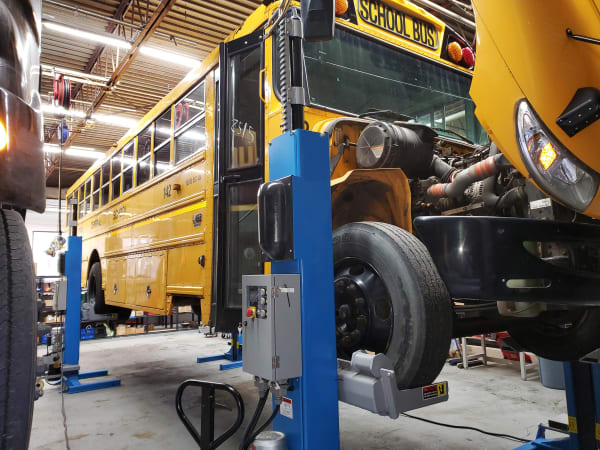
Amply Power and Unique Electric Solutions (UES) are partnering to repower internal combustion engine vehicles with V2G-capable electric powertrains. Shown here is a UES electric propulsion system repowering a school bus for New York-based Logan Bus Co.
Photo courtesy UES
4 min to read
In a move to evolve its e-mobility charging solutions with vehicle-to-grid (V2G) capabilities, Amply Power is partnering with Unique Electric Solutions (UES) to offer a comprehensive fleet electrification solution to bus and truck fleets.
The partnership will pair UES's vehicle repowering technology with Amply's charge management software. The solution includes the repowering of existing internal combustion engine trucks and buses with electric powertrains, charge management services, a V2G bi-directional electric vehicle (EV) charging system from Rhombus Energy Solutions, and coordination with the local utility, according to a news release from Amply.
Rhombus recently received UL 1741-SA certification for its 125kW DC fast charger, said Rick Sander, the company’s CEO, in the news release.
The suppliers have entered the partnership to prepare for the wave of V2G opportunities being pursued by utilities and end customers. A report by Precedence Research predicts that the global V2G technology market is expected to grow at a compound rate of 48% between 2020 to 2027.
V2G enables bi-directional and controllable electrical energy flow among vehicles and the local electrical grid for the benefit of both parties, Amply explained in the news release. Beyond serving as a virtual power plant that utilities and owners can tap in times of need, such as power outages or high prices due to increased demand, bi-directional charging can help fleets and grids balance their electricity demand and act as storage for renewable energy generation.
The companies are currently deploying their joint solution for Logan Bus Co., which provides school bus service for the New York City Department of Education.
“Vehicle-to-grid will be imperative for electric school bus operations to scale,” said Corey Muirhead, executive vice president of Logan Bus Co., in the news release. “V2G provides much-needed cost savings to the contractor while simultaneously allowing us to provide power back to the grid, thus reducing brownouts and helping our community during emergency events.”
Vic Shao, CEO of Amply Power, added in the news release that V2G “can help fleet operators be more energy resilient and achieve greater cost savings, while strengthening their local grids.”
Amply announced its partnership with the Logan Bus Co. last year and has since teamed up with several transit agencies to support their transition to electric, including Tri Delta Transit, Solano County Transit, and the Anaheim Transportation Network.
Amply also recently joined forces with the California Mobility Center to accelerate the transition to e-mobility throughout California and was named on the 2021 Global Cleantech 100 list for the second year in a row.
The Amply Power, UES, and Rhombus Energy Solutions alliance aims to help fleets take advantage of all the benefits of electrification with less up-front capital and risk.
By integrating these solutions into Amply’s Charging-as-a-Service (CaaS) model, the Logan Bus Co. project is set up to capture cost reductions beyond what electrification via repowering can bring.
Amply’s CaaS model is designed to simplify the transition to EVs for fleets by assuming end-to-end responsibility for all vehicle charging needs, from cloud-based system design to installing local site controllers. Its proprietary back-end software and operational methods can drive utility costs down by optimizing EV charging and other energy use at public and private depots. Combining this process with utility service upgrades as needed enables Logan Bus to further scale its electric bus deployments.
Combining UES’s repowering technology with Amply’s charge management software, operators can achieve higher efficiency and realize significant cost savings, according to Amply.
More generally, operating EVs can cost fleet operators one-third of the expense compared with diesel.
“The higher initial price tag of EVs compared to that of internal combustion vehicles can be challenging for many fleet operators. However, when looking at the economics of fueling, maintenance, and operating costs, electric is more affordable than maintaining them as diesel-fueled vehicles,” said Joe Ambrosio, CEO of UES. “Additionally, by deploying our re-powering strategy, where we retrofit the powertrain and keep the existing chassis, we can save operators even more time and money by providing all the reduced operating costs and emissions of a new EV but at a fraction of the price.”
Originally posted on School Bus Fleet
More Zero Emissions
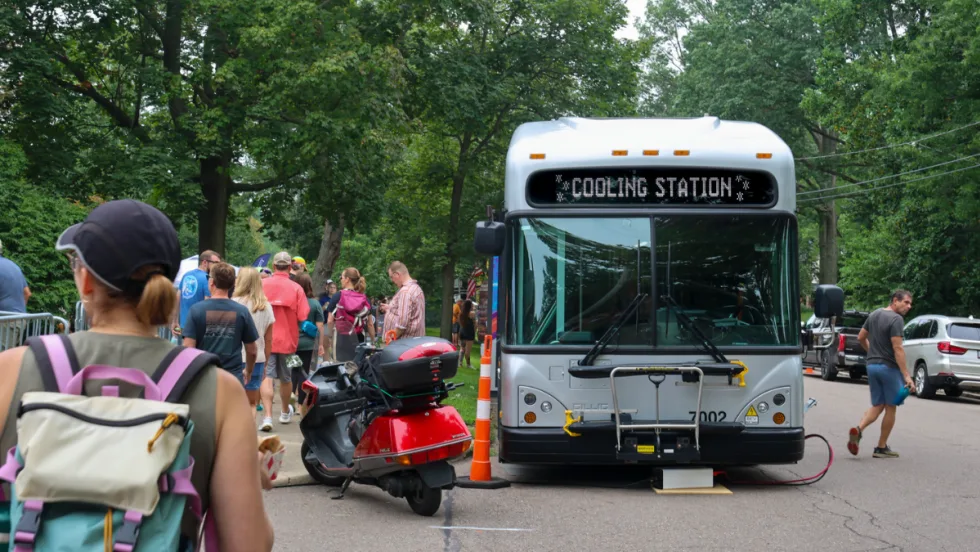
Ohio’s METRO RTA Turns Electric Buses into Mobile Power Sources at PorchROKR
See how three Gillig battery-electric buses powered festival stages while the agency’s new Park & Ride service carried approximately 1,000 attendees, demonstrating another potential use for transit agencies’ electric fleets.
Read More →
CALSTART and Forth Combine to Form Catalyst Mobility
The new name represents a renewed vision for the nonprofit focused on advancing clean, equitable, and affordable transportation solutions that move people and goods.
Read More →
Building a Flexible Path to Transit Electrification
John Hroncich discusses BAE Systems’ modular and scalable approach, lessons learned from decades of real-world operations, and how agencies can identify electrification strategies that fit their fleets.
Read More →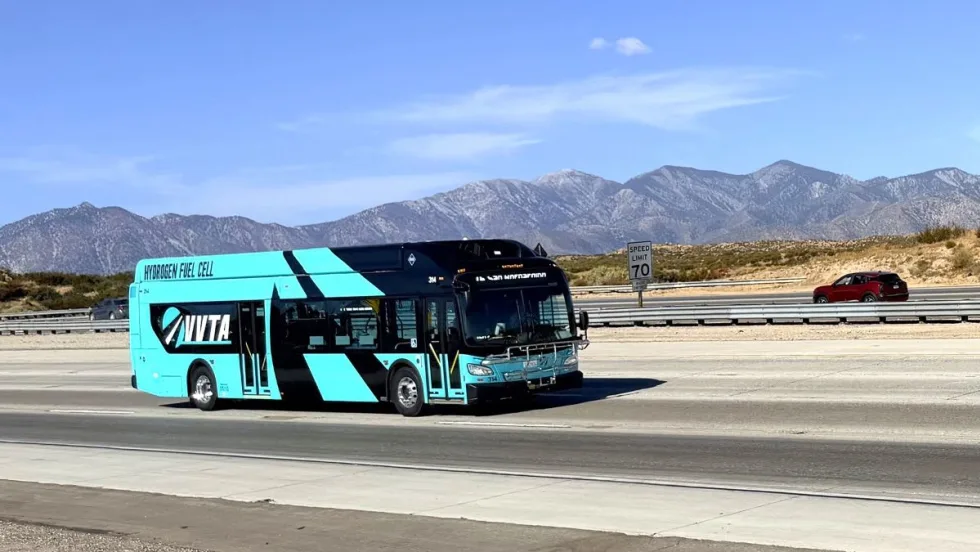
California's VVTA Begins Phased Rollout of Hydrogen Fuel Cell Buses
The agency is introducing 13 zero-emission buses into revenue service while evaluating performance across its urban, rural, and long-distance routes.
Read More →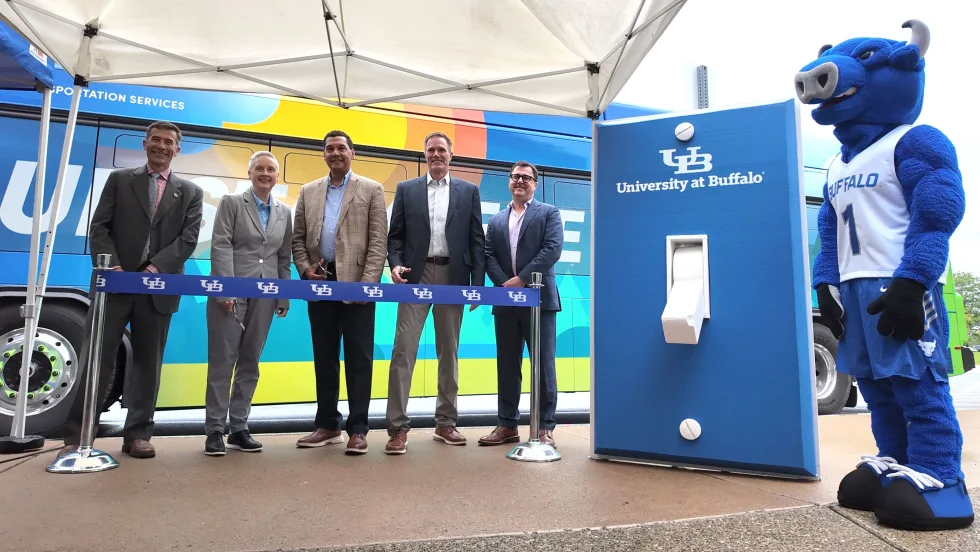
Inside Look: University at Buffalo Puts First 8 Electric Buses Into Stampede Service
UB, transportation solutions provider WeDriveU, and fleet electrification specialist Zenobē marked the deployment in the presence of students, university administrators, and local officials.
Read More →
Biz Briefs: OCTA Taps Clean Energy for Hydrogen Station, Stadler to Supply Via Rail Vehicles, and More
From manufacturers and suppliers to transit agencies and motorcoach operators, these updates offer a snapshot of the projects, partnerships and business moves driving the industry forward.
Read More →
AC Transit’s Cecil Blandon on Building the Next Generation of Transit Maintenance Leaders
The agency’s maintenance chief discusses leadership, workforce development, zero-emission technology, and preparing technicians for the future of public transportation.
Read More →
CTDOT Taps STV for Electric Bus Facility Design
The firm will work with CTDOT and RVT to define the facility layout, operational requirements, and long-term flexibility for RVT’s growing electric fleet.
Read More →
Chicago’s Pace Deploys 24 Hybrid-Electric Buses in Will County
The new buses reduce emissions and fuel consumption while advancing the agency's long-term goal of transitioning to a fully zero-emission fleet.
Read More →
DASH Breaks Ground on First On-Route Electric Bus Chargers in D.C. Region
The fast-charging infrastructure will help extend electric bus range, improve fleet utilization, and support DASH's goal of transitioning to a fully zero-emission fleet.
Read More →